 5.0 on Google, 19 reviews
Related care: Early Arthritis Management and Total and Partial Knee Replacement. Dr. Hamie sees patients at Clemenceau Medical Center, Dubai Healthcare City.
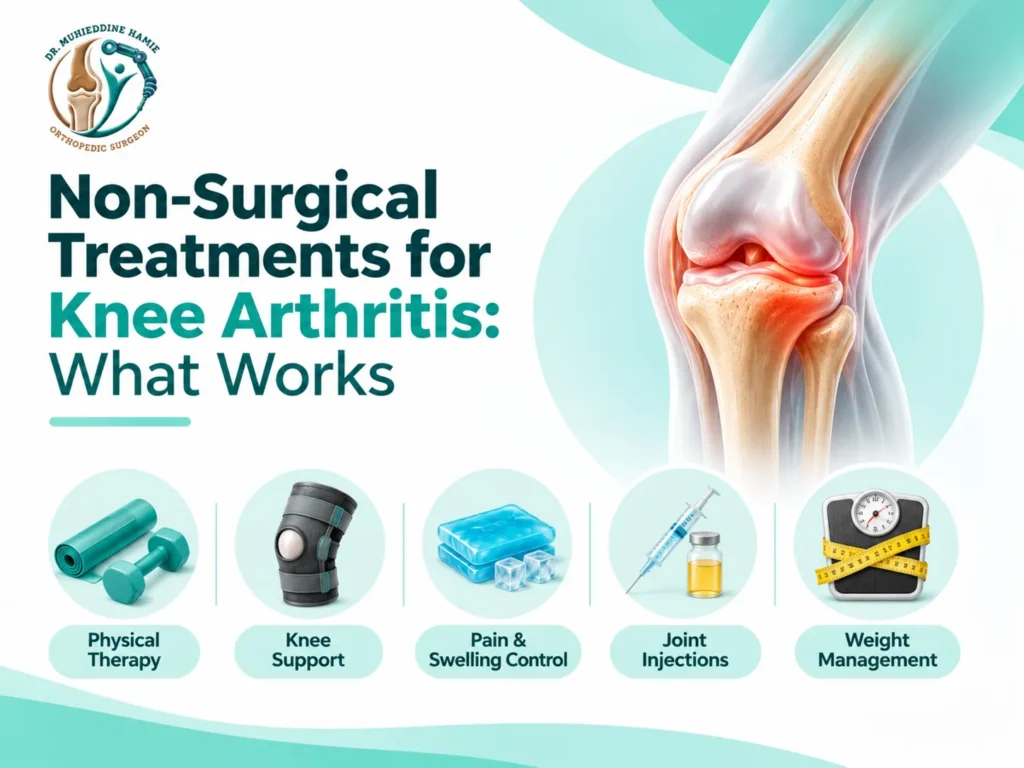
Evidence-based non surgical treatment for knee arthritis combines structured physical therapy, biomechanical offloading, weight management, and targeted intra-articular injections. Clinical guidelines from international orthopedic bodies emphasize conservative management as the first-line defense against degenerative joint wear. For patients experiencing persistent mechanical discomfort, pursuing a multimodal non surgical treatment for knee arthritis provides meaningful symptom control, preserves remaining joint space, and supports active daily living without surgical downtime.
Articular cartilage degeneration develops gradually within the joint capsule. When mechanical loads exceed the tissue's shock-absorbing threshold, chondrocytes experience metabolic strain, leading to surface fibrillation and secondary synovial inflammation. Initiating conservative therapy during earlier stages helps stabilize lower extremity biomechanics and maintains natural joint function.
Patients across Dubai and the broader United Arab Emirates often face unique environmental challenges. Transitioning between air-conditioned interiors and elevated outdoor temperatures can exacerbate joint stiffness, while prolonged sedentary desk hours weaken supporting musculature. A deliberate, multidisciplinary approach helps patients maintain functional comfort and preserve long-term joint health.
Defining Non Surgical Treatment for Knee Arthritis and Clinical Objectives
A comprehensive non surgical treatment for knee arthritis is a structured, physician-supervised regimen of non-operative therapies designed to decrease intra-articular inflammation, optimize load distribution, and preserve cartilage health. The approach aims to reduce mechanical discomfort, improve joint mobility, and safely postpone or prevent invasive surgical reconstruction.
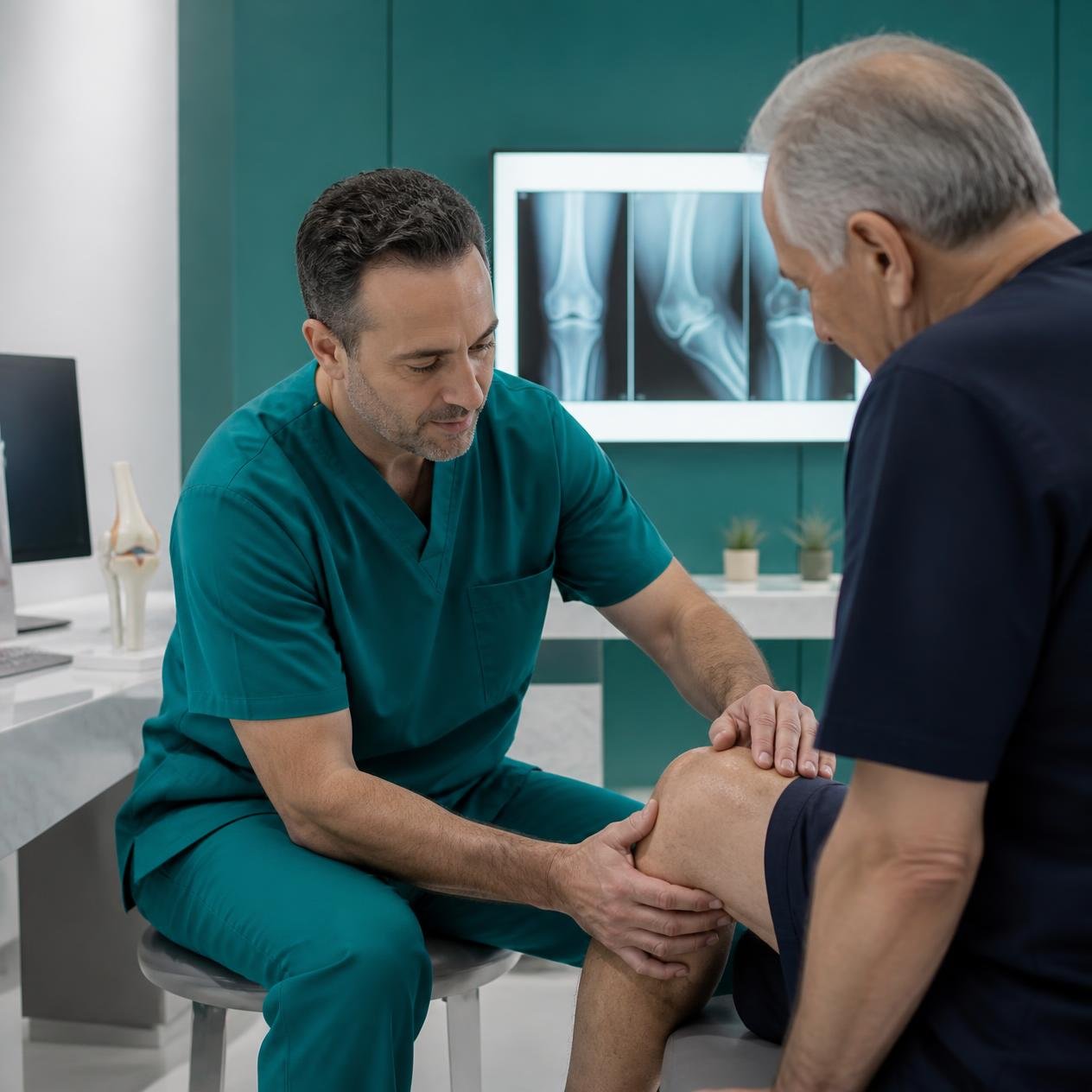
Diagnostic workups begin with standing, weight-bearing bilateral radiographs to evaluate joint space narrowing and bone alignment. Orthopedic clinicians correlate these radiographic findings with physical examination markers, such as localized joint-line tenderness, ligamentous laxity, and audible crepitus. Once an accurate baseline is established, medical teams craft a structured program tailored to the patient's functional demands and disease stage.
Targeted Knee Arthritis Exercises and Kinetic Chain Strengthening
Structured, low-impact knee arthritis exercises serve as the biological cornerstone of joint preservation. Because articular cartilage relies on synovial fluid diffusion rather than a direct vascular network for its nutrition, cyclical, low-impact loading is necessary to move nutrients into the tissue matrix and clear out metabolic waste.
Clinical evidence indicates that strengthening the quadriceps, hamstrings, and hip abductors directly reduces mechanical impact on the tibial plateau: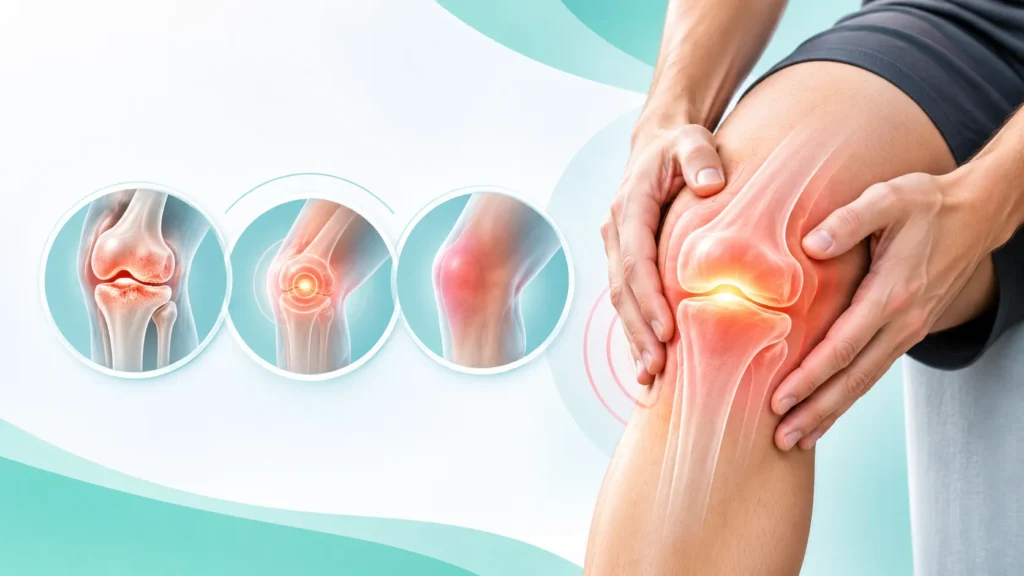
- Isometric Quadriceps Sets: Contracting the anterior thigh muscles against an extended knee builds muscular endurance without grinding damaged articular surfaces together.
- Straight Leg Raises: Elevating the leg while supine strengthens the rectus femoris and hip flexors, providing anterior stability during walking.
- Closed-Kinetic Chain Leg Presses: Controlled, shallow-angle leg presses build functional strength in the hamstrings, gluteus medius, and calf complex while limiting patellofemoral shear.
- Stationary Ergometer Cycling: Pedaling with low resistance stimulates regular synovial fluid production, lubricating the joint without subjecting the joint surfaces to high impact.
- Aquatic Hydrotherapy: Exercising in chest-deep water reduces joint loading by roughly 75 percent, allowing patients with sensitive joints to build strength safely.
Executing these focused knee arthritis exercises three to four times per week reinforces the body's natural shock-absorbing mechanisms and reduces daily mechanical strain.
Biomechanical Realignment Using a Knee Brace for Arthritis
When articular cartilage wear is primarily localized to a single compartment, most often the medial side, a specialized knee brace for arthritis provides practical, external mechanical relief. Structural wear frequently produces a subtle varus (bow-legged) deviation, concentrating compressive loads across the thinned inner joint line.
An unloader brace works via three-point leverage, applying gentle corrective pressure against the outer aspect of the knee to slightly open the compressed medial compartment. Peer-reviewed gait studies indicate that functional unloader bracing can reduce peak adduction moments during walking by up to 25 percent.
Patients commonly report immediate improvements in walking distance and stability when fitted with a custom or semi-rigid unloader. For individuals with generalized or patellofemoral tracking irritation, lightweight neoprene sleeves or compressive patellar bands provide useful tactile proprioception, helping improve neuromuscular control during everyday movement.
Send your X-ray or MRI on WhatsApp and Dr. Hamie will review it before your visit.
Evaluating Meaningful Alternatives to Knee Replacement
Patients with mild to moderate joint degeneration frequently seek proven alternatives to knee replacement to preserve native bone and avoid major hospital stays. When joint damage has not yet advanced to total bone-on-bone contact, conservative alternatives offer substantial clinical value.
Weight optimization represents one of the most effective non-surgical interventions. Biomechanical research confirms that every single pound of lost body weight removes roughly four pounds of mechanical load across the knee joint during normal walking. A modest reduction of 10 percent of body weight can cut joint-line forces in half, significantly improving comfort and slowing structural wear.
Additionally, non-invasive therapeutic options, such as pulsed electromagnetic field therapy, custom lateral-wedge orthotics, and transcutaneous electrical nerve stimulation (TENS), help modulate local pain pathways. Pursuing structured alternatives to knee replacement allows many patients to sustain an active lifestyle while maintaining their natural joint anatomy.
Comparative Analysis of Conservative Arthritis Interventions
| Non-Surgical Modality | Clinical Mechanism | Durability of Effect | Functional Benefits | Ideal Clinical Presentation |
|---|---|---|---|---|
| Physical Rehabilitation | Muscle hypertrophy; kinetic chain stabilization | Long-term with regular compliance | Improved range of motion; dynamic shock absorption | Grade 1 to Grade 3 degenerative wear |
| Unloader Knee Bracing | Three-point valgus or varus load shifting | Maintained while brace is worn | Reduced peak adduction; corrected walking gait | Isolated unicompartmental osteoarthritis |
| Viscosupplementation (HA) | Restores synovial fluid viscoelasticity | Typically 4 to 8 months per cycle | Decreased mechanical friction; improved joint glide | Mild to moderate cartilage degradation |
| Platelet-Rich Plasma (PRP) | Autologous growth factors modulate inflammation | Typically 6 to 12 months | Decreased joint effusion; sustained tissue support | Grade 1 to Grade 3 joint line pain |
| Weight Optimization | Lowers cumulative tibiofemoral impact force | Long-term with sustained lifestyle habits | Broad reduction in daily joint-line mechanical stress | Overweight individuals across all stages |
Understanding Diagnostic Progression and the Stages of Knee Osteoarthritis
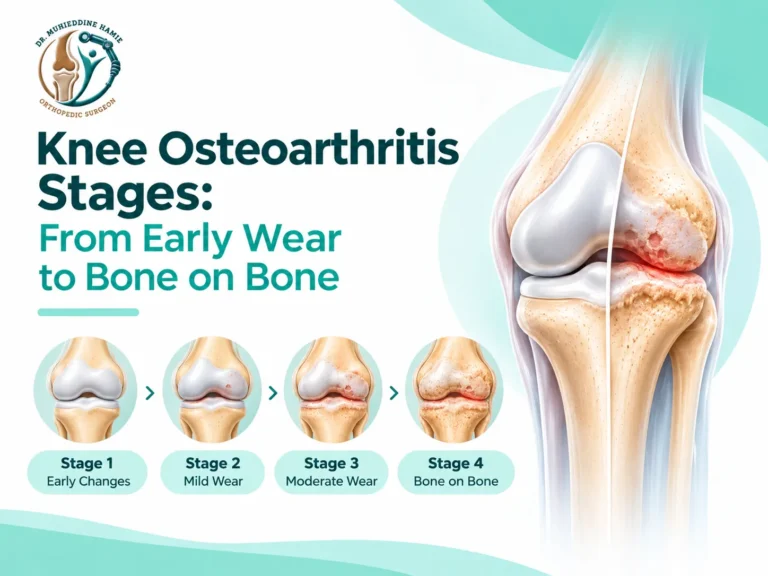
Mapping an effective conservative care pathway requires an objective understanding of the stages of knee osteoarthritis mapped out on standing X-rays. Clinicians use the Kellgren-Lawrence classification system to grade joint changes from Grade 0 (normal) to Grade 4 (severe).
In Grade 1 and Grade 2, articular cartilage exhibits early micro-fissuring and subtle osteophyte formation, while the joint gap remains largely intact. Non-surgical treatments demonstrate their highest long-term success rates during these early phases by protecting remaining joint cartilage.
When joint wear reaches Grade 3, cartilage thinning becomes pronounced, and subchondral bone begins to harden. While non-surgical methods remain beneficial here for managing day-to-day pain, treatment requires closer clinical monitoring. If the joint deteriorates to Grade 4, articular surfaces grind directly against each other, meaning non-surgical therapies offer only temporary relief and joint reconstruction may be discussed.
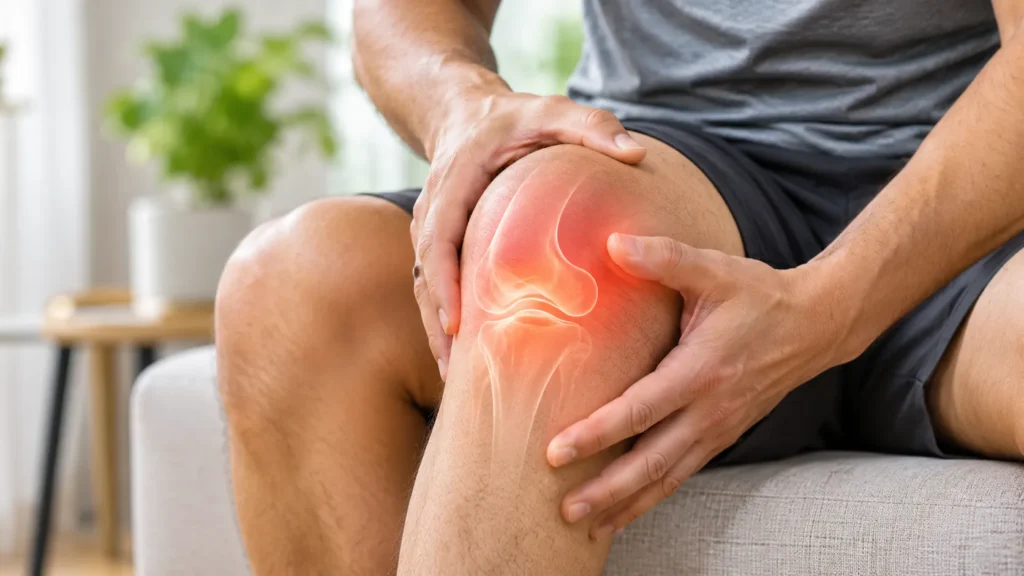
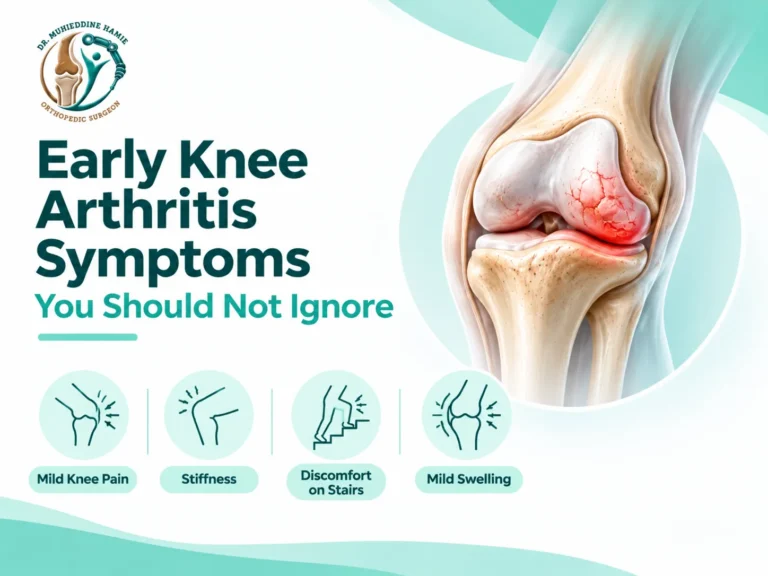
Early Clinical Identification and Early Signs of Knee Arthritis
Prompt medical evaluation allows for early joint-preservation care. Patients who
recognize the subtle early signs of knee arthritis can implement targeted therapies before irreversible cartilage damage occurs.
Key early warning indicators include brief morning joint stiffness lasting under thirty minutes, mild puffiness after sports, and a dull ache behind the kneecap when descending stairs. Overlooking these early physical cues allows abnormal joint mechanics to continue unchecked. Consulting an orthopedic specialist early helps ensure that conservative care is introduced when it is most effective.
Evidence-Based Injectable Therapies for Synovial Optimization
When oral medications and structured physical rehabilitation require additional support, intra-articular injections offer targeted relief within the joint capsule. Delivered using anatomical or ultrasound guidance, these therapies alter the intra-articular environment to ease movement:
- Corticosteroid Injections: Deliver rapid, short-term relief from acute synovial flare-ups and joint effusions. Because frequent use can weaken cartilage over time, clinical guidelines recommend using them selectively to break painful inflammatory cycles.
- Hyaluronic Acid (Viscosupplementation): Re-establishes healthy viscosity in the synovial fluid. This biological lubricant cushions the joint, reduces surface friction, and supports smoother joint articulation for several months.
- Platelet-Rich Plasma (PRP): Utilizes concentrated platelets from the patient's own blood. These autologous platelets release bioactive growth factors that help downregulate catabolic cytokines and reduce chronic synovial inflammation.
- Genicular Nerve Blockade / Cryoablation: Provides extended sensory pain relief by temporarily disrupting the small sensory nerve branches around the knee capsule, helping patients engage more comfortably in rehabilitative exercise.
These injectable therapies provide a safe, effective option for patients seeking lasting functional relief without oral pain medications.
Comprehensive Orthopedic Evaluation and Knee Arthritis Treatment in Dubai
Navigating non-operative options requires a thorough clinical assessment. Patients seeking specialized knee arthritis treatment in Dubai benefit from comprehensive musculoskeletal evaluations, advanced digital imaging, and customized rehabilitation pathways.
Multidisciplinary clinics integrate experienced orthopedic surgeons, dedicated sports rehabilitation therapists, and modern interventional suites. By evaluating individual gait biomechanics, lower extremity alignment, and personal activity goals, specialists design targeted treatment programs that help patients preserve joint health and maintain an active lifestyle.
Joint Preservation Consultations at Dr. Hamie Clinic
Persistent knee discomfort, recurrent swelling, and functional mobility challenges deserve expert clinical attention. At Dr. Hamie Clinic, located in Dubai Healthcare City, Phase 2, Al Jadaf, Dr. Muhieddine Hamie provides specialized orthopedic care focused on joint preservation, sports medicine, and advanced joint reconstruction.
Each evaluation involves a thorough review of medical history, functional gait assessments, and weight-bearing digital imaging to pinpoint the underlying cause of your joint symptoms. Treatment plans prioritize evidence-based conservative care, including targeted physiotherapy programs, custom unloader bracing, and advanced intra-articular therapies. For advanced joint wear that no longer responds to non-surgical methods, Dr. Hamie offers minimally invasive and robotic-assisted surgical solutions designed to restore comfortable, active mobility. Contact Dr. Hamie Clinic in Dubai to arrange an orthopedic consultation and explore your joint care options.
Conclusion
Structured non surgical treatment for knee arthritis offers a practical, evidence-based approach to preserving joint function and managing chronic pain. Combining targeted muscular conditioning, unloader bracing, weight optimization, and guided intra-articular injections helps protect articular cartilage and maintain daily mobility. Seeking early clinical guidance allows patients to address mechanical joint stress proactively and enjoy a healthy, active lifestyle without rushing into surgery.
Frequently Asked Questions
Can non surgical treatment for knee arthritis cure the condition permanently?
No, non-surgical therapies cannot regenerate lost hyaline cartilage. However, they can significantly reduce joint inflammation, strengthen supporting muscles, relieve pain, and help delay or avoid the need for joint replacement surgery.
How do physical therapy exercises reduce knee arthritis pain?
Strengthening the quadriceps and hamstrings stabilizes the knee joint and absorbs ground impact during movement. This offloads compressive forces from the damaged cartilage surfaces, easing mechanical ache and improving function.
How long do the benefits of hyaluronic acid injections typically last?
Hyaluronic acid injections usually provide between four to eight months of improved joint lubrication and reduced friction. Individual results vary depending on the degree of joint space narrowing and everyday activity levels.
When should a patient consider surgery instead of non-surgical treatments?
Surgery is generally considered when advanced (Grade 4) arthritis causes continuous pain at rest, visible limb deformity, and severe loss of mobility that no longer responds to medications, physical therapy, or targeted injections.
Is an unloader knee brace suitable for all types of knee arthritis?
Unloader braces are most effective for unicompartmental osteoarthritis, where joint wear is isolated to either the medial or lateral side. Patients with diffuse, tricompartmental arthritis benefit more from supportive compressive sleeves.

Consultant Orthopedic Surgeon at Clemenceau Medical Center, Dubai. He performs robotic-assisted, total, partial and revision knee replacement and treats sports injuries of the knee.
Meet Dr. Hamie