Robotic Knee Surgery in Dubai
Advanced Precision. Personalized Care. Better Recovery.
UNDERSTANDING THE TECHNOLOGY
What is Robotic Knee Surgery?
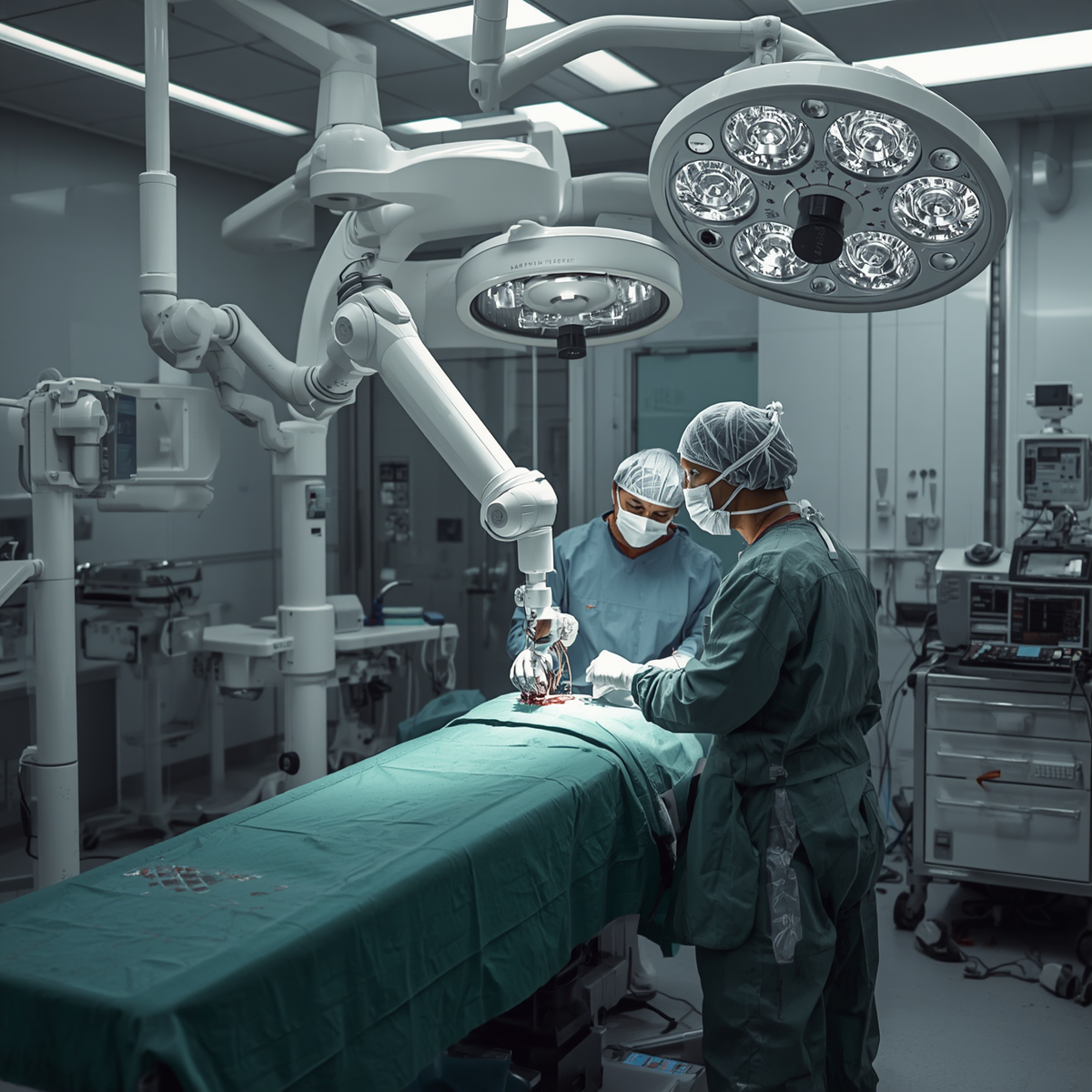
Robotic knee surgery is an advanced surgical technique that enhances the precision and accuracy of knee replacement procedures. Rather than performing the operation independently, the robotic system works as an extension of the surgeon’s expertise, providing detailed three-dimensional planning, real-time guidance, and enhanced precision throughout the procedure.
Before surgery, advanced imaging is used to create a personalized surgical plan based on your unique knee anatomy. During the operation, the robotic system assists Dr. Muhieddine Hamie in accurately preparing the bone and positioning the implant while preserving as much healthy tissue as possible. This high level of precision helps optimize joint alignment, improve implant positioning, and support better long-term function.
Total Knee Replacement
Advanced robotic technology helps accurately position the knee implant during total knee replacement, improving alignment, joint balance, and long-term function while preserving healthy bone whenever possible.
Partial Knee Replacement
For patients with arthritis affecting only one compartment of the knee, robotic assistance enables precise implant placement while preserving healthy cartilage, ligaments, and unaffected bone.
TECHNOLOGY COMPARISON
Traditional Knee Surgery vs. Robotic-Assisted Knee Surgery
Both traditional and robotic knee surgery aim to relieve pain and restore joint function. The key difference lies in the level of precision and personalization. Robotic-assisted technology enables detailed pre-operative planning and real-time surgical guidance, helping Dr. Muhieddine Hamie perform the procedure with enhanced accuracy while tailoring the surgery to your unique anatomy.
Traditional Knee Surgery
Traditional knee replacement relies on conventional surgical instruments and the surgeon’s expertise to position the implant and restore joint alignment.
Best For
- Total knee replacement
- Partial knee replacement
- Advanced knee arthritis
- Standard surgical cases
Features
- Conventional surgical instruments
- Proven and effective technique
- Restores joint function
- Relieves arthritis-related pain
Recovery
Excellent pain relief and improved mobility, allowing patients to return to daily activities with a well-functioning knee replacement.
Robotic Knee Surgery
Robotic knee surgery combines the surgeon’s expertise with advanced robotic technology to create a personalized surgical plan and provide real-time guidance for precise implant placement.
Best For
- Personalized knee replacement
- Complex knee anatomy
- Patients seeking precision
- Both Total and partial
Features
- 3D pre-operative planning
- Real-time surgical guidance
- Highly accurate implant
- Personalized to your anatomy
Recovery
Improved implant alignment, enhanced joint balance, greater precision, and the potential for a smoother recovery and long-term implant performance.
Is Robotic Knee Surgery Right for You?
Not every patient requires robotic-assisted surgery. Following a comprehensive evaluation, Dr. Muhieddine Hamie will determine whether robotic-assisted knee replacement is the most suitable option based on your joint condition, anatomy, lifestyle, and treatment goals.
RECOGNIZE THE WARNING SIGNS
Signs You May Benefit from Robotic Knee Surgery
If knee pain and stiffness are limiting your daily activities despite conservative treatment, you may be a candidate for knee replacement surgery. For eligible patients, robotic-assisted technology offers a more personalized and precise approach to implant placement and joint restoration.
Persistent Knee Pain
Ongoing knee pain that interferes with walking, climbing stairs, sleeping, or everyday activities despite medication, physiotherapy, or other conservative treatments.
Advanced Knee Arthritis
Moderate to severe osteoarthritis causing cartilage loss, stiffness, and progressive joint deterioration that affects your quality of life.
Reduced Mobility
Difficulty bending or straightening the knee, making routine activities such as standing, walking, or getting up from a chair increasingly challenging.
Knee Deformity or Alignment Issues
Bow-legged (varus) or knock-kneed (valgus) alignment that contributes to uneven joint wear and may require precise implant positioning during surgery.
Relief from Conservative Treatment
Persistent symptoms despite physiotherapy, medications, injections, weight management, or lifestyle modifications.
Looking for a Personalized Approach
Patients interested in advanced technology that supports individualized surgical planning and precise implant placement may benefit from robotic-assisted knee surgery after a specialist evaluation.
CAUSES, RISK FACTORS & DIAGNOSIS
Understanding When Robotic Knee Surgery May Be Recommended
Common Causes & Risk Factors
Advanced Osteoarthritis
Progressive cartilage wear leading to chronic pain, stiffness, and reduced mobility that significantly affects daily life.
Rheumatoid Arthritis
Inflammatory joint disease that causes cartilage damage, joint deformity, and functional limitations, which may require knee replacement.
Post-Traumatic Arthritis
Arthritis developing after fractures, ligament injuries, or previous knee trauma that results in progressive joint degeneration.
Knee Deformities
Bow-legged (varus) or knock-kneed (valgus) alignment causing uneven joint loading and advanced cartilage wear.
Failed Conservative Treatment
Persistent symptoms despite physiotherapy, medications, injections, weight management, and lifestyle modifications.
Complex Knee Anatomy
Patients with unique anatomical variations or previous knee surgery who may benefit from personalized surgical planning and precise implant positioning.
How is Robotic Knee Surgery Evaluated?
1
Medical History
A detailed discussion about your symptoms, medical history, previous treatments, lifestyle, and how knee pain affects your daily activities.
2
Physical Examination
Assessment of knee alignment, range of motion, ligament stability, joint deformity, and overall knee function.
3
Digital X-rays
Weight-bearing X-rays help evaluate joint space, arthritis severity, bone alignment, and determine whether knee replacement is appropriate.
4
MRI or CT Scan (When Required)
Advanced imaging is used to create a personalized three-dimensional model of your knee, allowing precise surgical planning tailored to your unique anatomy.
5
Personalized Treatment Planning
Using your clinical findings and digital planning data, Dr. Hamie determines whether robotic-assisted knee replacement is the most appropriate approach and develops a customized surgical plan to optimize implant positioning and long-term outcomes.
TREATMENT & RECOVERY JOURNEY
Precision Surgery. Personalized Recovery.
1
Consultation
Your journey begins with a detailed consultation, physical examination, X-rays, and advanced imaging to assess your knee and determine whether robotic-assisted surgery is the right option.
2
Personalized Plan
A three-dimensional model of your knee is created to plan implant size, alignment, and positioning based on your individual anatomy before surgery.
3
Treatment
During surgery, advanced robotic technology provides real-time guidance, enabling Dr. Hamie to perform the procedure with exceptional precision while remaining in complete control throughout the operation.
4
Rehabilitation
Following surgery, a personalized rehabilitation program focuses on pain management, restoring joint movement, rebuilding strength, and gradually improving mobility.
5
Recovery
With ongoing rehabilitation and regular follow-up, most patients regain confidence in their knee, experience improved mobility, and gradually return to work, daily activities, and recreational pursuits.
Your treatment begins with a comprehensive consultation and ends with a structured recovery program designed to help you return to an active life.
BENEFITS OF TREATMENT
Benefits of Robotic Knee Surgery
Robotic-assisted knee surgery combines advanced technology with surgical expertise to provide a personalized approach to knee replacement. By enabling precise planning and accurate implant positioning, this technology helps optimize joint function, improve recovery, and support long-term outcomes.
Personalized Surgical Precision
Advanced 3D planning and real-time robotic guidance allow the procedure to be tailored to your unique knee anatomy, supporting accurate implant positioning and optimal joint alignment.
Preserves Healthy Bone & Soft Tissue
Robotic-assisted technology enables precise bone preparation while preserving as much healthy bone and surrounding soft tissue as possible during surgery.
Improved Joint Function & Mobility
Accurate implant positioning and balanced joint alignment help restore natural knee movement, improve stability, and support better functional outcomes.
Enhanced Recovery & Long-Term Performance
Precise surgical execution may contribute to improved comfort, smoother rehabilitation, and long-term implant performance, helping patients return to everyday activities with greater confidence.
WHY CHOOSE DR. MUHIEDDINE HAMIE
Expertise You Can Trust. Care You Can Rely On.
Choosing the right orthopedic surgeon is an important step toward a successful recovery. Dr. Muhieddine Hamie combines advanced orthopedic expertise, personalized treatment planning, and a patient-first approach to deliver exceptional care for every individual. From your first consultation through surgery and rehabilitation, every stage of your journey is guided with precision, compassion, and a commitment to achieving the best possible outcome.
- Personalized Treatment Plans
- Advanced Knee Replacement Expertise
- Patient-Centered Care
- Comprehensive Rehabilitation Support
Committed to helping patients move with confidence, recover with comfort, and return to the activities they enjoy most.

Frequently Asked Questions
Find answers to common questions about the treatment by Dr. Muhieddine Hamie in Dubai.
What is robotic-assisted knee surgery?
Robotic-assisted knee surgery is an advanced surgical technique that uses robotic technology to assist the surgeon with pre-operative planning and real-time guidance during knee replacement. The robotic system enhances precision but does not perform the surgery independently.
Is the robot performing the surgery?
No. Dr. Hamie performs every step of the procedure. The robotic system provides advanced planning, real-time data, and precise guidance to support surgical accuracy.
Who is a candidate for robotic-assisted knee surgery?
Patients with advanced knee arthritis, persistent knee pain, reduced mobility, or those requiring total or partial knee replacement may be candidates. Suitability is determined after a comprehensive orthopedic evaluation.
What are the advantages of robotic-assisted knee surgery?
Potential benefits include personalized surgical planning, highly accurate implant positioning, improved joint alignment, preservation of healthy bone, and optimized knee function.
Can robotic technology be used for both total and partial knee replacement?
Yes. Robotic-assisted technology can be used for both total knee replacement and partial knee replacement, depending on your condition and treatment needs.
How long does robotic-assisted knee surgery take?
The procedure generally takes 1.5 to 2.5 hours, depending on whether a total or partial knee replacement is being performed and the complexity of the case.
Is recovery different from traditional knee replacement?
Recovery is similar in many ways, but the precision of robotic-assisted surgery may contribute to improved comfort, better joint function, and a smoother rehabilitation experience. Individual recovery varies from patient to patient.
Will I need physiotherapy after robotic-assisted knee surgery?
Yes. Physiotherapy is an essential part of recovery. A structured rehabilitation program helps restore movement, improve strength, enhance mobility, and support a safe return to everyday activities.
How long do robotic-assisted knee replacements last?
The longevity of a knee replacement depends on factors such as implant type, activity level, overall health, and long-term follow-up care. Robotic technology is designed to optimize implant positioning, which may contribute to long-term implant performance.
How do I know if robotic-assisted knee surgery is right for me?
A consultation with Dr. Hamie includes a detailed assessment of your symptoms, knee condition, imaging studies, and treatment goals. Based on this evaluation, he will determine whether robotic-assisted knee surgery is the most appropriate option for achieving the best possible outcome.