 5.0 on Google, 19 reviews
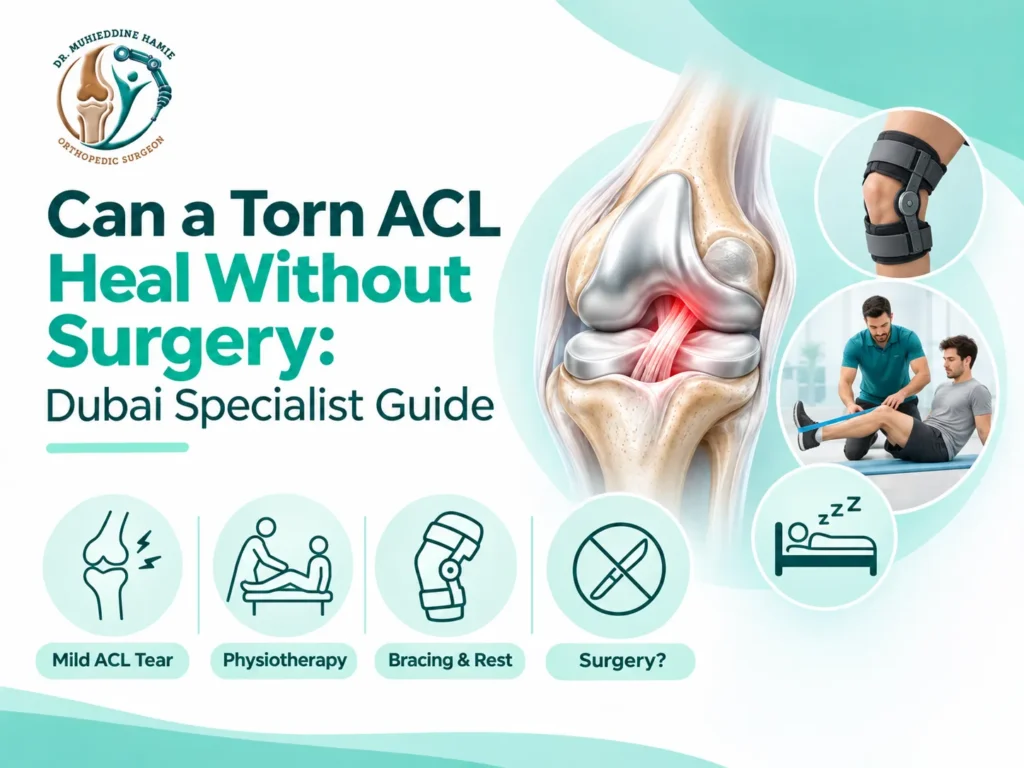
Related care: ACL Reconstruction and Sports Injuries. Dr. Hamie sees patients at Clemenceau Medical Center, Dubai Healthcare City.
Sustaining a major knee injury during sports or daily physical routines often raises immediate concerns regarding operative intervention. Understanding can a torn ACL heal without surgery is a critical clinical inquiry for many active individuals across Dubai.
Patients frequently hope that rest and bracing alone will reconnect the damaged ligament fibres. Evaluating whether can a torn ACL heal without surgery requires looking closely at knee biology, blood supply, and mechanical stability. While some partial tears stabilise with physical therapy, complete ruptures behave differently inside the joint fluid environment.
Anterior cruciate ligament trauma demands a clear, personalized assessment by an experienced orthopaedic specialist. Exploring whether can a torn ACL heal without surgery allows patients to weigh non-operative management against modern surgical techniques. At Dr. Muhieddine Hamie Clinic, treatment pathways prioritize long-term joint function and individual lifestyle requirements.
Biological Facts Regarding Can a Torn ACL Heal Without Surgery
The internal environment of the knee joint plays a major role when considering whether can a torn ACL heal without surgery. The anterior cruciate ligament resides within the synovial cavity, bathed constantly in synovial fluid. Unlike external knee structures like the medial collateral ligament, the ACL lacks a rich vascular envelope.
When an ACL ruptures completely, the synovial fluid washes away the initial fibrin clot necessary for biological bridging. This intra-articular environment prevents torn ligament ends from naturally knitting back together. Consequently, asking if can a torn ACL heal without surgery reveals that spontaneous biological reattachment of a completely torn ligament is extremely rare.
However, mechanical stability can sometimes be achieved even if the ligament fibres do not physically rejoin. Determining if a torn ACL heals without surgery depends heavily on whether surrounding muscular structures can dynamically compensate for the missing tissue.
Clinical Realities of ACL Tear Treatment Without Surgery
Modern orthopaedics recognises that non-operative care can be viable for a carefully selected group of patients. Pursuing ACL tear treatment without surgery focuses on building muscular compensation rather than achieving direct ligament regeneration.
Structured rehabilitation retrains the hamstrings, quadriceps, and gluteal muscles to act as secondary dynamic stabilisers. The hamstrings in particular work synergistically with the native ACL by pulling the tibia backward during movement. Through dedicated ACL tear treatment without surgery, patients can restore controlled linear mobility without joint buckling.
Nevertheless, dynamic muscular stabilization has distinct physical limitations. In patients with multi-ligament laxity, ACL tear treatment without surgery may fail to prevent rotational slippage during sudden pivot movements. A thorough orthopaedic assessment confirms whether non-operative rehabilitation provides adequate mechanical safety.
Core Components of Non Surgical ACL Treatment
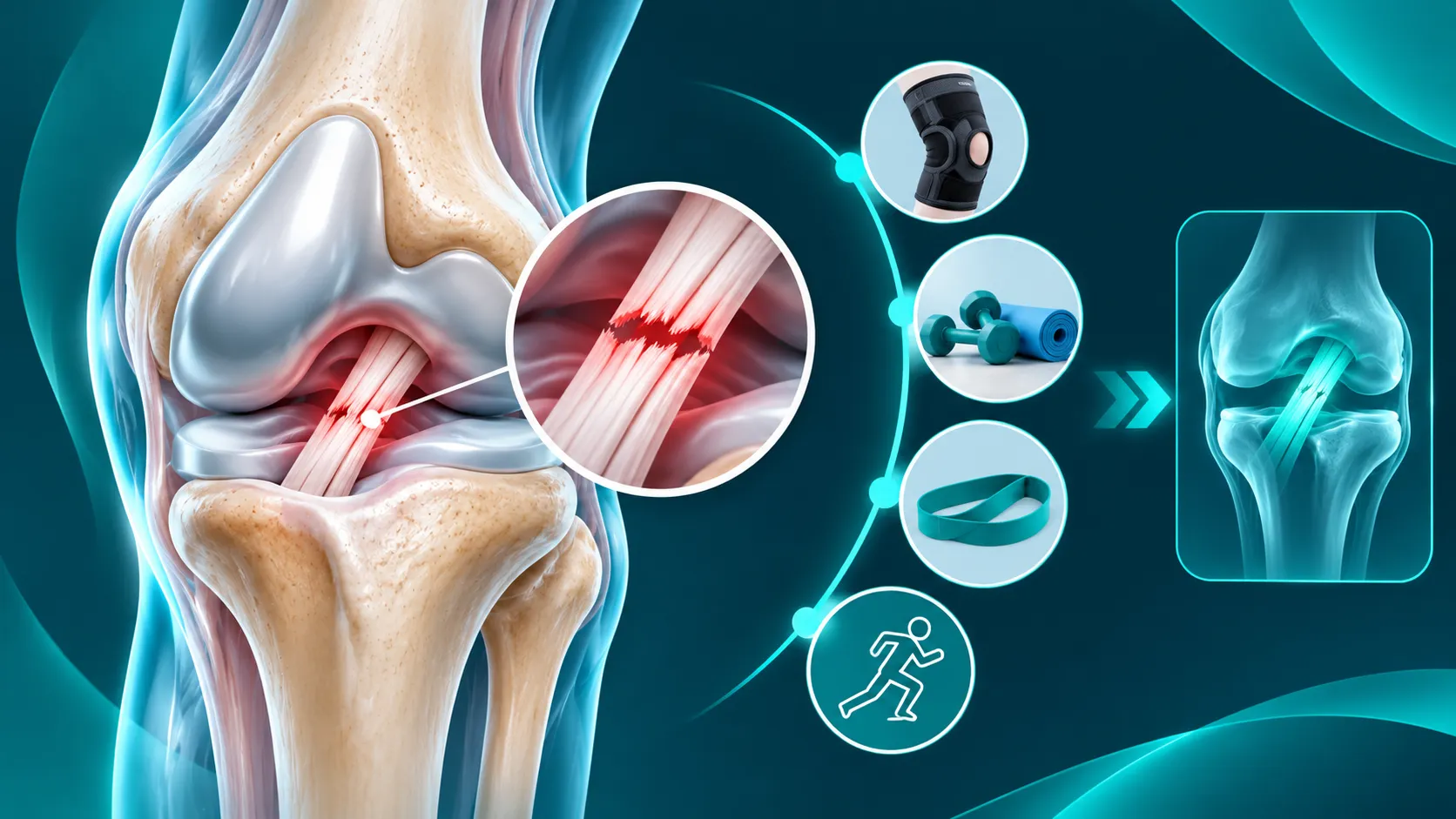
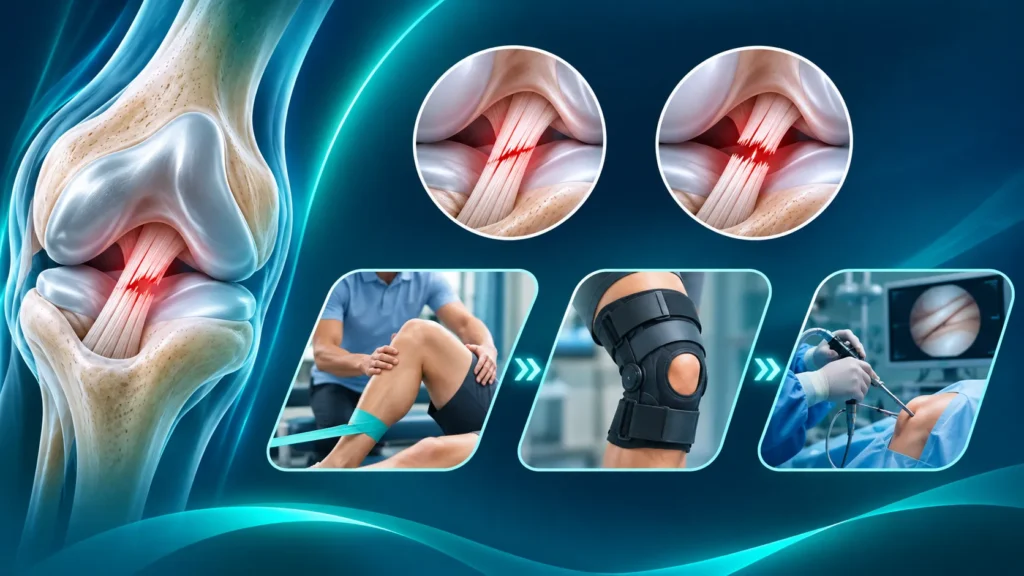
A successful conservative rehabilitation program requires a multi-stage approach guided by clinical milestones. Implementing structured non surgical ACL treatment involves progressive protocols tailored to reduce inflammation and restore functional control:
- Acute phase management: Initial care combines ice therapy, limb elevation, and temporary unloader bracing to eliminate joint effusion.
- Neuromuscular re-education: Targeted physical therapy restores proprioception, rapid muscle firing, and knee extension.
- Secondary stabilizer hypertrophy: Progressive resistance training strengthens the hamstrings, calves, and adductors to absorb joint loads.
- Functional motion retraining: Guided movement drills teach safe deceleration, linear jogging, and controlled landing mechanics.
Adhering consistently to non surgical ACL treatment enables many individuals to resume low-impact physical exercise. Structured protocols ensure that adjacent joint structures remain protected from compensatory strain.
Send your X-ray or MRI on WhatsApp and Dr. Hamie will review it before your visit.
Long-Term Biomechanical Effects of Living Without an ACL
Many active adults evaluate the feasibility of living without an ACL when considering conservative therapy. Managing daily routines without an intact cruciate ligament depends largely on whether an individual functions as a clinical "coper" or "non-coper."
Copers possess neuromuscular reflexes that stabilize the knee joint during unexpected foot strikes. For these individuals, living without an ACL permits normal office work, cycling, straight-line running, and gentle fitness training without episodes of giving way.
Conversely, non-copers experience persistent rotational instability, sudden knee collapse, and chronic effusion during simple daily turns. For these patients, living without an ACL poses significant secondary risks to long-term joint health. Each episode of giving way places shear stress on the articular cartilage and the menisci.
Comparing Operative and Non-Operative ACL Pathways
Selecting between surgical reconstruction and non-operative therapy requires balancing clinical diagnostic findings with personal functional goals. The comparative framework below illustrates standard parameters across both treatment modalities.
| Assessment Parameter | Non-Surgical Rehabilitation Pathway | Surgical Reconstruction Pathway |
|---|---|---|
| Primary Indication | Isolated partial tears; low physical demand | Full tears; active pivot sports; recurrent giving way |
| Biological Healing | Muscular compensation; no structural ligament rejoin | Anatomic tendon autograft replaces damaged ligament |
| Rotational Stability | Moderate linear control; reduced rotational hold | Restored high-grade rotational and multi-planar stability |
| Secondary Joint Risk | Higher risk of subsequent secondary meniscus tears | Protects meniscal fibrocartilage from shear stress |
| Rehabilitation Focus | Progressive hypertrophy and balance drills | Graft integration, progressive loading, return-to-sport testing |
Assessing whether a torn ACL can heal without surgery involves understanding these structural trade-offs. While conservative care avoids surgical intervention, operative reconstruction remains the gold standard for high-demand athletes.
Diagnostic Evaluation and Treatment Selection
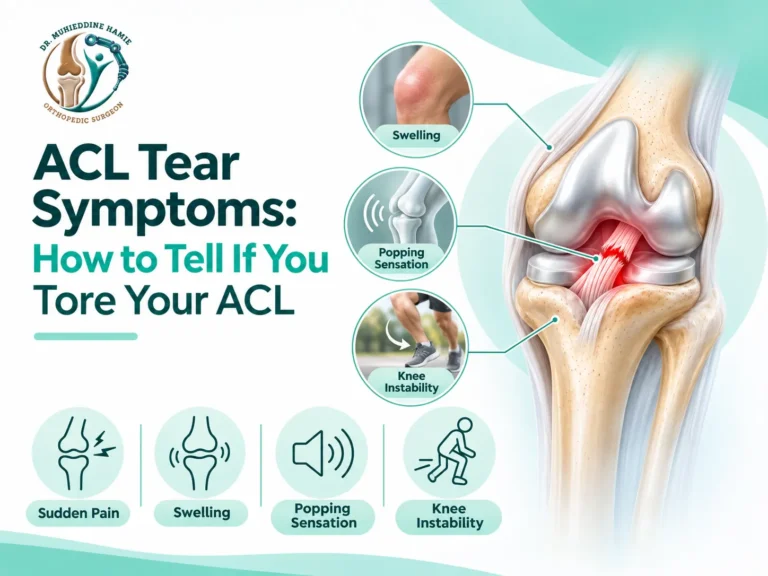
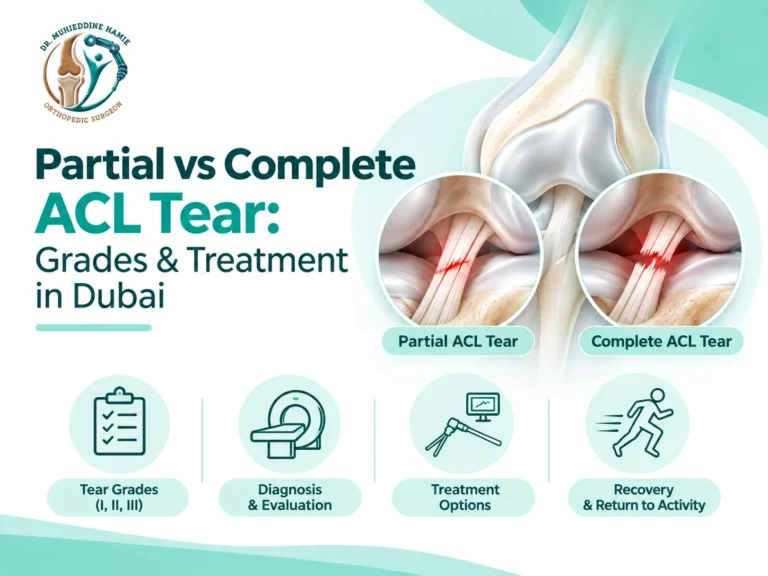
A correct clinical assessment begins with identifying classic ACL Tear Symptoms such as an audible pop, rapid hemarthrosis, and an unstable sensation. High-resolution magnetic resonance imaging is then conducted to determine whether the patient has sustained a Partial vs Complete ACL Tear.
Partial tears with preserved mechanical fibres have a significantly higher likelihood of successful non-operative management. In these cases, asking if a torn ACL heals without surgery often leads to positive functional outcomes through structured rehabilitation. Conversely, complete mid-substance ruptures rarely regain intrinsic mechanical tension without surgical intervention.
Your athletic aspirations and occupational demands heavily influence this clinical decision. Individuals participating in pivoting sports such as football, paddle, basketball, or skiing require reliable rotational stability that non-operative care rarely provides.
Advanced Surgical Solutions at Dr. Muhieddine Hamie Clinic
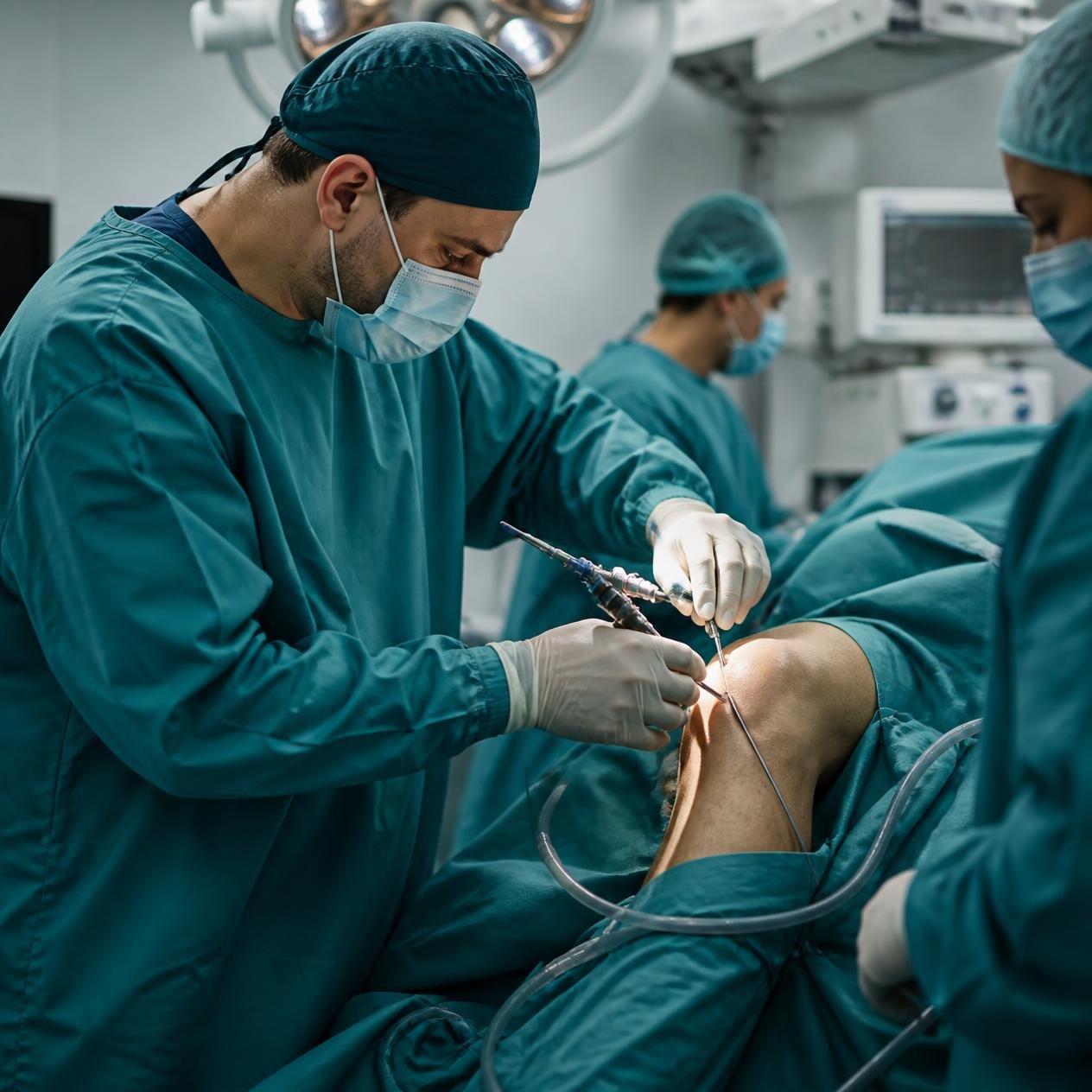
When non-operative therapies prove insufficient to stop recurrent instability, surgical reconstruction offers definitive joint restoration. Dr. Muhieddine Hamie utilizes advanced, minimally invasive keyhole techniques to reconstruct the torn ligament with sub-millimeter anatomical precision.
Patients seeking specialized ACL reconstruction in Dubai receive individualized graft planning using hamstring, patellar, or quadriceps tendon autografts. Keyhole surgery preserves surrounding healthy tissues, reduces post-operative discomfort, and accelerates functional rehabilitation.
Addressing a torn ligament early protects the meniscus and prevents premature joint degeneration. Under the clinical care of Dr. Muhieddine Hamie, operative interventions are paired with modern rehabilitation protocols to support a safe return to high-level athletics.
Reclaim Your Knee Stability and Active Lifestyle
Experiencing an acute knee injury should not force you into prolonged physical inactivity or uncertainty. Evaluating whether a torn ACL heal without surgery starts with an expert orthopaedic consultation tailored to your specific biomechanics.
Dr. Muhieddine Hamie offers advanced diagnostic evaluations, conservative rehabilitation planning, and state-of-the-art ligament reconstruction at his Dubai clinic. Take decisive action to protect your joint health and resume your active lifestyle with confidence.
Schedule Your Comprehensive Orthopaedic Consultation
Connect directly with the specialized clinical team at Dr. Muhieddine Hamie Clinic in Dubai to evaluate your knee injury and determine the ideal treatment pathway. Book your consultation today through our online booking system or contact our Al Jaddaf clinic directly.
Conclusion
Navigating ACL injuries requires balancing biological facts with your personal lifestyle and physical demands. While spontaneous biological healing of a fully ruptured ligament does not occur inside the joint fluid, non-operative management can provide functional stability for individuals with low physical demands.
However, active individuals who engage in cutting and pivoting sports typically require anatomical reconstruction to prevent recurrent giving way and protect meniscal cartilage. Early clinical evaluation ensures that joint instability is addressed before irreversible cartilage wear develops.
Partnering with an experienced orthopaedic surgeon ensures your knee receives evidence-based, individualized care. Restoring joint stability allows you to protect long-term joint health and enjoy Dubai's vibrant, active community.
Frequently Asked Questions:
Can a torn ACL heal without surgery completely?
A completely torn ACL cannot biologically knit back together because synovial fluid disrupts clot formation. However, some partial tears and low-demand patients achieve functional knee stability through non-surgical physical therapy.
Who is a good candidate for ACL tear treatment without surgery?
Non-surgical treatment suits individuals with partial tears, no knee instability, and lower physical demands who do not participate in pivoting sports like football or padel tennis, relying on muscle strengthening instead.
What are the main risks of living without an ACL?
Living with an untreated torn ACL increases the risk of recurrent knee giving way, secondary meniscal tears, and early-onset osteoarthritis caused by chronic joint instability and abnormal biomechanical wear.
How does non surgical ACL treatment stabilize the knee joint?
Non-surgical management strengthens secondary muscular stabilizers, especially the hamstrings, gluteals, and quadriceps, and trains neuromuscular reflexes to dynamically control tibial translation and joint stability.
When is surgery necessary for a torn ACL?
Surgery is strongly advised for active athletes, individuals experiencing persistent joint instability or giving way, and patients with concurrent meniscal or cartilage injuries requiring anatomical restoration.
Can physical therapy alone prevent knee arthritis after an ACL tear?
While physical therapy builds dynamic muscle strength, it cannot eliminate rotational joint laxity in complete ruptures. Persistent micro-instability can still contribute to long-term articular cartilage wear over time.
Consultant Orthopedic Surgeon at Clemenceau Medical Center, Dubai. He performs robotic-assisted, total, partial and revision knee replacement and treats sports injuries of the knee.
Meet Dr. Hamie