 5.0 on Google, 19 reviews
Related care: ACL Reconstruction and Sports Injuries. Dr. Hamie sees patients at Clemenceau Medical Center, Dubai Healthcare City.
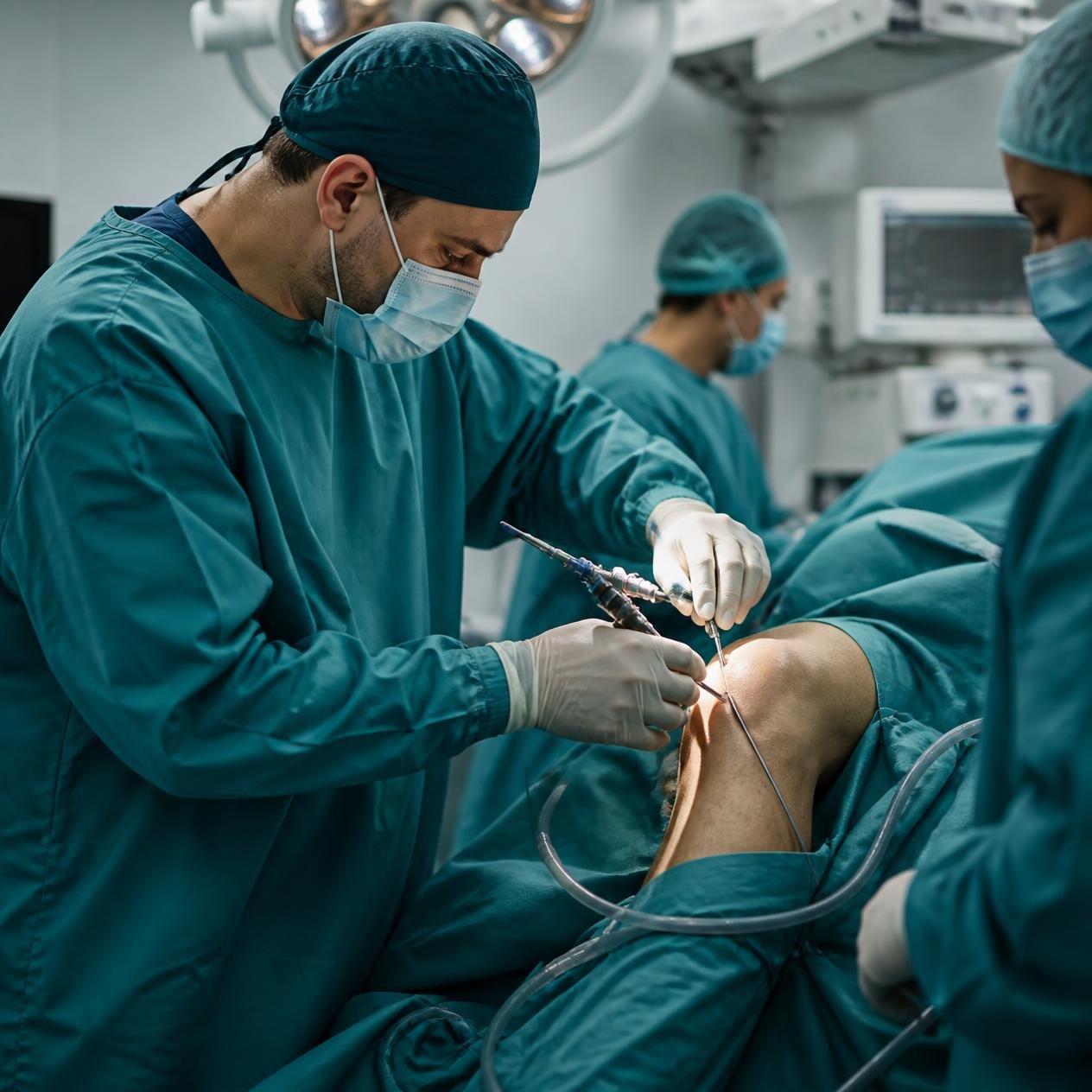
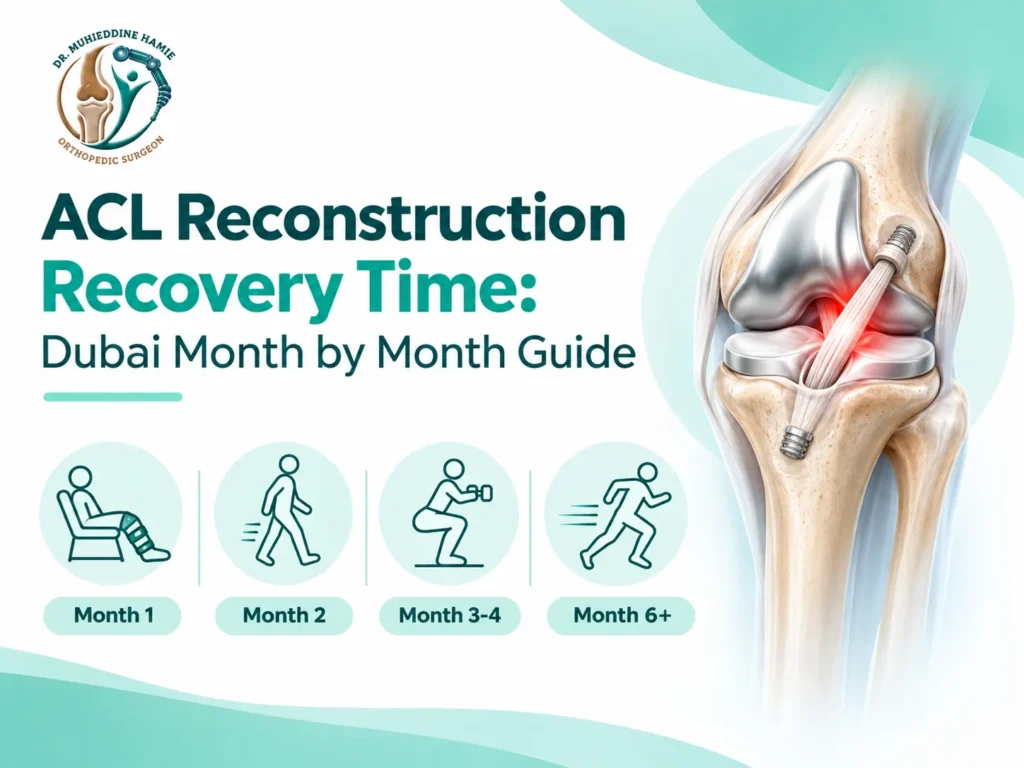
Undergoing anterior cruciate ligament surgery represents a pivotal step toward restoring rotational knee stability and returning to active athletic pursuits. Understanding your projected ACL reconstruction recovery time provides the clarity required to navigate each physiological healing milestone with complete confidence.
Athletes and active professionals across Dubai often wonder how rapidly they can resume high-impact sporting routines. While advanced operative techniques protect periarticular tissues, tissue healing dictates your ACL reconstruction recovery time. Adhering to biological maturation stages ensures that your reconstructed graft transforms securely into a robust, durable ligament.
Rehabilitation is never an arbitrary waiting game; it is a structured, criteria-driven progression. Following your ACL reconstruction recovery time month by month enables you to track functional gains while avoiding premature joint overload. Under the clinical guidance of Dr. Muhieddine Hamie, personalized rehabilitation protocols restore muscular symmetry and athletic performance safely.
Factors Influencing Your ACL Reconstruction Recovery Time
Multiple anatomical and surgical parameters determine your overall ACL reconstruction recovery time:
- Pre-operative condition: Quadriceps strength, baseline joint flexibility, and early prehabilitation shorten post-operative adaptation and protect functional milestones.
- Surgical precision: Minimally invasive arthroscopic methods and accurate anatomical graft placement directly influence your ACL reconstruction recovery time by minimizing tissue trauma.
- Concurrent joint injuries: Addressing associated meniscal or cartilage lesions alongside the ligament repair affects early weight-bearing and movement protocols.
- Commitment to rehabilitation: Diligent physical therapy guides biological ligamentization, progressive resistance training, and neuromuscular control to prevent compensatory gait habits.
Balancing these critical factors under expert clinical guidance ensures a smoother, safer ACL reconstruction recovery time tailored to your long-term mobility goals.
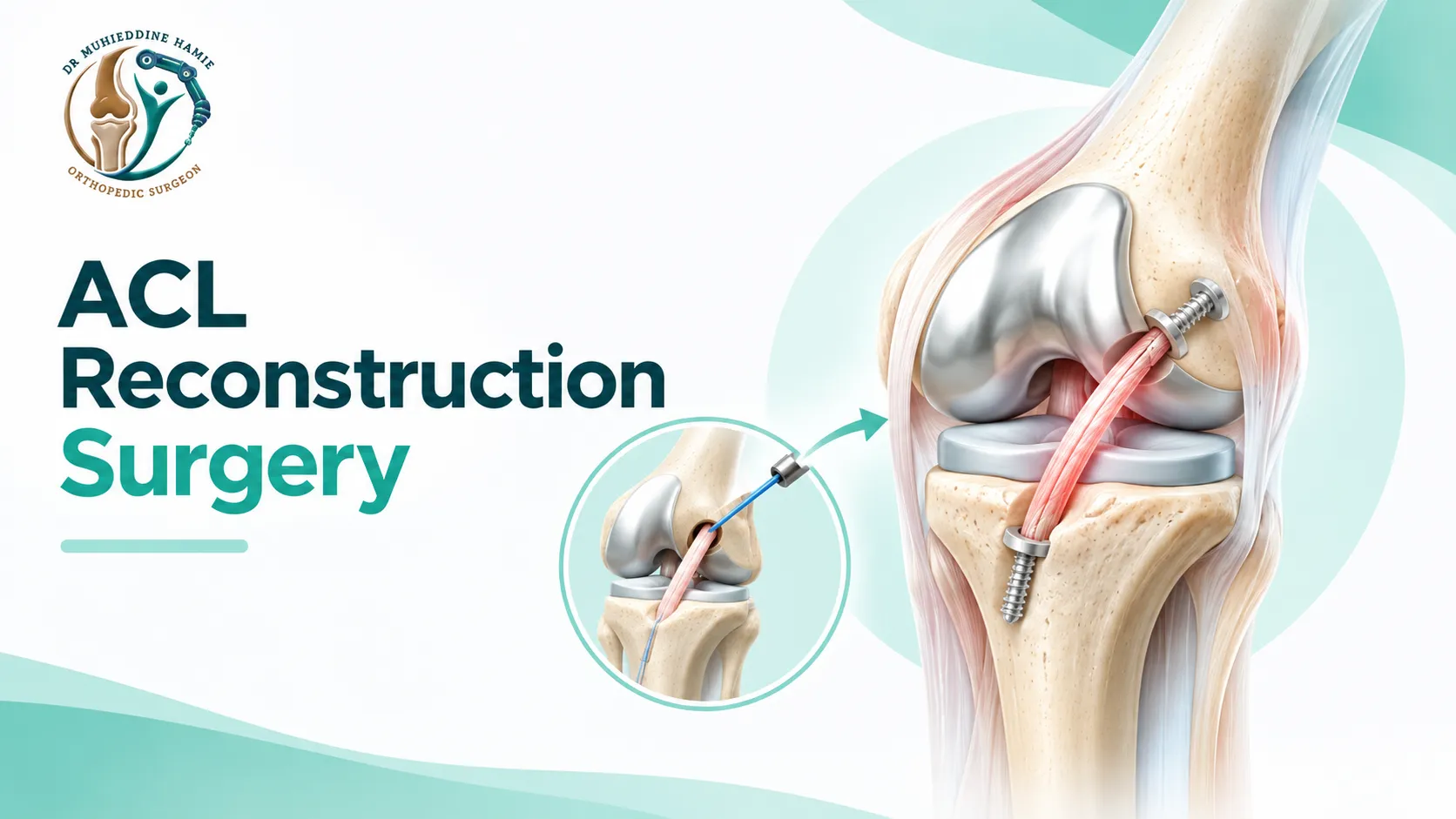
Clinical Overview of the ACL Surgery Recovery Timeline
Navigating an evidence-based ACL surgery recovery timeline requires shifting focus from simple calendar days to objective physical criteria. Every patient progresses at an individualized rate based on muscle activation, effusion control, and functional stability.
Biological graft incorporation transitions through stages of avascular necrosis, revascularization, cellular proliferation, and progressive structural remodeling. Respecting this physiological schedule throughout your ACL surgery recovery timeline prevents catastrophic graft stretching during vulnerable healing phases. Objective testing confirms limb symmetry before introducing higher physical demands.
Tracking your ACL surgery recovery timeline with regular clinical check-ups guarantees that functional milestones are achieved systematically. Dr. Muhieddine Hamie reviews biomechanical progress at every transition to ensure complete musculoskeletal safety.
Detailed Breakdown of the Essential ACL Rehab Phases
Structured rehabilitation divides the recovery journey into progressive functional stages. Adhering to these distinct ACL rehab phases systematically rebuilds joint mobility, muscular hypertrophy, dynamic proprioception, and sport-specific agility.
Month 1: Acute Protection, Full Extension, and Early Ambulation
The opening month focuses on eliminating intra-articular effusion, achieving full terminal knee extension, and reactivating inhibited quadriceps musculature. Many recovering athletes urgently ask when can I walk after ACL surgery following hospital discharge. In modern post-operative protocols, assisted weight-bearing with crutches and a hinged brace begins immediately on day one.
Patients steadily transition off mobility aids as quadriceps control improves and voluntary straight leg raises become comfortable. Resolving queries regarding when can I walk after ACL surgery without a limp typically takes between two and three weeks for isolated reconstructions. If a concurrent meniscus repair was performed, weight-bearing may be protected for up to six weeks to safeguard healing sutures.
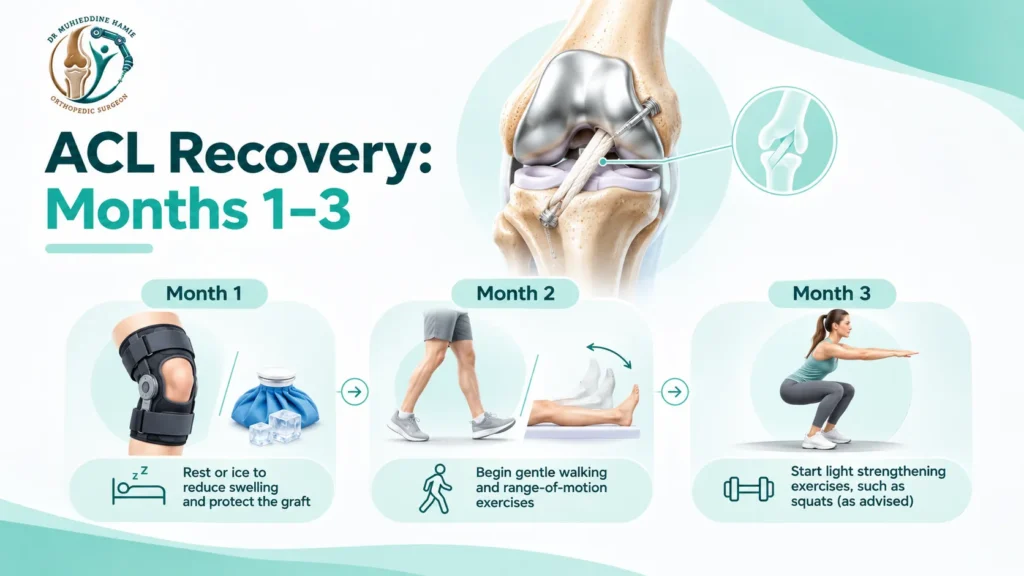
Physical therapy during the initial month emphasizes active-assisted range of motion, patellar mobilizations, and gentle stationary cycling without resistance. Achieving symmetrical knee extension identical to the uninjured limb remains paramount during early ACL rehab phases. Restoring full extension early prevents cyclops lesions and avoids chronic anterior knee tightness.
Months 2 to 3: Muscular Hypertrophy and Neuromuscular Re-Education
During the second and third months, physical therapy moves from basic joint protection to targeted strength building and neuromuscular control:
- Independent mobility: Asking when can I walk after ACL surgery becomes a distant memory as patients walk unassisted with a normal gait.
- Resistance exercises: Adding leg presses, squats, step-downs, and Romanian deadlifts to rebuild symmetrical leg strength.
- Proprioceptive conditioning: Using balance boards and perturbation platforms to retrain dynamic joint reflexes and stabilizer muscles.
- Low-impact cardio: Maintaining endurance with cross-training on elliptical machines, outdoor walking, and indoor rowing.
These intermediate ACL rehab phases build the physical strength and stability required before progressing to running and impact drills.
Months 4 to 6: Impact Introduction, Linear Jogging, and Dynamic Control
The fourth through sixth months mark an exciting transition where low-impact strengthening evolves into dynamic impact loading. Before clearing a patient for outdoor linear running, strict clinical criteria must be satisfied, including zero joint effusion and at least 70% quadriceps limb symmetry.
Rehabilitation integrates treadmill jogging intervals, forward plyometric hops, and progressive deceleration mechanics. Controlled deceleration drills teach athletes how to dissipate ground reaction forces through the hips and knees safely. Progressing through these dynamic ACL rehab phases rebuilds physical confidence and neural coordination.
During this window, the healing graft is undergoing cellular remodeling and gradual collagen maturation. While subjective confidence often surges, the graft remains biologically vulnerable to excessive shear stress. Avoiding premature pivoting drills protects your ACL reconstruction recovery time from accidental setbacks or secondary inflammatory episodes.
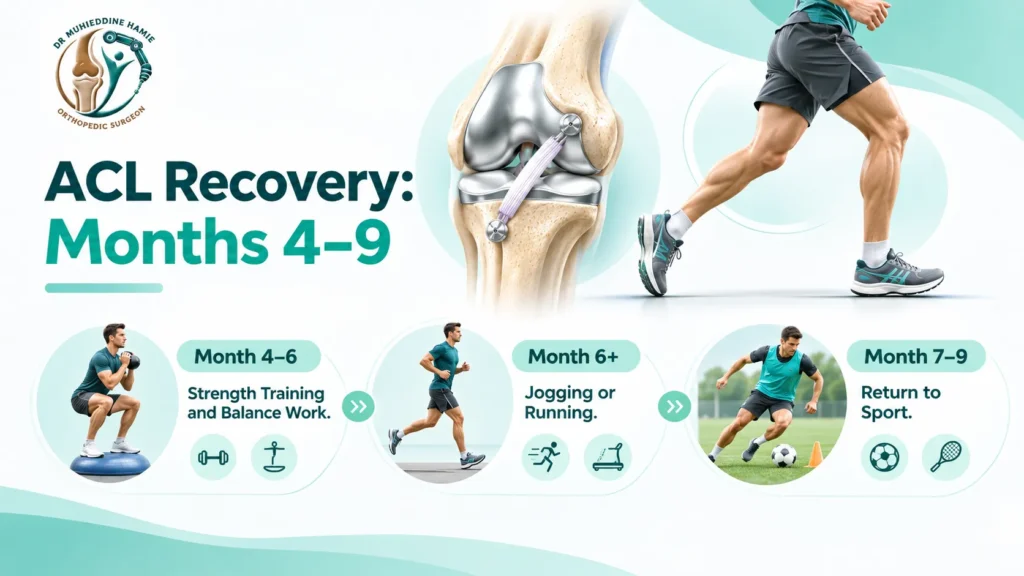
Months 7 to 9: Multi-Planar Agility, Cutting Drills, and Functional Strength
Between months seven and nine, rehabilitation shifts toward multi-directional agility drills and sport-specific motor patterns:
- Agility training: Integrating lateral shuffles, reactive cone drills, and rapid change-of-direction tasks.
- Strength parity: Reaching 85% to 90% limb symmetry on dynamometer assessments and single-leg hop test batteries.
- Psychological readiness: Overcoming kinesiophobia through graded athletic drills to build movement confidence.
These advanced ACL rehab phases ensure both physical power and neuromuscular stability before advancing to unrestricted sports competition.
Months 10 to 12 and Beyond: Unrestricted Athletic Competition
The final stage of the ACL surgery recovery timeline marks clearance for unrestricted sports participation. Returning safely to competitive pivot sports requires meeting objective clinical criteria rather than just watching the calendar:
- Strength symmetry: Achieving a 90% to 95% limb symmetry index across strength and hop testing batteries.
- Movement quality: Demonstrating safe jumping and landing biomechanics without knee valgus collapse.
- Clinical joint stability: Verifying a firm mechanical endpoint and total joint quietness with Dr. Muhieddine Hamie.
Respecting this complete ACL reconstruction recovery time allows the graft to mature biologically, significantly lowering secondary reinjury risks and protecting your athletic career.
Send your X-ray or MRI on WhatsApp and Dr. Hamie will review it before your visit.
Month-by-Month Functional Benchmarks Across ACL Rehab Phases
Tracking objective functional benchmarks ensures steady progression while minimizing reinjury risks. The table below outlines standard clinical criteria across the entire rehabilitation journey.
| Post-Operative Window | Core Clinical Goals | Permitted Physical Activities | Objective Milestone Criteria |
|---|---|---|---|
| Month 1 (Weeks 1–4) | Swelling control, full extension, quad reactivation | Crutch-assisted walking, gentle cycling, straight leg raises | Full passive extension; unassisted walking achieved |
| Months 2–3 (Weeks 5–12) | Muscle hypertrophy, normalized gait, balance drills | Leg presses, step-downs, elliptical trainer, core stability | >120° flexion; symmetrical uninhibited gait pattern |
| Months 4–6 (Weeks 13–24) | Impact tolerance, deceleration control, linear running | Treadmill jogging, double-leg jumping, heavy resistance | >70% quad symmetry; zero reactive joint effusion |
| Months 7–9 (Weeks 25–36) | Multi-planar agility, cutting drills, reactive coordination | Lateral shuffling, change-of-direction, plyometrics | >85% limb symmetry index; passing hop test battery |
| Months 10–12+ (Weeks 37+) | Full athletic return, match fitness, peak power output | Unrestricted pivot sports, competitive training, matches | >90–95% strength symmetry; high psychological readiness |
Adhering to these evidence-based ACL rehab phases ensures that physical loading corresponds directly with tissue maturation. Objective testing eliminates guesswork from the return-to-sport decision.
Essential Factors Determining When Can I Walk After ACL Surgery
Patients commonly wonder when can I walk after ACL surgery without experiencing pain or instability:
- Quadriceps activation: Walking independently requires sufficient quadriceps strength to perform a straight leg raise without extension lag.
- Absence of a limp: Mobilizing without crutches is only permitted once an individual demonstrates a symmetrical, heel-to-toe gait pattern.
- Effusion management: Severe joint swelling restricts normal extension mechanics, making brief crutch use necessary until inflammation subsides.
- Associated tissue repairs: Patients with concomitant meniscal repairs or chondral grafting require protected weight-bearing for four to six weeks.
Discussing these parameters with your orthopaedic surgeon ensures that transitioning away from crutches occurs safely without compromising surgical repair sites.
Anatomical Considerations and Modern Surgical Excellence
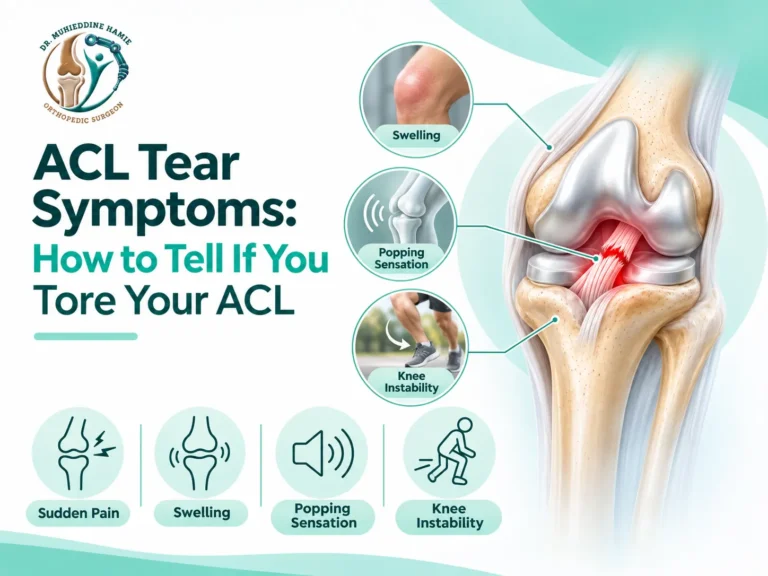
Achieving an optimal ACL reconstruction recovery time begins with an accurate assessment of early ACL tear symptoms such as an audible pop, severe hemarthrosis, and rotational knee instability. Prompt evaluation ensures timely intervention before secondary meniscal or cartilage damage occurs.
Surgical success also depends heavily on selecting appropriate ACL Graft Options tailored to your age, body composition, and sporting demands. Bone-patellar tendon-bone autografts, hamstring tendon autografts, and quadriceps tendon autografts each offer unique structural profiles that influence early healing rates.
Patients who previously underwent surgery and experience renewed giving way must be evaluated for Failed ACL Reconstruction Symptoms including graft stretching, recurrent effusion, or tunnel malposition. Revision procedures require meticulous anatomical planning to restore primary stability.
For residents across the UAE, selecting specialised ACL knee surgery in Dubai provides access to world-class arthroscopic precision. Dr. Muhieddine Hamie utilizes tissue-sparing, minimally invasive techniques that optimize healing environments and support accelerated rehabilitation trajectories.
Reclaim Your Athletic Power and Joint Stability Today
Recovering from an anterior cruciate ligament tear demands clinical precision, disciplined rehabilitation, and dedicated medical guidance. Knowing your projected ACL reconstruction recovery time allows you to navigate the rehabilitation pathway with complete peace of mind.
Dr. Muhieddine Hamie combines international orthopaedic fellowship expertise with advanced operative methods at his Dubai clinic. Take decisive steps toward eliminating rotational instability, safeguarding cartilage health, and returning to the sports you love.
Schedule Your Comprehensive Orthopaedic Consultation
Connect directly with the surgical and rehabilitation team at Dr. Muhieddine Hamie Clinic in Dubai to evaluate your knee injury and design your individualized recovery program. Book your consultation today through our online booking system or contact our Al Jaddaf clinic directly.
Restoring Knee Stability and Long-Term Joint Health
Navigating your ACL surgery recovery timeline requires disciplined dedication to phased exercise progressions, objective strength testing, and structured tissue protection. While early milestones focus on walking autonomy and swelling reduction, true athletic resilience develops through systematic strength and agility training over nine to twelve months.
Respecting biological tissue maturation prevents premature athletic clearance and dramatically reduces secondary tear rates. Guided rehabilitation transforms simple daily walking strides back into dynamic athletic cutting power.
Partnering with an experienced orthopaedic surgeon ensures that your surgical and rehabilitation journey delivers lasting joint protection. Reclaiming robust, pain-free joint stability empowers you to pursue your athletic and active lifestyle across Dubai with complete confidence.
Frequently Asked Questions:
What is the average ACL reconstruction recovery time for athletes?
Full return to competitive pivot sports generally requires 9 to 12 months. This timeframe ensures biological graft maturation, symmetrical quadriceps strength, and successful completion of dynamic agility and hop testing batteries.
Exactly when can I walk after ACL surgery without crutches?
Most patients with isolated reconstructions walk without crutches within 2 to 3 weeks, provided they have achieved full passive knee extension, good quadriceps activation, and a normal, uninhibited gait pattern.
How do surgeons structure the ACL surgery recovery timeline?
Surgeons structure recovery into criteria-based phases: acute joint protection (Month 1), muscle strengthening (Months 2–3), straight-line jogging (Months 4–6), agility drills (Months 7–9), and full sport clearance (Months 10–12+).
What occurs during the primary ACL rehab phases in physical therapy?
Therapy progresses through swelling reduction, range-of-motion restoration, closed-chain muscular hypertrophy, dynamic neuromuscular training, plyometric deceleration drills, and sport-specific agility conditioning.
Can I return to running at 3 months after ACL surgery?
Running is typically introduced between 4 and 5 months post-surgery. Patients must demonstrate zero swelling, full joint extension, and at least 70% quadriceps limb symmetry before running safely.
Why is returning to sports before 9 months post-surgery discouraged?
Returning before 9 months significantly increases graft reinjury risk. Research shows that biological graft remodeling and neuromuscular reflex symmetry require at least 9 to 12 months to mature fully.

Consultant Orthopedic Surgeon at Clemenceau Medical Center, Dubai. He performs robotic-assisted, total, partial and revision knee replacement and treats sports injuries of the knee.
Meet Dr. Hamie