
UNDERSTANDING THE PROCEDURE
What is Knee Replacement Surgery?
Knee replacement surgery, also known as knee arthroplasty, is a highly effective orthopedic procedure performed to relieve chronic knee pain and restore function in patients with severe joint damage. It involves replacing worn or damaged portions of the knee joint with advanced prosthetic components designed to improve movement, stability, and overall quality of life.
The procedure is typically recommended when conservative treatments such as medications, physiotherapy, lifestyle modifications, or injections no longer provide adequate relief. Depending on the extent of joint damage, Dr. Muhieddine Hamie may recommend either a Total Knee Replacement (TKR) or a Partial Knee Replacement (PKR) to achieve the best possible outcome.
Total Knee Replacement (TKR)
The entire knee joint is replaced with artificial components when arthritis or damage affects multiple compartments of the knee.
Partial Knee Replacement (PKR)
Only the damaged portion of the knee is replaced, preserving healthy bone, cartilage, and ligaments whenever possible.
PROCEDURE COMPARISON
Total vs Partial Knee Replacement
Not every patient requires the same type of knee replacement. Depending on the extent of joint damage, age, activity level, and overall knee condition, Dr. Muhieddine Hamie may recommend either a Total Knee Replacement (TKR) or a Partial Knee Replacement (PKR) to achieve the best long-term outcome.
Total Knee Replacement (TKR)
Total Knee Replacement involves replacing all damaged surfaces of the knee joint with advanced prosthetic components. It is commonly recommended when arthritis or degeneration affects multiple compartments of the knee.
Best For
- Advanced osteoarthritis
- Severe knee pain
- Multi-damaged compartments
- Significant loss of mobility
Benefits
- Excellent long-term pain relief
- Improved joint stability
- Better overall mobility
- High long-term success rates
Recovery
Most patients begin walking with assistance within a day after surgery and gradually return to normal activities through a structured rehabilitation program.
Partial Knee Replacement (PKR)
Partial Knee Replacement replaces only the damaged compartment of the knee while preserving healthy bone, cartilage, and ligaments. It is suitable for patients with localized arthritis affecting only one part of the joint.
Best For
- Early or localized arthritis
- Healthy surrounding cartilage
- Preserved knee ligaments
- With limited joint damage
Benefits
- Smaller surgical incision
- Faster recovery
- More natural knee movement
- Preservation of healthy bone
Recovery
Patients often experience a quicker recovery, reduced post-operative discomfort, and an earlier return to daily activities compared to total knee replacement.
Which Procedure is Right for You?
The choice between Total and Partial Knee Replacement depends on the extent of joint damage, symptoms, activity level, and overall knee health. Dr. Muhieddine Hamie performs a comprehensive evaluation to recommend the most appropriate treatment for each patient.
RECOGNIZE THE WARNING SIGNS
Signs You May Need Knee Replacement Surgery
Knee pain that persists despite medication, physiotherapy, or other conservative treatments may indicate advanced joint damage. If these symptoms begin to affect your daily activities and quality of life, it may be time to consult an orthopedic specialist to determine whether knee replacement surgery is the right solution.
Persistent Knee Pain
Ongoing pain during walking, standing, or everyday activities that does not improve with rest or medication.
Difficulty Walking or Climbing Stairs
Simple movements such as walking, climbing stairs, or standing for extended periods become increasingly difficult.
Swelling & Joint Stiffness
Frequent swelling, stiffness, and inflammation that restrict normal knee movement and flexibility.
Reduced Range of Motion
Difficulty bending or straightening the knee, making routine activities uncomfortable or impossible.
Pain at Rest or During Sleep
Persistent pain that continues even while resting or sleeping, often indicating advanced joint degeneration.
Conservative Treatments No Longer Help
Medications, injections, physiotherapy, and lifestyle changes no longer provide lasting relief from pain or improve mobility.
CAUSES, RISK FACTORS & DIAGNOSIS
Understanding the Underlying Cause of Knee Pain
Common Causes & Risk Factors
Osteoarthritis
The most common cause of knee replacement, resulting from gradual wear and tear of the joint cartilage.
Age & Natural Joint Degeneration
Advancing age increases the likelihood of cartilage deterioration and reduced joint function.
Previous Knee Injuries
Past ligament injuries, fractures, or meniscus tears can lead to long-term joint degeneration.
Excess Body Weight
Additional body weight places increased stress on the knee joints, accelerating cartilage damage.
Inflammatory Arthritis
Conditions such as rheumatoid arthritis may cause progressive damage to the knee joint.
Family History
A genetic predisposition can increase the risk of developing osteoarthritis and other joint disorders.
How is Knee Replacement Evaluated?
1
Medical History
Understanding symptoms, pain levels, activity limitations, and previous treatments.
2
Physical Examination
Assessing joint alignment, stability, swelling, range of motion, and walking pattern.
3
Digital X-rays
Evaluating cartilage loss, bone alignment, and the severity of joint degeneration.
4
MRI (When Required)
Provides detailed images of cartilage, ligaments, menisci, and surrounding soft tissues.
5
Personalized Treatment Planning
Based on examination findings and imaging results, Dr. Muhieddine Hamie recommends the most suitable treatment approach.
TREATMENT OPTIONS
Personalized Care for Every Stage of Knee Pain

Non-Surgical Treatment
Dr. Muhieddine Hamie believes in exhausting appropriate conservative treatment options before recommending surgery. For many patients, a personalized combination of medication, physiotherapy, lifestyle modifications, and injection therapy can effectively reduce pain, improve mobility, and delay the need for surgical intervention.
Available Treatments
Medication
Pain relief and inflammation management.
Physiotherapy
Improve strength, flexibility and stability.
Injection Therapy
Temporary relief for selected patients.
Lifestyle Modification
Weight management and activity adjustment.
- Best suited for patients with early to moderate knee degeneration.
Surgical Treatment
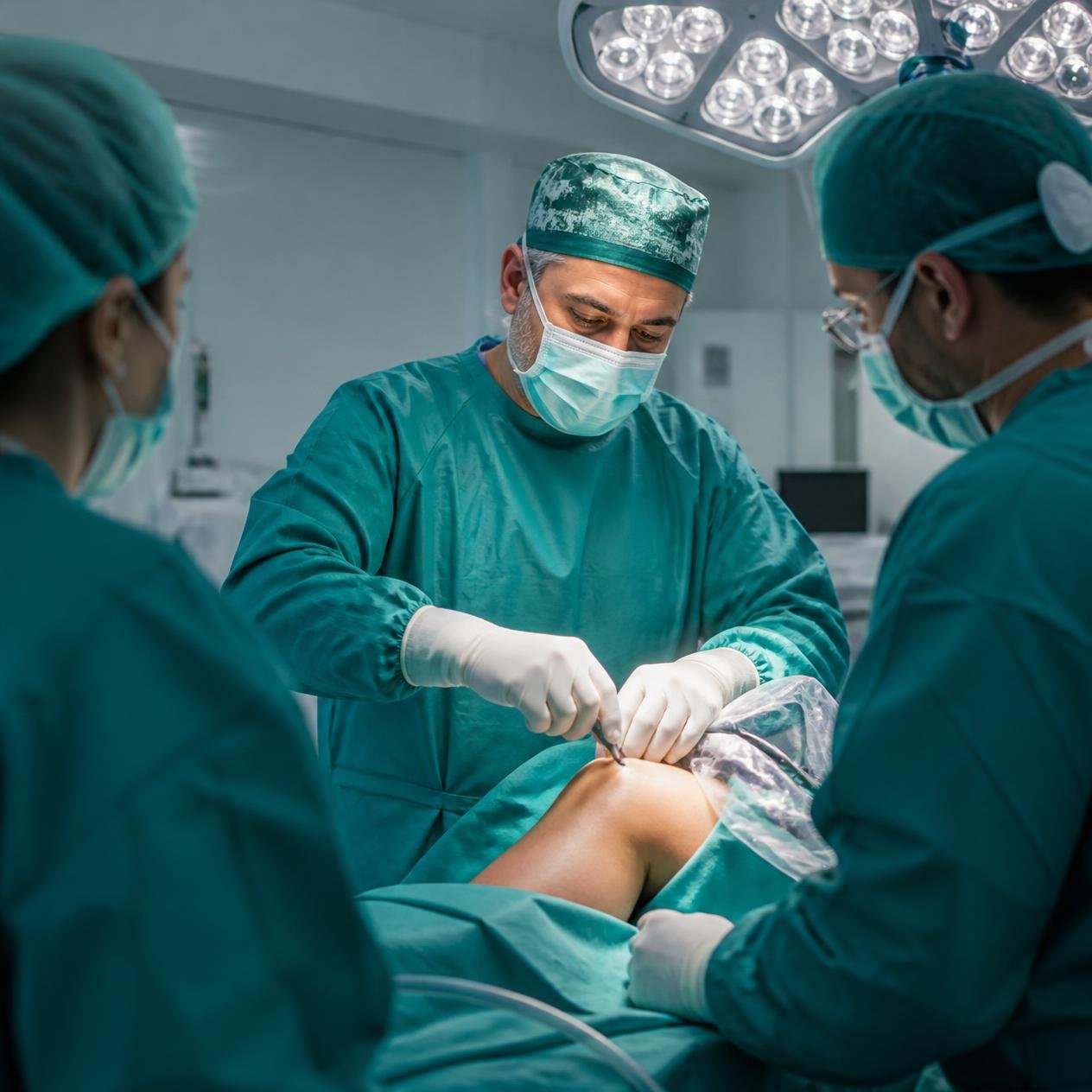
When conservative treatment no longer provides lasting relief and knee pain significantly affects daily life, surgical treatment may offer the best long-term solution. Dr. Muhieddine Hamie performs advanced knee replacement procedures tailored to each patient’s condition, helping restore mobility, relieve pain, and improve overall quality of life.
Available Treatments
Total Knee Replacement
Complete joint replacement for advanced arthritis.
Robotic-Assisted Surgery
Enhanced precision for selected patients.
Partial Knee Replacement
Preserves healthy bone and ligaments.
Revision Knee Replacement
Replacement of failed or worn implants.
- Recommended when non-surgical treatment no longer restores comfortable daily function.
WHAT TO EXPECT
Your Knee Replacement Journey
1
Consultation
Detailed evaluation of your knee condition, symptoms, imaging, and treatment history.
2
Preparation
Pre-operative assessment and personalized planning to prepare you safely for surgery.
3
Surgery
Total or partial knee replacement is performed according to the extent of joint damage.
4
Rehabilitation
Early movement and guided physiotherapy help restore strength, flexibility, and mobility.
5
Recovery
Gradual return to everyday activities with ongoing follow-up and rehabilitation.
Your treatment begins with a comprehensive consultation and ends with a structured recovery program designed to help you return to an active life.
BENEFITS OF KNEE REPLACEMENT
Helping You Move Better, Live Better
Following successful surgery and rehabilitation, knee replacement can significantly improve comfort, mobility, and overall quality of life. While every patient’s recovery is unique, the goal is to help you return to everyday activities with greater confidence and less pain.
Lasting Pain Relief
Reduce chronic knee pain caused by arthritis and joint degeneration, making everyday activities more comfortable.
Improved Mobility
Walk, climb stairs, and move more freely with better joint function and stability.
Better Quality of Life
Regain independence and return to work, travel, hobbies, and other activities you enjoy.
Long-Term Joint Function
Modern knee replacement implants are designed for durability, helping patients maintain an active lifestyle for years to come.
WHY CHOOSE DR. MUHIEDDINE HAMIE
Expertise You Can Trust. Care You Can Rely On.
Choosing the right orthopedic surgeon is an important step toward a successful recovery. Dr. Muhieddine Hamie combines advanced orthopedic expertise, personalized treatment planning, and a patient-first approach to deliver exceptional care for every individual. From your first consultation through surgery and rehabilitation, every stage of your journey is guided with precision, compassion, and a commitment to achieving the best possible outcome.
- Personalized Treatment Plans
- Advanced Knee Replacement Expertise
- Patient-Centered Care
- Comprehensive Rehabilitation Support
Committed to helping patients move with confidence, recover with comfort, and return to the activities they enjoy most.

Frequently Asked Questions
Find answers to common questions about Knee Replacement Surgery (Total & Partial) by Dr. Muhieddine Hamie in Dubai.
Who is a suitable candidate for knee replacement surgery?
Knee replacement surgery is generally recommended for patients with persistent knee pain, advanced arthritis, reduced mobility, or joint damage that no longer responds to medications, physiotherapy, or other conservative treatments. A comprehensive evaluation helps determine whether surgery is the most appropriate option.
What is the difference between Total and Partial Knee Replacement?
A Total Knee Replacement replaces the entire knee joint, while a Partial Knee Replacement replaces only the damaged compartment, preserving healthy bone and ligaments. The most suitable procedure depends on the extent of joint damage and your individual condition.
How long does knee replacement surgery take?
The procedure typically takes 60 to 120 minutes, depending on the complexity of the surgery and the patient’s condition.
How long will I stay in the hospital?
Most patients stay in the hospital for 2 to 4 days, although this may vary based on individual recovery and overall health.
When can I start walking after surgery?
Early movement is encouraged. Many patients begin standing and walking with assistance within 24 hours after surgery as part of their recovery program.
How long does it take to recover from knee replacement surgery?
Recovery varies for each patient. Most people resume many daily activities within 6 to 12 weeks, while continued rehabilitation and strength improvement may continue for several months.
Will I need physiotherapy after surgery?
Yes. Physiotherapy is an essential part of recovery, helping restore strength, flexibility, balance, and knee function while supporting a safe return to everyday activities.
How long do knee replacement implants last?
Modern knee replacement implants are designed to be durable and can last 15–20 years or longer in many patients, depending on factors such as activity level, overall health, and implant care.
Are there risks associated with knee replacement surgery?
As with any surgical procedure, there are potential risks, including infection, blood clots, stiffness, or implant-related complications. Dr. Muhieddine Hamie follows established surgical protocols and personalized care plans to help minimize these risks.
How do I book a consultation with Dr. Muhieddine Hamie?
You can schedule an appointment by contacting the clinic directly or using the Book Appointment option on the website. During your consultation, Dr. Muhieddine Hamie will assess your condition, discuss your symptoms, and recommend the most appropriate treatment plan.