Knee Osteotomy Surgery in Dubai
Preserve Your Natural Knee. Restore Alignment. Stay Active.

UNDERSTANDING THE PROCEDURE
What is Knee Osteotomy?
Knee osteotomy is a joint-preserving surgical procedure that realigns the bones around the knee to redistribute body weight away from the damaged or worn-out portion of the joint. Instead of replacing the knee, the procedure corrects the alignment of the leg, helping to reduce pain, improve function, and slow the progression of arthritis.
The procedure is most commonly recommended for younger and active patients with early to moderate osteoarthritis affecting only one side of the knee, particularly those with bow-legged (varus) or knock-kneed (valgus) alignment. By restoring proper weight distribution across the knee joint, an osteotomy can relieve pressure on the damaged cartilage, preserve the natural knee, and delay or even avoid the need for knee replacement surgery.
High Tibial Osteotomy (HTO)
A procedure performed on the upper part of the tibia (shin bone) to correct bow-legged (varus) alignment. It shifts weight away from the damaged inner (medial) compartment of the knee, relieving pain and preserving the natural joint.
Distal Femoral Osteotomy (DFO)
A corrective procedure performed on the lower part of the femur (thigh bone) to treat knock-kneed (valgus) alignment. It redistributes weight more evenly across the knee joint, helping reduce pain and improve stability.
CONDITION COMPARISON
High Tibial Osteotomy (HTO) vs. Distal Femoral Osteotomy (DFO)
Knee osteotomy is not a one-size-fits-all procedure. The type of osteotomy depends on the location of the deformity, the affected compartment of the knee, and the patient’s overall alignment. Dr. Muhieddine Hamie carefully evaluates your knee using clinical examination and advanced imaging to determine the most appropriate corrective procedure for long-term joint preservation.
High Tibial Osteotomy (HTO)
High Tibial Osteotomy is performed by reshaping the upper part of the tibia (shin bone) to correct bow-legged (varus) alignment. By shifting body weight away from the damaged inner compartment of the knee, HTO helps relieve pain while preserving the natural joint.
Best For
- Bow-legged (Varus) alignment
- Medial compartment arthritis
- Active patients under 60
- Early to moderate osteoarthritis
Features
- Corrects leg alignment
- Preserves natural knee joint
- Reduces pressure on cartilage
- Delay knee replacement surgery
Recovery
Improved knee alignment, pain relief, better mobility, and a return to an active lifestyle while maintaining your natural knee.
Distal Femoral Osteotomy (DFO)
Distal Femoral Osteotomy is performed on the lower part of the femur (thigh bone) to correct knock-kneed (valgus) alignment. The procedure redistributes weight away from the worn outer compartment of the knee, improving balance and joint function.
Best For
- Knock-kneed (Valgus) alignment
- Lateral compartment arthritis
- Young and active individuals
- Joint preservation
Features
- Restores proper limb alignment
- Reduces stress on knee
- Improves knee stability
- Preserves healthy joint structures
Recovery
Better weight distribution across the knee, reduced pain, improved function, and delayed progression of arthritis.
Which Treatment is Right for You?
Choosing between High Tibial Osteotomy and Distal Femoral Osteotomy depends on your knee alignment, cartilage condition, and overall joint health. Dr. Muhieddine Hamie performs a comprehensive assessment to determine the most appropriate procedure and develop a personalized treatment plan.
RECOGNIZE THE WARNING SIGNS
Signs You May Need a Knee Osteotomy
Knee osteotomy is typically recommended for patients with early to moderate arthritis or knee malalignment who continue to experience pain despite conservative treatment. If your symptoms are affecting your daily activities or preventing you from maintaining an active lifestyle, a comprehensive evaluation can help determine whether a joint-preserving osteotomy is the right solution.
Pain on One Side of the Knee
Persistent pain on either the inner (medial) or outer (lateral) side of the knee that worsens during walking, standing, or physical activity.
Bow-Legged or Knock-Kneed Alignment
Noticeable bow-legged (varus) or knock-kneed (valgus) alignment that places uneven pressure on the knee joint and affects normal movement.
Difficulty Walking Long Distances
Pain or discomfort that limits your ability to walk, hike, exercise, or remain active for extended periods.
Early Arthritis in One Knee Compartment
Joint wear affecting only one side of the knee while the remaining cartilage is relatively healthy, making joint-preserving surgery a potential option.
Knee Pain Despite Conservative Treatment
Persistent symptoms that continue despite physiotherapy, medication, activity modification, injections, or supportive bracing.
You Want to Delay Knee Replacement
You are a younger or physically active patient looking to preserve your natural knee joint and postpone the need for total knee replacement.
CAUSES, RISK FACTORS & DIAGNOSIS
Understanding When Knee Osteotomy May Be Recommended
Common Causes & Risk Factors
Varus (Bow-Legged) Alignment
When the legs bow outward, excessive pressure is placed on the inner (medial) compartment of the knee, leading to uneven cartilage wear and progressive arthritis.
Valgus (Knock-Kneed) Alignment
Knock-kneed alignment shifts body weight toward the outer (lateral) compartment of the knee, increasing stress on the cartilage and accelerating joint degeneration.
Early to Moderate Osteoarthritis
Patients with arthritis limited to one side of the knee while the remaining cartilage remains healthy may benefit from a joint-preserving osteotomy.
Previous Knee Injury
Previous ligament injuries, meniscus damage, fractures, or untreated knee trauma can alter leg alignment and contribute to uneven joint loading over time.
Active Lifestyle
Younger and physically active individuals who wish to maintain a high level of activity and delay knee replacement may be suitable candidates for knee osteotomy.
Progressive Joint Overload
Long-term uneven weight distribution across the knee joint can accelerate cartilage wear, increase pain, and reduce overall knee function.
How is Knee Osteotomy Evaluated?
1
Medical History
A detailed discussion about your symptoms, activity level, previous injuries, and how knee pain affects your daily life and physical activities.
2
Physical Examination
Assessment of knee alignment, range of motion, ligament stability, walking pattern, and overall lower limb mechanics.
3
Digital X-rays
Full-length weight-bearing X-rays are performed to accurately measure leg alignment and identify where the deformity originates.
4
MRI (When Required)
MRI may be recommended to evaluate cartilage quality, meniscus condition, ligament integrity, and the extent of joint damage before planning surgery.
5
Personalized Treatment Planning
Using the clinical examination and imaging findings, Dr. Muhieddine Hamie determines whether High Tibial Osteotomy (HTO) or Distal Femoral Osteotomy (DFO) is the most appropriate procedure to restore alignment and preserve your natural knee.
TREATMENT OPTIONS
Personalized Treatment for Knee Malalignment & Early Arthritis

Non-Surgical Treatment
Patients with early symptoms or mild knee malalignment may benefit from conservative treatment aimed at reducing pain, improving knee function, and slowing the progression of arthritis. These treatments can help maintain mobility while delaying the need for surgery.
Available Treatments
Physiotherapy & Strengthening
A personalized physiotherapy program focuses on strengthening the muscles around the knee, improving flexibility, and enhancing joint stability.
Activity Modification
Reducing high-impact activities and adopting joint-friendly exercises can help decrease stress on the affected compartment of the knee.
Pain Management
Medication may be recommended to relieve pain and reduce inflammation, allowing patients to remain active and comfortable.
Injection Therapy
Selected patients may benefit from corticosteroid or hyaluronic acid injections to help relieve symptoms and improve knee function.
- Best suited for patients with early-stage arthritis, mild malalignment, or symptoms that can be effectively managed without surgery.
Surgical Treatment
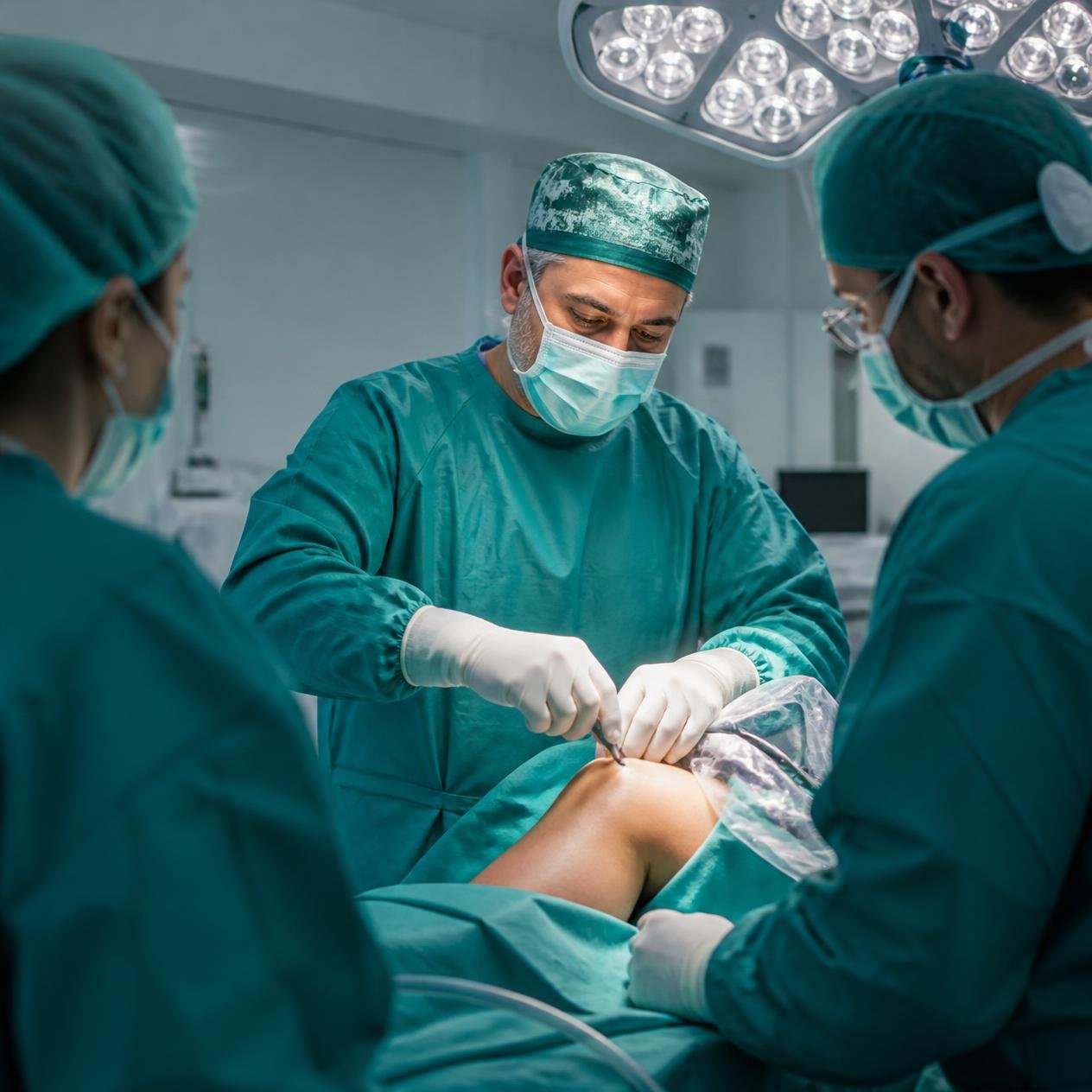
When conservative treatment no longer provides lasting relief, knee osteotomy may be recommended to correct leg alignment and redistribute weight away from the damaged area of the knee. By preserving the natural joint, osteotomy can relieve pain, improve function, and delay the need for knee replacement surgery.
Available Treatments
High Tibial Osteotomy (HTO)
Corrects bow-legged (varus) alignment by reshaping the upper tibia to shift weight toward the healthier side of the knee.
Distal Femoral Osteotomy (DFO)
Corrects knock-kneed (valgus) alignment by realigning the lower femur, reducing pressure on the damaged outer compartment of the knee.
Precision Alignment Correction
Advanced pre-operative planning ensures accurate correction of limb alignment, helping restore balanced weight distribution across the knee joint.
Personalized Rehabilitation
Following surgery, a personalized rehabilitation program helps restore knee strength, improve mobility, and support a safe return to everyday activities and sports.
- Recommended for active patients with early to moderate arthritis, single-compartment knee damage, and significant leg malalignment who wish to preserve their natural knee joint.
TREATMENT & RECOVERY JOURNEY
Restoring Alignment. Preserving Your Natural Knee.
1
Consultation
Your journey begins with a detailed consultation, physical examination, and weight-bearing imaging to assess knee alignment, cartilage health, and determine whether knee osteotomy is the right treatment option.
2
Personalized Plan
Advanced imaging and alignment measurements are used to carefully plan the correction angle, ensuring accurate weight redistribution and the best possible long-term outcome.
3
Treatment
The osteotomy is performed to precisely realign the leg, shifting body weight away from the damaged compartment of the knee while preserving the natural joint.
4
Rehabilitation
A structured rehabilitation program focuses on restoring knee movement, rebuilding muscle strength, improving balance, and gradually increasing weight-bearing activities under professional supervision.
5
Recovery
With successful healing and continued rehabilitation, most patients experience improved knee function, reduced pain, and can gradually return to work, recreational activities, and sports while preserving their natural knee.
Your treatment begins with a comprehensive consultation and ends with a structured recovery program designed to help you return to an active life.
BENEFITS OF TREATMENT
Benefits of Knee Osteotomy
Knee osteotomy is a joint-preserving procedure designed to correct leg alignment, reduce pressure on the damaged part of the knee, and improve long-term joint function. For the right candidate, it offers an effective solution to relieve pain while maintaining the natural knee and delaying the need for knee replacement surgery.
Preserves Your Natural Knee Joint
Unlike knee replacement, osteotomy retains your natural knee by correcting alignment rather than replacing the joint, making it an excellent option for younger and active patients.
Relieves Pain & Improves Joint Function
By redistributing body weight away from the damaged compartment of the knee, osteotomy helps reduce pain, improve movement, and enhance overall knee function.
Delays the Need for Knee Replacement
For appropriately selected patients, knee osteotomy can significantly postpone the progression of arthritis and delay the need for total knee replacement.
Supports an Active Lifestyle
With improved knee alignment and structured rehabilitation, many patients can return to work, recreational activities, and low- to moderate-impact sports while maintaining better joint health.
WHY CHOOSE DR. MUHIEDDINE HAMIE
Expertise You Can Trust. Care You Can Rely On.
Choosing the right orthopedic surgeon is an important step toward a successful recovery. Dr. Muhieddine Hamie combines advanced orthopedic expertise, personalized treatment planning, and a patient-first approach to deliver exceptional care for every individual. From your first consultation through surgery and rehabilitation, every stage of your journey is guided with precision, compassion, and a commitment to achieving the best possible outcome.
- Personalized Treatment Plans
- Advanced Knee Replacement Expertise
- Patient-Centered Care
- Comprehensive Rehabilitation Support
Committed to helping patients move with confidence, recover with comfort, and return to the activities they enjoy most.

Frequently Asked Questions
Find answers to common questions about the treatment by Dr. Muhieddine Hamie in Dubai.
What is a knee osteotomy?
A knee osteotomy is a joint-preserving surgical procedure that realigns the bones around the knee to redistribute weight away from the damaged part of the joint. It helps relieve pain, improve function, and delay the need for knee replacement surgery in suitable patients.
Who is a good candidate for knee osteotomy?
Knee osteotomy is generally recommended for younger or physically active patients with early to moderate osteoarthritis affecting one side of the knee, along with bow-legged (varus) or knock-kneed (valgus) alignment.
How is knee osteotomy different from knee replacement?
Unlike knee replacement, which replaces the damaged joint with an artificial implant, knee osteotomy preserves your natural knee by correcting the alignment of the leg and redistributing weight across the joint.
What conditions can knee osteotomy treat?
Knee osteotomy is commonly performed to treat single-compartment knee osteoarthritis, varus or valgus deformities, cartilage overload caused by malalignment, and certain post-traumatic alignment problems.
What is the difference between HTO and DFO?
High Tibial Osteotomy (HTO) is performed to correct bow-legged (varus) alignment, while Distal Femoral Osteotomy (DFO) is used to correct knock-kneed (valgus) alignment. The choice depends on the location of the deformity and the condition of your knee joint.
How long does knee osteotomy surgery take?
The procedure typically takes 1.5 to 2.5 hours, depending on the complexity of the correction and the surgical technique being performed.
How long is the recovery after knee osteotomy?
Recovery varies for each patient. Bone healing usually takes several weeks, while rehabilitation continues over several months to restore strength, mobility, and normal walking. Dr. Muhieddine Hamie will provide a personalized recovery plan based on your progress.
Will I need physiotherapy after surgery?
Yes. Physiotherapy is an essential part of recovery. A structured rehabilitation program helps improve knee movement, rebuild muscle strength, restore balance, and gradually return you to everyday activities and sports.
Can knee osteotomy delay knee replacement surgery?
Yes. For appropriately selected patients, knee osteotomy can significantly reduce pain, improve knee function, and delay the need for total knee replacement by preserving the natural joint and slowing the progression of arthritis.
How do I know if knee osteotomy is right for me?
The best way to determine whether knee osteotomy is suitable is through a comprehensive evaluation with Dr. Muhieddine Hamie. After reviewing your symptoms, physical examination, and weight-bearing imaging, he will recommend the most appropriate treatment based on your knee alignment, cartilage health, activity level, and long-term goals.