Joint Replacement Surgery in Dubai
Advanced Hip & Knee Replacement for Lasting Pain Relief and Improved Mobility
UNDERSTANDING THE PROCEDURE
What is Joint Replacement Surgery?
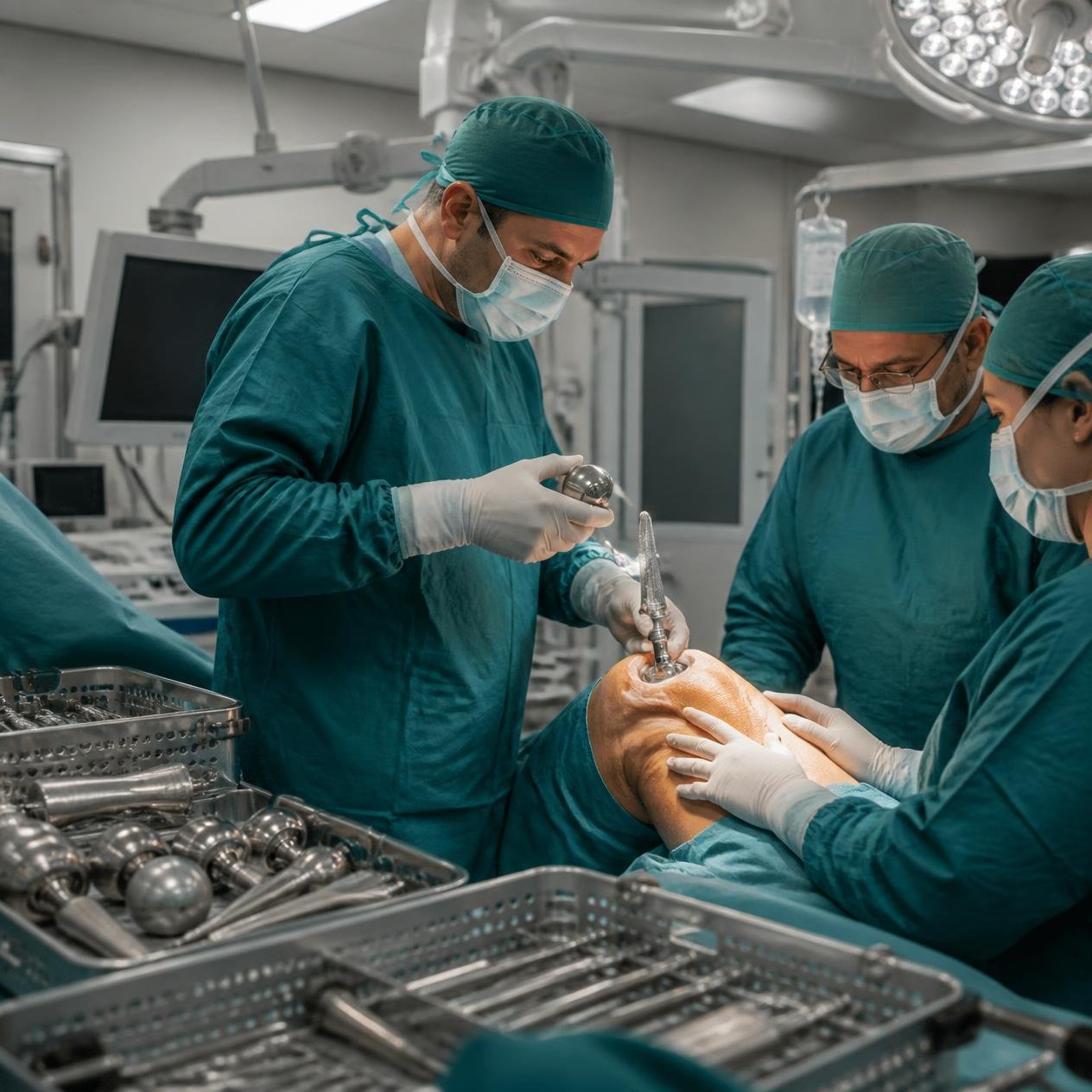
Joint replacement surgery, also known as arthroplasty, is a procedure that replaces damaged or worn joint surfaces with artificial implants to relieve pain, restore movement, and improve overall joint function. It is commonly recommended when arthritis, injury, or joint degeneration causes persistent symptoms that no longer respond to conservative treatments.
Whether you require knee replacement for advanced arthritis or hip replacement for joint degeneration or hip fractures, every procedure is carefully planned to achieve optimal alignment, stability, and long-term function.
Knee Replacement Surgery
Knee replacement surgery involves replacing damaged joint surfaces with modern implants to relieve pain, improve mobility, and restore knee function. Depending on the condition, treatment may involve total or partial knee replacement.
Hip Replacement Surgery
Hip replacement surgery replaces the damaged ball-and-socket joint with advanced implants to restore smooth movement, reduce pain, and improve mobility. It may be recommended for advanced arthritis, severe joint damage, or certain hip fractures.
CONDITION COMPARISON
Knee Replacement vs. Hip Replacement
Joint replacement surgery is tailored to the affected joint and the underlying condition. While both procedures aim to relieve pain and restore mobility, knee replacement and hip replacement address different joints, symptoms, and movement patterns. Dr. Muhieddine Hamie carefully evaluates your condition to recommend the most appropriate treatment for long-term joint function and quality of life.
Knee Replacement Surgery
Knee replacement surgery involves replacing the damaged surfaces of the knee joint with advanced implants to relieve pain, improve stability, and restore natural movement. Depending on the extent of joint damage, the knee replacement may be recommended.
Best For
- Advanced knee arthritis
- Chronic knee pain
- Knee stiffness
- Reduced mobility
Features
- Total or partial replacement
- Advanced implant technology
- Personalized surgical planning
- Improved joint function
Recovery
Reduced pain, improved mobility, enhanced knee stability, and a return to everyday activities with greater comfort.
Hip Replacement Surgery
Hip replacement surgery replaces the damaged ball-and-socket hip joint with modern implants to restore smooth movement, relieve pain, and improve overall hip function. It is commonly recommended for advanced arthritis, severe joint damage, or certain hip fractures.
Best For
- Advanced hip arthritis
- Hip joint degeneration
- Hip fractures
- Persistent hip pain
Features
- Total or partial replacement
- Modern implant technology
- Precise implant positioning
- Restored hip mobility
Recovery
Depending on the cause, treatment may include advanced ligament reconstruction, patellar stabilization procedures, or corrective surgery to restore normal kneecap tracking and reduce the risk of future dislocations.
Which Treatment is Right for You?
Every patient has unique symptoms, lifestyle goals, and joint conditions. After a comprehensive evaluation, Dr. Muhieddine Hamie will determine whether hip or knee replacement is the most appropriate solution and develop a personalized treatment plan tailored to your needs.
RECOGNIZE THE WARNING SIGNS
Signs You May Need Joint Replacement Surgery
Joint replacement may be recommended when chronic joint pain and stiffness significantly affect your daily life and no longer respond to conservative treatment. Early evaluation can help determine the most appropriate treatment and improve long-term outcomes.
Persistent Joint Pain
Pain in the hip or knee that continues despite rest, medication, physiotherapy, or other non-surgical treatments.
Stiffness & Reduced Range of Motion
Difficulty bending, straightening, or moving the affected joint, making everyday activities increasingly difficult.
Difficulty Walking or Climbing Stairs
Pain or weakness that limits your ability to walk, stand for long periods, climb stairs, or perform routine daily tasks.
Advanced Arthritis or Joint Damage
Progressive cartilage loss caused by osteoarthritis, rheumatoid arthritis, or previous injury resulting in significant joint deterioration.
Relief from Conservative Treatment
Symptoms that continue despite medications, physiotherapy, injections, weight management, or lifestyle modifications.
Reduced Quality of Life
Joint pain that interferes with work, sleep, exercise, or daily activities, preventing you from maintaining an active and independent lifestyle.
CAUSES, RISK FACTORS & DIAGNOSIS
Understanding When Joint Replacement May Be Recommended
Common Causes & Risk Factors
Osteoarthritis
The most common reason for joint replacement, where progressive cartilage wear causes pain, stiffness, and reduced joint function.
Rheumatoid Arthritis
An inflammatory autoimmune condition that damages joint cartilage and surrounding tissues, leading to pain, deformity, and reduced mobility.
Post-Traumatic Arthritis
Joint degeneration that develops following fractures, ligament injuries, or previous trauma affecting the hip or knee.
Avascular Necrosis (Hip)
Loss of blood supply to the hip joint can cause the femoral head to collapse, leading to severe pain and joint dysfunction that may require hip replacement.
Severe Joint Damage
Advanced cartilage loss, bone deformity, or long-standing joint disease that significantly limits movement and daily activities.
Hip Fractures
Certain displaced femoral neck fractures, particularly in older adults, may be best treated with hip replacement to restore mobility and improve recovery.
How is Patellar Instability Evaluated?
1
Medical History
A detailed discussion about your symptoms, previous treatments, medical history, activity level, and how joint pain affects your daily life.
2
Physical Examination
Assessment of joint movement, alignment, stability, muscle strength, walking pattern, and overall function of the affected hip or knee.
3
Digital X-rays
Weight-bearing X-rays help evaluate cartilage loss, joint space narrowing, bone deformity, and the severity of arthritis or joint damage.
4
MRI or CT Scan (When Required)
MRI or CT scans may be recommended in selected cases to evaluate bone quality, surrounding soft tissues, or to assist with surgical planning.
5
Personalized Treatment Planning
After reviewing your clinical examination and imaging findings, Dr. Hamie develops a customized treatment plan, determining whether hip replacement or knee replacement is the most appropriate solution to restore mobility and improve quality of life.
TREATMENT & RECOVERY JOURNEY
From Joint Pain to Restored Mobility
1
Consultation
Your journey begins with a detailed consultation, physical examination, and imaging studies to diagnose the underlying joint condition and determine whether joint replacement is the right treatment.
2
Personalized Plan
A customized treatment plan is developed based on your affected joint, overall health, lifestyle, and mobility goals. Implant selection and surgical planning are tailored to your individual needs.
Based on your diagnosis, Dr. Hamie develops a customized treatment strategy, whether conservative management or surgical stabilization, tailored to your condition and activity level.
3
Treatment
Using advanced surgical techniques and modern implants, the damaged hip or knee joint is replaced to relieve pain, restore alignment, and improve joint function.
4
Rehabilitation
A structured rehabilitation program focuses on pain management, restoring joint movement, rebuilding strength, and gradually improving mobility to support a safe recovery.
5
Recovery
With continued rehabilitation and regular follow-up care, most patients regain confidence, return to everyday activities, and enjoy improved mobility with significantly less joint pain.
With successful treatment and rehabilitation, most patients can safely return to work, recreational activities, and sports with improved knee stability, confidence, and reduced risk of future dislocations.
Your treatment begins with a comprehensive consultation and ends with a structured recovery program designed to help you return to an active life.
BENEFITS OF TREATMENT
Benefits of Joint Replacement Surgery
Joint replacement surgery is designed to relieve chronic joint pain, restore mobility, and improve overall quality of life. By replacing damaged joint surfaces with modern implants, patients can experience improved function, greater independence, and a return to the activities they enjoy.
Long-Lasting Pain Relief
Joint replacement effectively relieves chronic pain caused by arthritis, joint degeneration, or injury, allowing patients to perform everyday activities with greater comfort.
Improved Mobility & Joint Function
Replacing the damaged joint helps restore smoother movement, improve flexibility, and enhance overall function, making walking, climbing stairs, and other daily activities easier.
Better Quality of Life
With reduced pain and improved mobility, many patients regain independence, return to work, participate in recreational activities, and enjoy a more active lifestyle.
Advanced Implants with Personalized Care
Modern implant technology, combined with personalized surgical planning and evidence-based techniques, provides durable joint function and supports long-term outcomes.
WHY CHOOSE DR. MUHIEDDINE HAMIE
Expertise You Can Trust. Care You Can Rely On.
Choosing the right orthopedic surgeon is an important step toward a successful recovery. Dr. Muhieddine Hamie combines advanced orthopedic expertise, personalized treatment planning, and a patient-first approach to deliver exceptional care for every individual. From your first consultation through surgery and rehabilitation, every stage of your journey is guided with precision, compassion, and a commitment to achieving the best possible outcome.
- Personalized Treatment Plans
- Advanced Joint Replacement Expertise
- Patient-Centered Care
- Comprehensive Rehabilitation Support
Committed to helping patients move with confidence, recover with comfort, and return to the activities they enjoy most.

Frequently Asked Questions
Find answers to common questions about the treatment by Dr. Muhieddine Hamie in Dubai.
What is joint replacement surgery?
Joint replacement surgery, also known as arthroplasty, is a procedure in which a damaged joint is replaced with an artificial implant to relieve pain, restore movement, and improve overall joint function.
Which joints can be replaced?
The most commonly replaced joints are the hip and knee. Dr. Muhieddine Hamie specializes in advanced hip and knee replacement procedures tailored to each patient’s condition and lifestyle.
When is joint replacement recommended?
Joint replacement may be recommended when arthritis, injury, or joint degeneration causes persistent pain and reduced mobility that no longer responds to medications, physiotherapy, injections, or other conservative treatments.
What conditions are commonly treated with joint replacement?
Joint replacement is commonly performed for osteoarthritis, rheumatoid arthritis, post-traumatic arthritis, avascular necrosis of the hip, severe joint damage, and selected hip fractures.
How long does joint replacement surgery take?
The procedure typically takes 1 to 2 hours, depending on whether a hip or knee replacement is being performed and the complexity of the case.
How long does recovery take after joint replacement?
Recovery varies depending on the joint being replaced, your overall health, and your rehabilitation progress. Most patients begin walking shortly after surgery and continue improving over several weeks to months with physiotherapy.
Will I need physiotherapy after surgery?
Yes. Physiotherapy is an important part of recovery and helps restore joint movement, improve muscle strength, enhance mobility, and support a safe return to everyday activities.
How long do hip and knee replacements last?
Modern hip and knee implants are designed for long-term durability. Their lifespan depends on factors such as implant type, activity level, overall health, body weight, and regular follow-up care.
Can I return to an active lifestyle after joint replacement?
Yes. Most patients can return to walking, swimming, cycling, golf, and many other low-impact activities after rehabilitation. Dr. Muhieddine Hamie will guide you on when it is safe to resume specific activities based on your recovery.
How do I know if joint replacement is right for me?
If persistent hip or knee pain is limiting your daily activities and conservative treatments have not provided adequate relief, a consultation with Dr. Muhieddine Hamie can help determine whether joint replacement is the most appropriate treatment. After a comprehensive evaluation, he will recommend a personalized plan based on your condition, lifestyle, and long-term mobility goals.