
Knee replacement

Knee Replacement Surgery in Dubai

  • 5.0 on Google, 19 reviews
  • FACS, MRCS (England)
  • Clemenceau Medical Center, Dubai
Total and Partial Knee Replacement in Dubai with Dr. Hamie
5.019 Google reviews
Dr. Muhieddine Hamie, FACSConsultant Orthopedic Surgeon
Treatment type
Total or partial knee replacement
Anaesthesia
Spinal or general anaesthesia, often with a nerve block
Hospital stay
Usually 1 to 3 nights
Back to daily activities
Often 6 to 12 weeks
Return to sport or full activity
Low-impact activity, usually from 3 to 6 months

Typical figures. Dr. Hamie confirms what applies to you at your consultation.

Overview

What Is Knee Replacement Surgery?

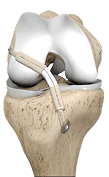
In knee replacement surgery, Dr. Hamie removes the damaged cartilage (the smooth lining on the ends of the bones) along with a thin layer of bone, then fits metal parts to the thigh bone and shin bone. A plastic spacer sits between them so the joint can glide smoothly again. The back of the kneecap may also be resurfaced.

A total knee replacement resurfaces the whole joint. A partial knee replacement replaces only the worn part when arthritis is limited to one side of the knee, keeping healthy bone and ligaments. Dr. Hamie holds the ESSKA European Certification in Knee Arthroplasty (joint replacement) and explains which option suits your knee after examining you and reviewing your X-rays.

Signs and symptoms

Signs and Symptoms of Advanced Knee Arthritis

These signs suggest your arthritis may be advanced enough to discuss knee replacement with Dr. Hamie.

  • Pain on most days

    Your knee hurts when walking, on stairs or standing, and often aches at rest too.

  • Pain at night

    Aching keeps you awake or wakes you when you turn over in bed.

  • Stiffness and reduced bend

    The knee will not fully bend or straighten, so chairs, cars and stairs feel harder.

  • Swelling that keeps returning

    The knee swells after activity and takes days to settle down.

  • Changing leg shape

    Your leg becomes more bowed or knock-kneed as the joint wears unevenly.

  • Shrinking walking distance

    You walk shorter distances, need a stick, or plan your day around your knee.

Diagnosis

How Dr. Hamie Diagnoses Knee Arthritis

A clear diagnosis comes first, so your treatment plan fits your knee and your goals.

  1. Your history and goals

    Dr. Hamie asks how the knee affects your walking, sleep, work and hobbies, and which treatments you have already tried.

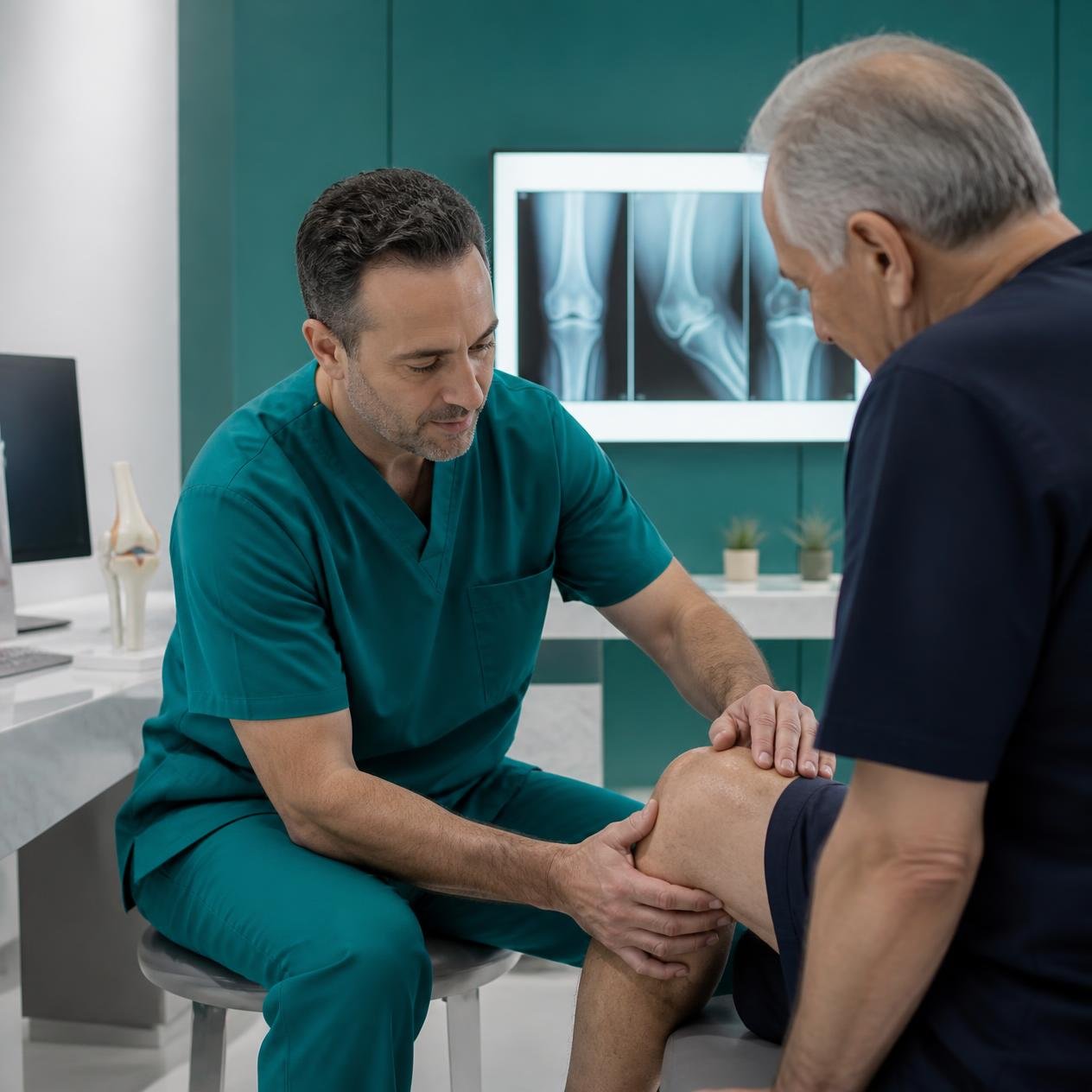
  2. Careful examination

    He checks your knee's movement, stability and alignment, and also examines your hip and spine, which can cause knee pain too.

  3. Standing X-rays and scans

    Weight-bearing X-rays show how much cartilage is left. An MRI or CT scan is added only when it helps. You can send existing images on WhatsApp before your visit.

Treatment options

Treatment Options for Knee Arthritis

Knee replacement is considered once non-surgical care is no longer controlling your symptoms.

First step

Non-surgical care

Earlier stages of arthritis often respond to simpler measures, and Dr. Hamie starts here when they are likely to help.

  • Physiotherapy to strengthen the thigh and hip muscles
  • Weight management, activity changes and walking aids
  • Pain relief medicines and joint injections
When needed

Surgical treatment

When pain and stiffness persist, a knee replacement may ease pain and improve how well you move.

  • Partial knee replacement when arthritis affects one side only
  • Total knee replacement when the whole joint is worn
  • Robotic-assisted knee replacement, planned in 3D from a scan
The procedure

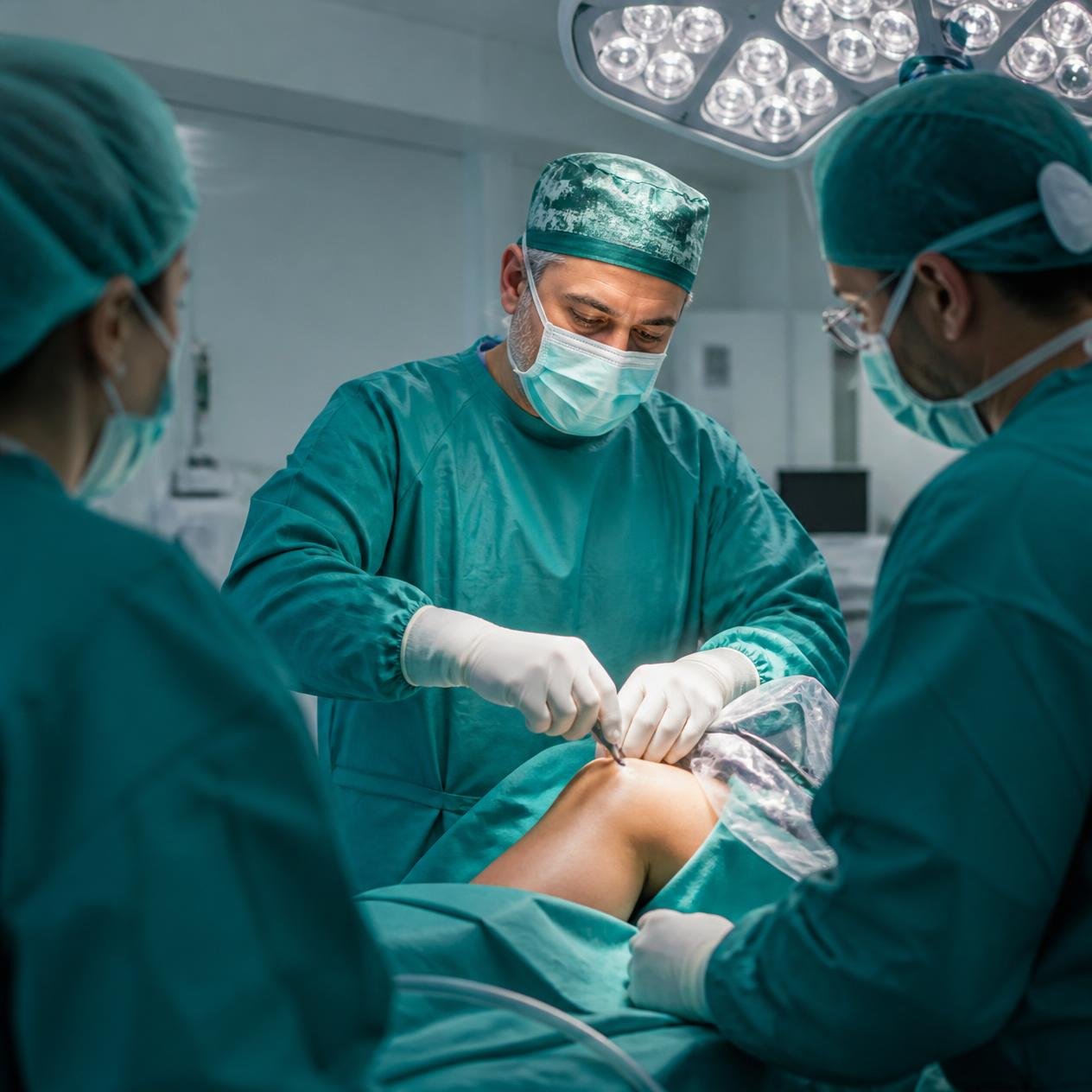
What Happens During Knee Replacement Surgery

Dr. Hamie explains every step before your treatment, so you know exactly what to expect on the day.

  1. Planning and preparation

    Before surgery you have blood tests, a heart check if needed, and advice on medicines, setting up your home and exercises to build strength.

  2. Anaesthesia

    The anaesthetist usually gives a spinal anaesthetic (numbing from the waist down) or a general anaesthetic, often with a nerve block for pain relief afterwards.

  3. Replacing the joint surfaces

    Dr. Hamie removes the worn surfaces, shapes the bone, fits the implants and checks that the knee bends, straightens and stays stable. The operation often takes 1 to 2 hours.

  4. Waking up and first steps

    A physiotherapist usually helps you stand and walk with a frame on the day of surgery or the next morning.

Recovery

Recovery After Knee Replacement Surgery

Every recovery is different, so these are typical ranges that Dr. Hamie confirms for you at consultation.

  1. Days 1 to 3

    In hospital

    You start walking with a frame, learn your exercises and go home once you can move safely and your pain is controlled.

  2. Weeks 1 to 6

    Early recovery at home

    Swelling and stiffness are common. Daily exercises and physiotherapy help you bend and straighten the knee, and many people move from a frame to a stick.

  3. Weeks 6 to 12

    Back to daily life

    Most daily tasks, short walks and desk work usually return. Driving is often possible from around 6 weeks, once you can control the car safely.

  4. Months 3 to 12

    Building strength

    Strength and stamina keep improving. Many patients return to low-impact activities such as walking, swimming, cycling and golf. Mild swelling can last up to a year.

Dr. Hamie follows up with you at every stage of your recovery.

Why Dr. Hamie

Why Patients Choose Dr. Hamie for Knee Replacement

  • Certified in knee arthroplasty

    Dr. Hamie holds the ESSKA European Certification in Knee Arthroplasty, a European qualification focused on knee replacement surgery.

  • Non-surgical care first

    He makes a clear diagnosis, considers simpler treatments first, and recommends surgery only when it is likely to help.

  • Total, partial and robotic options

    He performs total, partial and robotic-assisted knee replacement and also treats failed knee replacements, so your plan is shaped around your knee.

Patient stories

Hear Directly from Those Who Walk Stronger Today

Real stories from patients who have regained their mobility and confidence with Dr. Hamie.

5.0Based on 19 Google reviews
FAQ

Frequently Asked Questions

Clear answers to the questions patients ask Dr. Hamie most often.

Still have a question?Typical reply within 2 hours

Send your question with the booking form, and attach your MRI or X-ray for Dr. Hamie to review.

How do I know if I am ready for a knee replacement?

There is no single test. Dr. Hamie looks at how much pain and stiffness affect your daily life, what your X-rays show, and whether physiotherapy, medicines or injections are still helping. If the knee limits your walking, sleep or work despite these treatments, it may be time to discuss surgery.

What is the difference between a total and a partial knee replacement?

A total knee replacement resurfaces the whole joint. A partial knee replacement replaces only the worn compartment, usually the inner side, and keeps healthy bone and ligaments. Partial replacement suits only some knees, so Dr. Hamie checks your X-rays, alignment and ligaments before recommending one or the other.

How long does a knee replacement last?

Modern knee replacements often last many years, and for many patients the new knee lasts the rest of their life. Wear depends on your age, weight, activity level and how well the implant is positioned. Dr. Hamie reviews you after surgery and advises on activities that are kind to your new joint.

Will I be able to kneel after a knee replacement?

Many people can kneel once they have recovered, although it may feel uncomfortable or strange because the skin over the front of the knee can stay numb. Kneeling does not usually harm the implant, and a soft cushion helps. Dr. Hamie will tell you when it is safe to start trying.

Can I send my X-rays before the consultation?

Yes. You can send your X-rays or MRI on WhatsApp to +971 56 165 7695 before your visit. Dr. Hamie reviews them in advance, so your consultation can focus on your symptoms, the examination and a clear plan for your knee.

Appointments

Talk to Dr. Hamie About Your Knee Pain

Book a consultation at Clemenceau Medical Center, Dubai, or send your knee X-rays on WhatsApp to +971 56 165 7695 for review before your visit. Appointments are at Clemenceau Medical Center in Dubai Healthcare City, and you can send your MRI or X-ray before your visit.

  • Phone & WhatsApp+971 56 165 7695
  • AddressClemenceau Medical Center, Dubai Healthcare City Phase 2, Al Jadaf, Dubai
  • Clinic hours Mon, Wed9:00 AM to 7:00 PM Tue, Thu8:00 AM to 6:00 PM Sunday8:00 AM to 4:00 PM Fri, SatClosed
  • Emaildoctorhamieh@gmail.com

Send your details

The clinic replies by WhatsApp or phone.

+971
Find the clinic

Clemenceau Medical Center

Dubai Healthcare City Phase 2, Al Jadaf, Dubai

Call the clinic+971 56 165 7695