
 5.0 on Google, 19 reviews
Related care: Total and Partial Knee Replacement and Revision Knee Replacement. Dr. Hamie sees patients at Clemenceau Medical Center, Dubai Healthcare City.
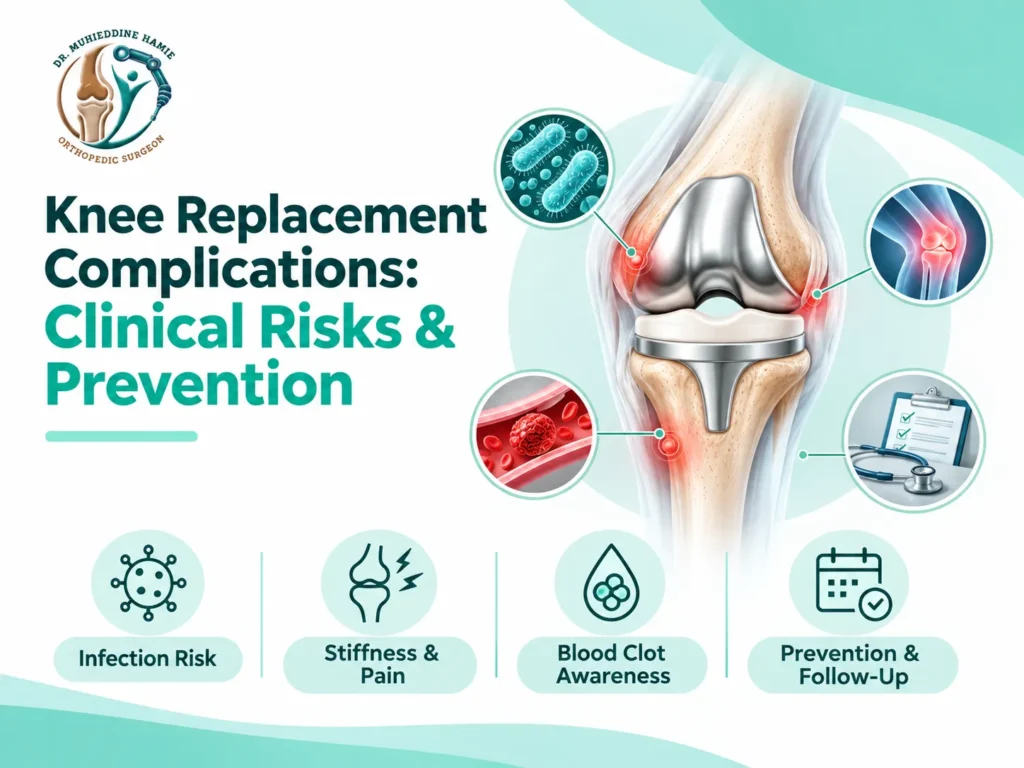
Knee replacement complications occur in a small percentage of surgical procedures, yet identifying early clinical indicators remains critical for safeguarding functional mobility. Modern surgical protocols, refined biomaterials, and comprehensive pre-operative screening reduce major adverse events to approximately two to three percent worldwide.
Understanding potential adverse events allows individuals to approach joint reconstruction with realistic expectations and proactive health strategies. When patients recognize early warning signs, clinical teams can intervene promptly to protect both the prosthetic implant and surrounding native tissues. Clear communication regarding potential challenges supports smooth post-operative healing and long-term joint durability.
Orthopedic safety relies on systematic prevention, accurate surgical execution, and patient compliance throughout rehabilitation. Identifying specific vulnerabilities helps the clinical team tailor surgical protocols to individual health profiles. At Dr. Hamie Clinic in Dubai Healthcare City, evidence-based practices minimize surgical risks and prioritize lasting, pain-free joint stability.
Knee Replacement Complications: Its Place in Modern Arthroplasty
Knee replacement complications refer to unintended mechanical, biological, or systemic adverse events following joint arthroplasty. These issues range from minor, self-limiting soft-tissue swelling to structural problems like implant loosening, deep periprosthetic infection, joint stiffness, or vascular thrombosis requiring medical intervention.
Understanding how and why these issues develop requires examining both surgical variables and host biology. While the vast majority of joint resurfacing procedures restore active movement without difficulty, physiological healing varies between individuals. Differentiating between expected postoperative recovery symptoms and true pathological knee replacement complications ensures that patients seek medical guidance at the appropriate time.
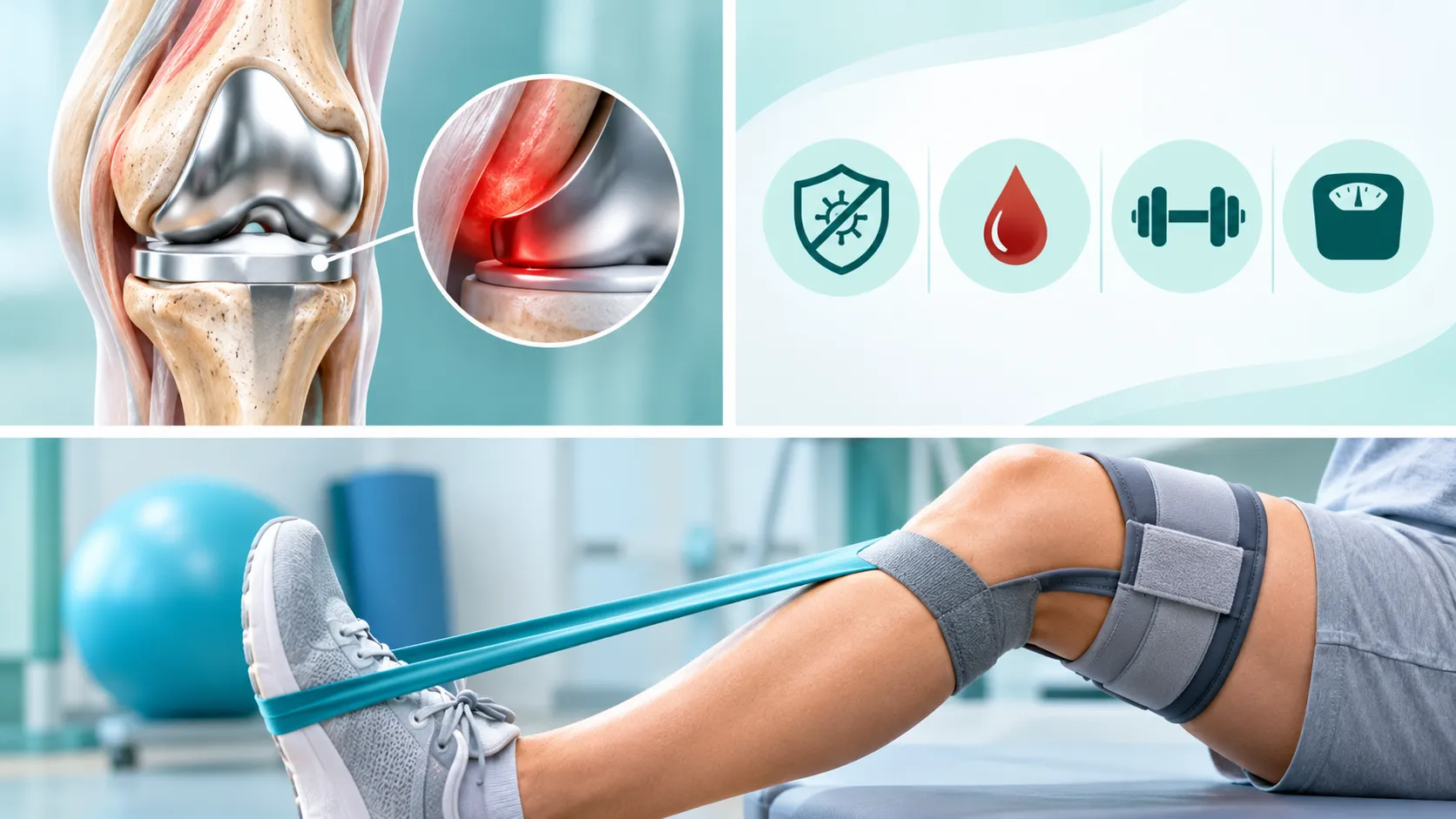
Systemic health conditions directly influence the likelihood of encountering post-operative problems. Chronic metabolic imbalances, peripheral vascular conditions, and compromised immune responses alter soft-tissue healing and bone remodeling. A detailed clinical assessment identifies individual risk factors early, allowing the surgical team to implement protective measures before entering the operating room.
Long-term joint success depends on open discussions between the patient and the orthopedic team. Reviewing documented knee replacement complications ensures that patients understand normal rehabilitation sensations versus symptoms requiring diagnostic evaluation. Proactive clinical management keeps recovery on track and preserves native bone stock.
Detailed Clinical Analysis of Major Knee Replacement Risks
Evaluating documented knee replacement risks requires looking closely at how systemic biology, surgical trauma, and mechanical loading interact within the lower extremity. Clinical research categorizes operative vulnerabilities into distinct biological and structural events:
- Deep vein thrombosis and pulmonary embolism: Sluggish venous blood flow during and after surgery can cause blood clots in the deep calf veins, requiring preventive anticoagulant medications.
- Periprosthetic joint infection: Bacterial contamination of the surgical site or prosthetic surface triggers acute or delayed inflammation that threatens implant fixation.
- Arthrofibrosis and persistent joint stiffness: Excessive internal scar tissue formation restricts natural flexion and extension, limiting functional range of motion despite regular physical therapy.
- Aseptic mechanical loosening: Microscopic breakdown of the bone-implant interface over time causes component shifting without active bacterial infection.
- Persistent localized swelling and synovitis: Prolonged intra-articular inflammation leads to soft-tissue tightness that delays quadriceps reactivation.
Careful assessment of these knee replacement risks allows the surgical team to deploy targeted preventive pathways. Selecting appropriate types of knee replacement based on individual joint wear patterns ensures that unaffected compartments remain undisturbed, reducing unnecessary surgical trauma.
Identifying and Managing Short-Term Knee Replacement Side Effects
Distinguishing transient post-operative reactions from chronic structural issues is an essential part of recovery. Patients routinely experience expected knee replacement side effects during the initial weeks following surgery.
Common knee replacement side effects include localized bruising, moderate post-operative edema, low-grade skin warmth, and muscular fatigue around the operative site. These responses represent normal physiological reactions to bone preparation and soft-tissue mobilization. As the body adapts to the artificial joint, acute swelling gradually resolves with cryotherapy, elevation, and gentle walking.
However, when mild knee replacement side effects intensify rather than diminish, medical reassessment becomes necessary. Progressive redness spreading from the incision, unmanageable pain spikes, or sudden calf tenderness should never be dismissed as routine healing. Early clinical review prevents manageable recovery issues from escalating into serious knee replacement complications.
Patient education regarding normal versus abnormal postoperative sensations reduces recovery stress. Understanding common knee replacement side effects helps patients participate actively in physical therapy while staying vigilant for potential complications.
Send your X-ray or MRI on WhatsApp and Dr. Hamie will review it before your visit.
Understanding and Preventing Nerve Damage After Knee Replacement
Neurological changes following joint resurfacing represent an important clinical consideration. Experiencing nerve damage after knee replacement can occur due to mechanical retraction, anatomical limb realignment, or localized fluid compression.
The common peroneal nerve is the most vulnerable neurological structure during knee reconstruction. In patients undergoing correction for severe valgus (knock-knee) deformities, straightening the mechanical axis stretches the peroneal nerve. Symptoms of nerve damage after knee replacement range from temporary numbness across the top of the foot to motor weakness, such as foot drop.
Fortunately, permanent nerve damage after knee replacement remains uncommon, occurring in less than one percent of standard primary procedures. Most neuropraxic events involve temporary nerve stretching rather than physical laceration. Sensory sensations usually return gradually over several months as the nerve recovers.
Careful soft-tissue handling and intra-operative monitoring help minimize the likelihood of nerve damage after knee replacement. Evaluating limb alignment before surgery allows the surgeon to anticipate nerve tension and protect surrounding neurovascular structures throughout the procedure.
Clinical Comparison of Knee Replacement Complications and Preventive Strategies
Managing surgical risks requires systematic medical protocols, precise operative techniques, and structured rehabilitation. The comparative matrix below outlines primary adverse events, their clinical frequencies, diagnostic indicators, and evidence-based prevention methods.
| Complication Profile | Primary Diagnostic Signs | Evidence-Based Prevention Strategy |
|---|---|---|
| Deep Vein Thrombosis (DVT) | Unilateral calf swelling, localized tenderness, skin warmth | Mechanical compression boots, early ambulation, oral anticoagulants |
| Periprosthetic Joint Infection | Elevated ESR/CRP, persistent wound drainage, localized heat | Laminar airflow suites, prophylactic IV antibiotics, skin decolonization |
| Peroneal Neuropraxia | Dorsal foot numbness, weakened ankle dorsiflexion | Gentle soft-tissue retraction, cautious valgus deformity correction |
| Arthrofibrosis (Stiffness) | Knee flexion under 90°, loss of full extension at 6 weeks | Early physical therapy, continuous cryotherapy, aggressive swelling control |
| Implant Aseptic Loosening | Start-up pain, progressive mechanical instability on X-rays | Sub-millimeter robotic alignment, balanced soft-tissue gap tensioning |
Evaluating these clinical metrics demonstrates why structured prevention is essential. Proactive clinical protocols help patients prepare for a safe, active life after knee replacement with minimal risk of long-term impairment.
Structural Influences of Implant Fixation on Long-Term Safety
The method used to secure prosthetic components to host bone directly influences long-term mechanical stability. Comparing cemented vs cementless knee replacement highlights two distinct biomechanical fixation approaches, each carrying specific risk profiles.
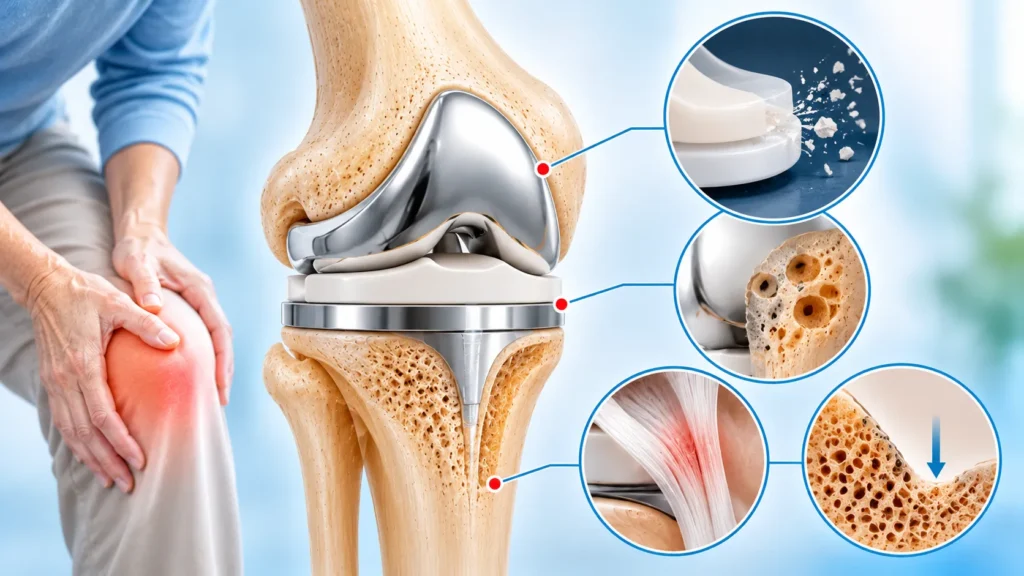
Cemented fixation utilizes fast-curing polymethyl methacrylate to anchor components immediately. While highly dependable, bone cement can develop micro-fragmentation after decades of repetitive physical loading. Microscopic debris can trigger localized bone reabsorption, leading to late component loosening.
Conversely, cementless fixation relies on biological bone ingrowth into porous titanium surfaces. If baseline bone mineral density is compromised, initial micro-motion can impede bone integration, causing persistent joint line aching. Evaluating bone quality before surgery ensures that the selected fixation strategy minimizes mechanical knee replacement complications.
Discussing fixation options with your orthopedic surgeon helps identify the most stable approach for your bone structure. Tailoring the fixation method protects host bone and reduces the likelihood of future revision procedures.
Patient-Specific Risk Factors and Medical Optimization
Individual medical history plays a central role in overall operative safety. Addressing pre-existing health conditions significantly lowers the incidence of post-operative knee replacement complications: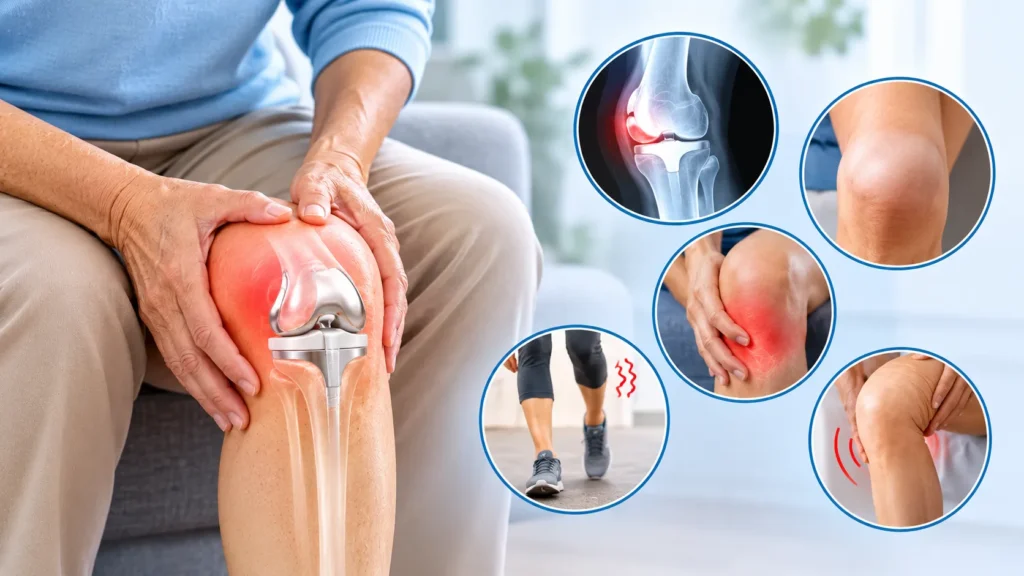
- Poorly regulated blood glucose: Elevated HbA1c levels impair microvascular circulation and leukocyte activity, significantly increasing periprosthetic infection risks.
- Tobacco and nicotine exposure: Nicotine causes peripheral vasoconstriction, slowing surgical wound healing and increasing skin necrosis risks.
- Elevated body mass index: Excess mechanical weight multiplies contact forces across prosthetic bearing surfaces, accelerating polyethylene wear.
- Chronic venous insufficiency: Pre-existing poor venous return elevates the risk of lower extremity fluid retention and deep vein thrombosis.
Managing these physiological variables prior to surgery builds functional resilience. Dedicated pre-operative optimization allows patients to approach surgery with lower risk profiles.
Comprehensive Surgical Protocols to Minimize Knee Replacement Complications
Modern orthopedic practices follow multi-layered safety pathways to eliminate preventable surgical risks. Infection control begins before the patient enters the operating room with chlorhexidine skin washes and nasal decolonization protocols.
During surgery, laminar airflow ventilation and specialized antibiotic regimens create a sterile operative field. Surgeons utilize computerized navigation and robotic alignment tools to seat components within sub-millimeter tolerances. Accurate component positioning balances joint loading, preventing abnormal stresses that contribute to early mechanical failure.
Post-operative protocols emphasize rapid recovery pathways. Early mobilization within hours of surgery stimulates venous return, reducing the risk of deep vein thrombosis while preventing joint stiffness. Combining modern surgical technology with structured rehabilitation significantly reduces overall knee replacement complications.
Patients seeking specialized Knee Replacement in Dubai benefit from world-class surgical facilities adhering to rigorous international safety standards. Dr. Muhieddine Hamie applies evidence-based clinical protocols to deliver safe, dependable joint reconstruction.
Clinical Safety at Dr. Hamie Clinic
Achieving dependable joint outcomes requires surgical precision, advanced diagnostic planning, and dedicated postoperative support. Dr. Muhieddine Hamie brings extensive orthopedic training to his practice in Dubai Healthcare City Phase 2, delivering individualized care for patients facing degenerative joint disease.
At Dr. Hamie Clinic, safety protocols guide every stage of the treatment journey. Pre-operative assessments evaluate systemic health, bone morphology, and soft-tissue integrity. Utilizing tissue-sparing techniques and computerized alignment tools, Dr. Hamie restores natural knee kinematics while protecting critical neurovascular structures.
Patients receive detailed guidance on recognizing and preventing knee replacement complications throughout recovery. The clinical team maintains regular follow-up schedules to monitor healing, verify implant stability, and ensure a smooth return to an active lifestyle.
Take the Next Step Toward Restoring Your Joint Health
Living with severe joint pain should not force you into chronic physical limitations or uncertainty regarding surgical treatment. Understanding the realities of knee replacement complications provides the clinical knowledge needed to make informed choices about your care.
Dr. Muhieddine Hamie offers comprehensive orthopedic evaluations, pre-operative optimization planning, and advanced joint reconstruction at Dr. Hamie Clinic in Dubai. Take a proactive step toward relieving chronic pain and protecting your long-term mobility.
Consult with Our Orthopedic Specialists
Connect directly with the clinical team at Dr. Hamie Clinic to schedule a thorough knee evaluation and discuss personalized treatment strategies. Book your consultation today through our online appointment system or contact our Dubai clinic directly.
Conclusion
Knee arthroplasty remains one of the most reliable and successful procedures in modern medicine, offering dependable pain relief and restored physical independence. While knee replacement complications are documented medical risks, following comprehensive pre-operative screening and evidence-based surgical protocols keeps complication rates low.
Systematic prevention strategies, including early ambulation, structured anticoagulant protocols, and precise anatomical component positioning, protect against biological and mechanical challenges. Active communication between the patient and the surgical team ensures that subtle symptoms are evaluated and addressed promptly.
Partnering with an experienced orthopedic surgeon provides assurance throughout every phase of joint restoration. Understanding potential risks and adhering to structured rehabilitation guidelines empowers you to reclaim an active, pain-free lifestyle with complete confidence.
Frequently Asked Questions
What are the most common knee replacement complications to monitor?
The most recognized complications include deep vein thrombosis, wound infection, joint stiffness from arthrofibrosis, implant loosening, and persistent localized swelling that delays muscle rehabilitation.
How are serious knee replacement risks prevented during surgery?
Surgical teams prevent risks using sterile laminar airflow operating theaters, prophylactic intravenous antibiotics, computerized robotic alignment, and customized blood-thinning medications combined with early walking.
What are the normal knee replacement side effects after surgery?
Normal side effects include mild to moderate bruising, localized swelling, manageable surgical discomfort, temporary skin numbness around the scar, and muscle tightness during early physical therapy.
Does nerve damage after knee replacement resolve on its own?
Most nerve injuries involve temporary stretching rather than physical tears. Sensation and muscle control typically improve gradually over several months as the nerve pathway regenerates.
When should unexpected knee replacement complications prompt urgent medical review?
Seek immediate clinical review if you develop a high fever, spreading wound redness, persistent fluid drainage, severe calf pain with swelling, or sudden chest pain and shortness of breath.
How does robotic precision help reduce knee replacement complications?
Robotic-assisted systems provide sub-millimeter cutting accuracy and real-time ligament balancing. This precision prevents component malalignment, reduces soft-tissue trauma, and lowers the risk of early implant loosening.

Consultant Orthopedic Surgeon at Clemenceau Medical Center, Dubai. He performs robotic-assisted, total, partial and revision knee replacement and treats sports injuries of the knee.
Meet Dr. Hamie