
 5.0 on Google, 19 reviews
Related care: Early Arthritis Management and Knee Osteotomy. Dr. Hamie sees patients at Clemenceau Medical Center, Dubai Healthcare City.
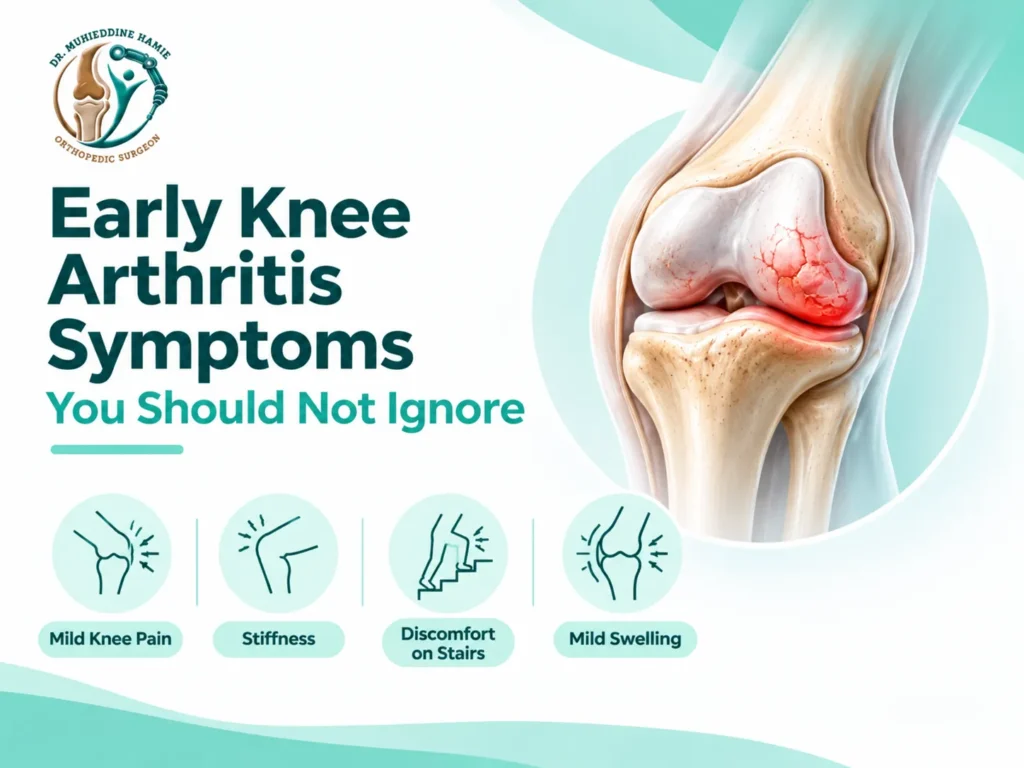
The early signs of knee arthritis involve subtle mechanical joint friction, mild localized swelling, and brief morning tightness that improves within thirty minutes of movement. Articular hyaline cartilage lacks blood vessels and sensory nerve endings, meaning initial microscopic breakdown occurs quietly before deep joint ache begins. Identifying the early signs of knee arthritis provides an invaluable therapeutic window for clinical evaluation, lifestyle modification, and targeted joint-preservation strategies.
Clinical evidence suggests that cartilage wear progresses along a gradual spectrum rather than appearing overnight. Over time, repeated compressive loads cause tiny fissures across the load-bearing articular surfaces, triggering localized synovial inflammation.
Recognizing early physical signals allows patients to seek timely orthopedic evaluation instead of waiting until simple walking becomes painful. Whether navigating office environments, physical workouts, or routine stair climbing, understanding these primary markers protects joint mobility and supports long-term musculoskeletal wellness.
Defining the Primary Early Signs of Knee Arthritis in Clinical Practice
The early signs of knee arthritis refer to the initial clinical presentations of articular cartilage fibrillation, minor osteophyte formation, and reactive synovial effusion. These signs manifest primarily as transient mechanical stiffness after rest, localized tenderness along the joint line, and minor puffiness following prolonged physical exertion.
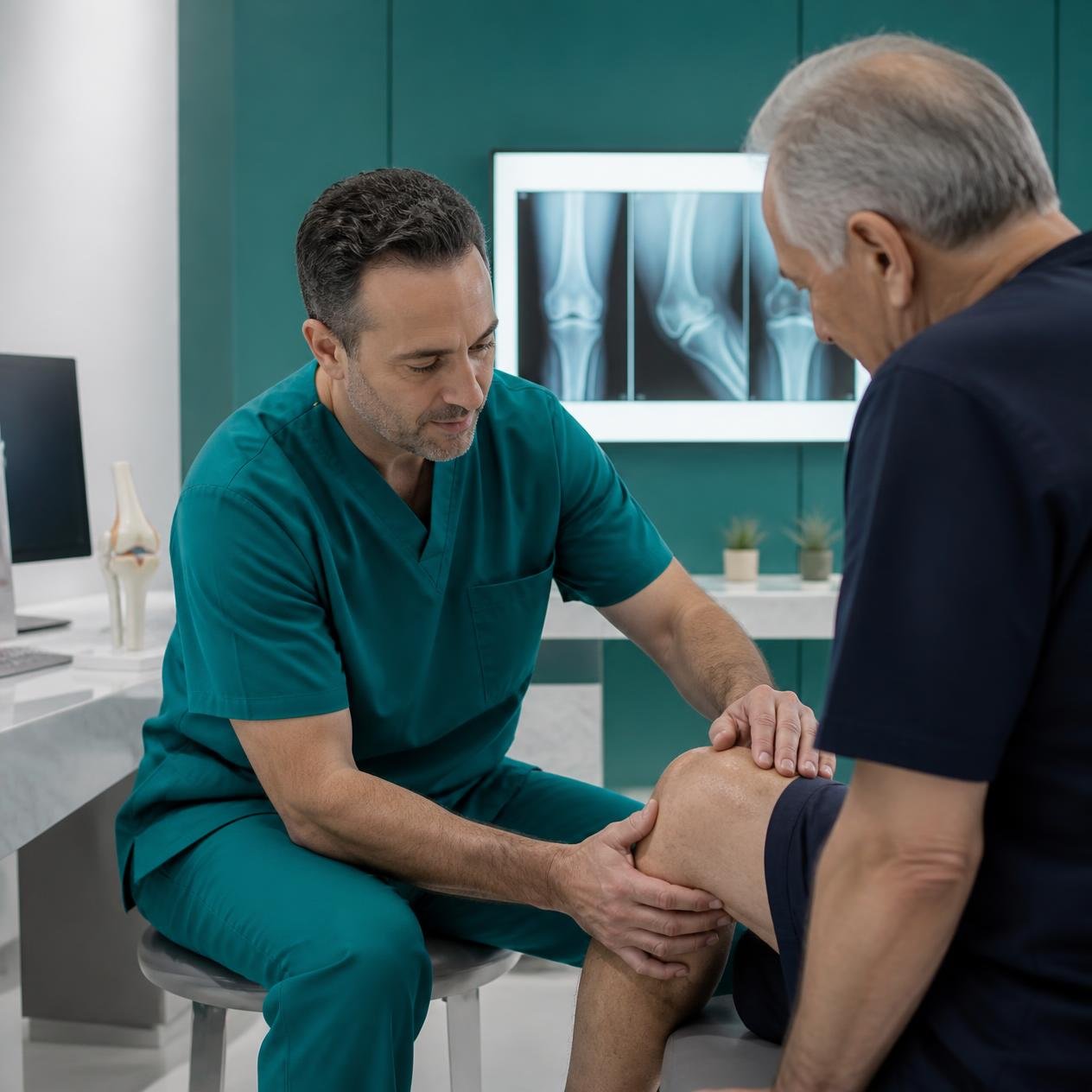
Diagnostic confirmation involves a physical examination alongside weight-bearing bilateral knee radiographs. Orthopedic specialists assess subtle alterations across the medial, lateral, and patellofemoral compartments. Catching cartilage wear during this initial phase helps protect the joint before bone-on-bone contact occurs.
Common Knee Arthritis Symptoms and Early Warning Indicators
Recognizing common knee arthritis symptoms requires paying attention to how the joint behaves under daily physical demands. Unlike acute sports injuries that cause sudden pain, early degenerative changes present intermittently.
The most frequent warning signals include: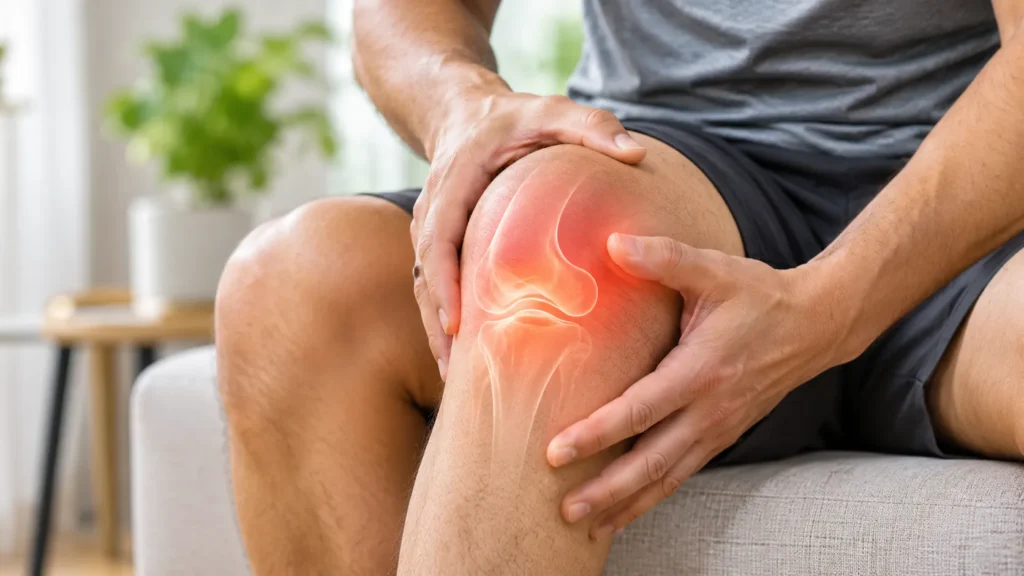
- Mechanical Joint Ache: A dull discomfort that develops during or immediately after extended periods of walking, jogging, or standing, which subsides after seated rest.
- Patellofemoral Load Sensitivity: Sharp, localized irritation behind or around the kneecap when descending stairs, stepping off curbs, or standing up from deep seats.
- Activity-Induced Effusion: Mild, painless swelling that causes the knee to feel tight or full at the end of an active day.
- Audible Crepitus: A soft crackling, grinding, or popping sensation felt beneath the hands during flexion and extension.
- Transient Joint Warmth: A subtle rise in localized skin temperature over the joint margin following repetitive loading.
Tracking these patterns helps distinguish standard muscular fatigue from underlying articular wear.
Differentiating Knee Osteoarthritis Symptoms from Soft-Tissue Strain
Distinguishing knee osteoarthritis symptoms from soft-tissue ligament or meniscal injuries requires analyzing the onset, location, and behavior of joint discomfort. Meniscal tears and collateral ligament sprains usually stem from sudden twisting motions, causing immediate swelling, joint locking, or giving way.
In contrast, knee osteoarthritis symptoms develop gradually over months or years. The discomfort is typically diffuse, shifting between the inner (medial) joint line and the front of the knee. Tendon strains often improve with standard rest, whereas cartilage-related wear recurs predictably whenever mechanical exertion increases.
Biomechanical factors also play an important role. Age-related changes in the joint lining decrease tissue hydration, reducing the cartilage's ability to absorb shock. Recognizing this gradual onset ensures individuals seek targeted medical evaluation rather than assuming the discomfort is a temporary muscle pull.
Send your X-ray or MRI on WhatsApp and Dr. Hamie will review it before your visit.
Clinical Patterns of Morning Knee Stiffness and Immobility
A key diagnostic indicator in early degenerative wear is the specific behavior of morning knee stiffness. Individuals frequently notice that the joint feels tight and resistant to bending immediately upon getting out of bed.
In degenerative joint conditions, morning knee stiffness typically lasts under thirty minutes. As light walking circulates synovial fluid and warms surrounding tendons, the joint loosens up. This self-limiting pattern, often called the "gelling phenomenon", also occurs after sitting through long flights, cinema screenings, or desk shifts.
If stiffness persists beyond forty-five minutes or is accompanied by symmetric swelling across multiple hand or wrist joints, clinicians often investigate inflammatory or autoimmune conditions such as rheumatoid arthritis. Identifying the duration of morning discomfort is therefore a central step in clinical diagnosis.
Comparing Early Joint Warning Indicators and Advanced Presentations
| Clinical Marker | Initial Early Joint Warning Signs | Moderate Degenerative Profile | Advanced Articular Breakdown |
|---|---|---|---|
| Pain Onset Pattern | Mild ache after unaccustomed exertion | Predictable pain during daily walking | Continuous discomfort, including at rest |
| Stiffness Duration | Under 30 minutes following rest | 30 to 45 minutes; requires warm-up | Persistent stiffness throughout the day |
| Joint Mobility | Full range of motion preserved | Mild loss of full terminal extension | Fixed flexion contracture; rigid motion |
| Radiographic Appearance | Subtle spurs; normal joint space | Definite narrowing; clear spurs | Severe space loss; bone friction |
| Mechanical Stability | Joint feels stable under normal loads | Occasional apprehension on stairs | Mechanical instability and weakness |
| Functional Impact | Able to complete all routine tasks | Requires pacing for sports and stairs | Severe limitations on basic walking |
Anatomical Progression Across the Stages of Knee Osteoarthritis
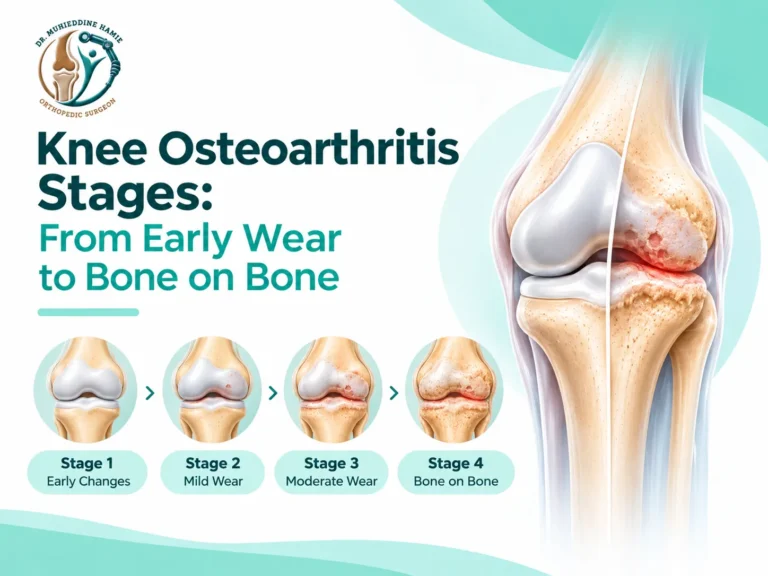
Understanding the progression across the stages of knee osteoarthritis provides helpful context for understanding early diagnostic imaging. Radiologists evaluate joint changes using standard classification scales, such as the Kellgren-Lawrence system.
In Stage 1 (doubtful narrowing), articular cartilage displays minor surface wear, and weight-bearing X-rays show doubtful or minute bone spurs. As the condition moves into Stage 2 (mild wear), clear osteophytes emerge along the joint margins, though the space between the bones remains largely maintained on standard views.
If left unmanaged, the disease advances into Stage 3 (moderate) and Stage 4 (severe), where extensive cartilage loss leads to complete joint space collapse. Recognizing changes during the earliest stages allows for targeted, non-operative interventions before bone friction and angular limb deformities develop.
Evidence-Based Non Surgical Treatment for Knee Arthritis Protocols
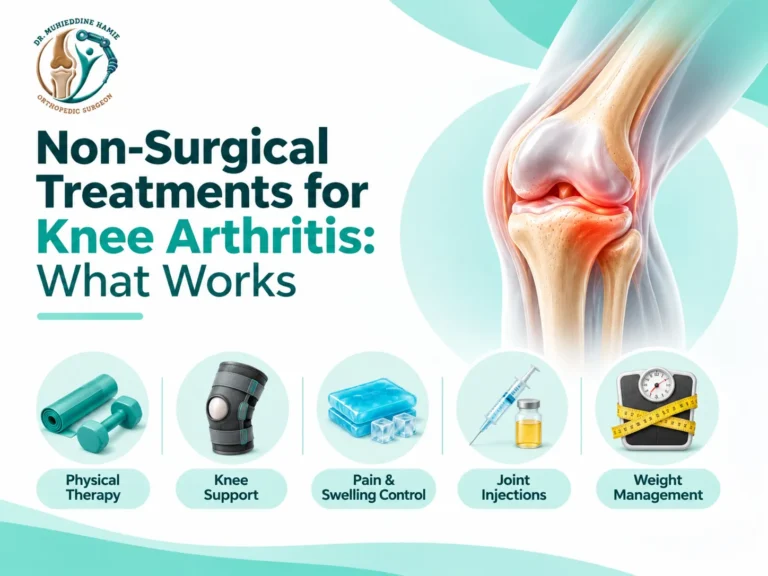
When detected early, cartilage wear can often be managed through structured conservative protocols. Implementing a non surgical treatment for knee arthritis plan focuses on stabilizing joint biomechanics, strengthening surrounding muscle groups, and minimizing excess mechanical loads.
Conservative management typically emphasizes several foundational strategies: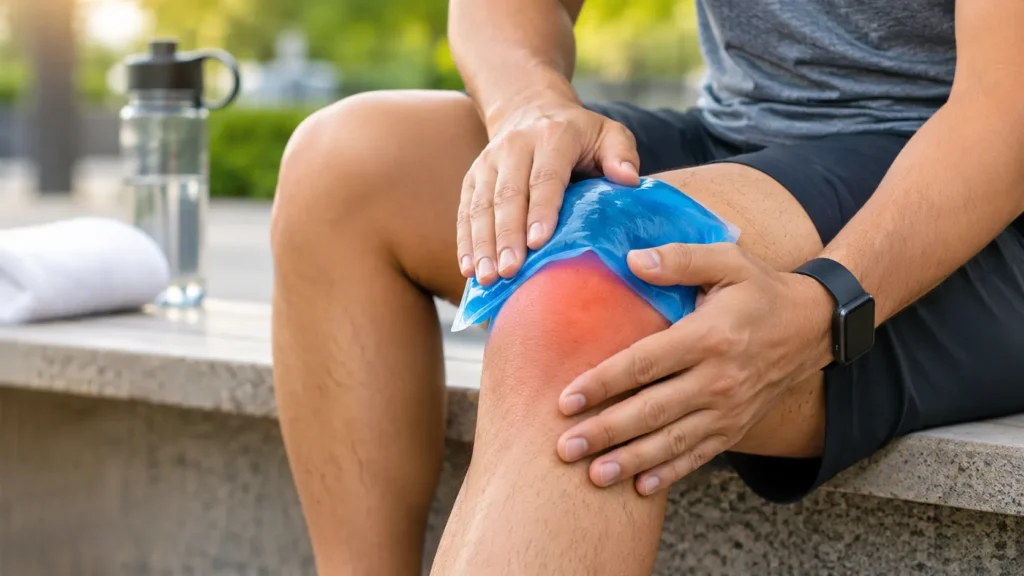
- Targeted Muscle Conditioning: Strengthening the quadriceps, hamstrings, and hip abductor muscles absorbs compressive forces during walking, taking stress off the articular surfaces.
- Low-Impact Cardiovascular Exercise: Incorporating cycling, swimming, and water aerobics maintains joint flexibility and aerobic fitness without subjecting cartilage to high impact.
- Biomechanic Footwear and Orthotics: Utilizing supportive footwear and custom medial or lateral wedge orthotics helps balance mechanical weight distribution across the joint.
- Body Weight Optimization: Reducing body mass decreases compressive joint load significantly with every step, helping slow structural wear and reduce daily discomfort.
Combining these conservative measures provides stable, long-term joint support for early-stage wear.
Interventional Care and Knee Injections for Arthritis Options
When guided physical therapy and lifestyle modifications need additional support for intermediate discomfort, interventional modalities offer targeted relief. Incorporating image-guided knee injections for arthritis helps manage localized inflammation directly inside the synovial capsule.
Hyaluronic acid injections supplement natural synovial fluid, enhancing joint lubrication and shock absorption during movement. In addition, autologous biological therapies, such as platelet-rich plasma (PRP), introduce concentrated growth factors that help modulate inflammatory signaling within the joint lining. An orthopedic specialist can help determine whether an interventional approach fits your specific clinical stage.
Expert Knee Arthritis Evaluation by Dr. Muhieddine Hamie
When identifying early signs of knee arthritis, precise diagnosis from an expert is crucial to preserve joint health. Dr. Muhieddine Hamie, an orthopedic surgeon in Dubai, brings his expertise in joint preservation and early cartilage wear management. Utilizing advanced diagnostics, Dr. Hamie identifies the root cause of your morning stiffness and mechanical discomfort. He specializes in designing tailored, evidence-based conservative treatments, including targeted muscle conditioning and intra-articular injections, to successfully halt arthritis progression.
Known for a highly patient-centered approach, Dr. Hamie ensures you receive a customized care plan. Consulting him early provides an opportunity to manage symptoms effectively, avoid unnecessary surgery, and confidently maintain your active lifestyle.
Comprehensive Clinical Care and Knee Arthritis Treatment in Dubai
Managing joint discomfort effectively starts with a precise clinical evaluation. Patients seeking advanced knee arthritis treatment in Dubai benefit from detailed physical examinations, weight-bearing digital imaging, and customized rehabilitation programs.
Clinical teams prioritize joint-preservation protocols whenever possible. By evaluating individual walking mechanics, joint alignment, and everyday activity levels, specialists design clear treatment pathways tailored to patient goals. Routine clinical follow-up ensures interventions are adjusted as symptoms evolve, helping patients maintain active, comfortable lives.
Orthopedic Joint Evaluation at Dr. Hamie Clinic
Persistent morning stiffness, recurrent post-exercise swelling, and joint line aching warrant an objective medical evaluation by an experienced orthopedic surgeon. At Dr. Hamie Clinic, located in Dubai Healthcare City, Phase 2, Al Jadaf, Dr. Muhieddine Hamie provides specialized orthopedic care focused on joint preservation, sports medicine, and advanced reconstruction.
Each consultation includes a thorough review of medical history, functional mobility assessments, and digital imaging to identify the precise stage of joint wear. Treatment pathways emphasize evidence-based joint-sparing protocols, including structured physiotherapy, biological intra-articular injections, and unloader bracing. For advanced joint disease, modern minimally invasive and robotic-assisted surgical options are available to restore stable, comfortable movement. Contact Dr. Hamie Clinic in Dubai to arrange a consultation and discuss your joint care options.
Conclusion
Recognizing the early signs of knee arthritis is essential for protecting natural joint function and maintaining everyday mobility. Paying attention to initial indicators, such as brief morning stiffness, load sensitivity on stairs, and mild post-activity swelling, enables patients to pursue timely clinical evaluation. By combining quadriceps strengthening, weight management, and targeted non-surgical therapies, individuals can manage joint wear effectively and continue leading active, comfortable lives.
Frequently Asked Questions:
Can clicking sounds in the knee indicate early arthritis without pain?
Painless clicking or popping, known as physiological crepitus, is common and often benign. However, if the sounds are accompanied by localized aching, swelling, or joint stiffness, they may indicate early cartilage wear.
How long does morning stiffness last in early knee osteoarthritis?
In early osteoarthritis, joint stiffness usually subsides within 15 to 30 minutes as light walking warms the joint and circulates synovial fluid. Stiffness lasting over 45 minutes may warrant evaluation for inflammatory joint conditions.
Will early knee arthritis always require joint replacement surgery?
No. Many individuals manage early symptoms effectively through physical therapy, quadriceps strengthening, weight management, and targeted injections, maintaining good function without surgery.
Can weight-bearing X-rays detect cartilage wear in the earliest stage?
Standard X-rays visualize bone margins and joint space narrowing indirectly. In very early wear, cartilage thinning may be minimal on an X-ray. In select cases, specialized high-resolution MRI scans provide clearer views of the cartilage surface.
What physical activities are safest when experiencing early joint stiffness?
Low-impact activities such as stationary cycling, swimming, water aerobics, and brisk walking on even surfaces are ideal. These exercises build supporting muscular strength without placing high-impact stress on articular cartilage.

Consultant Orthopedic Surgeon at Clemenceau Medical Center, Dubai. He performs robotic-assisted, total, partial and revision knee replacement and treats sports injuries of the knee.
Meet Dr. Hamie