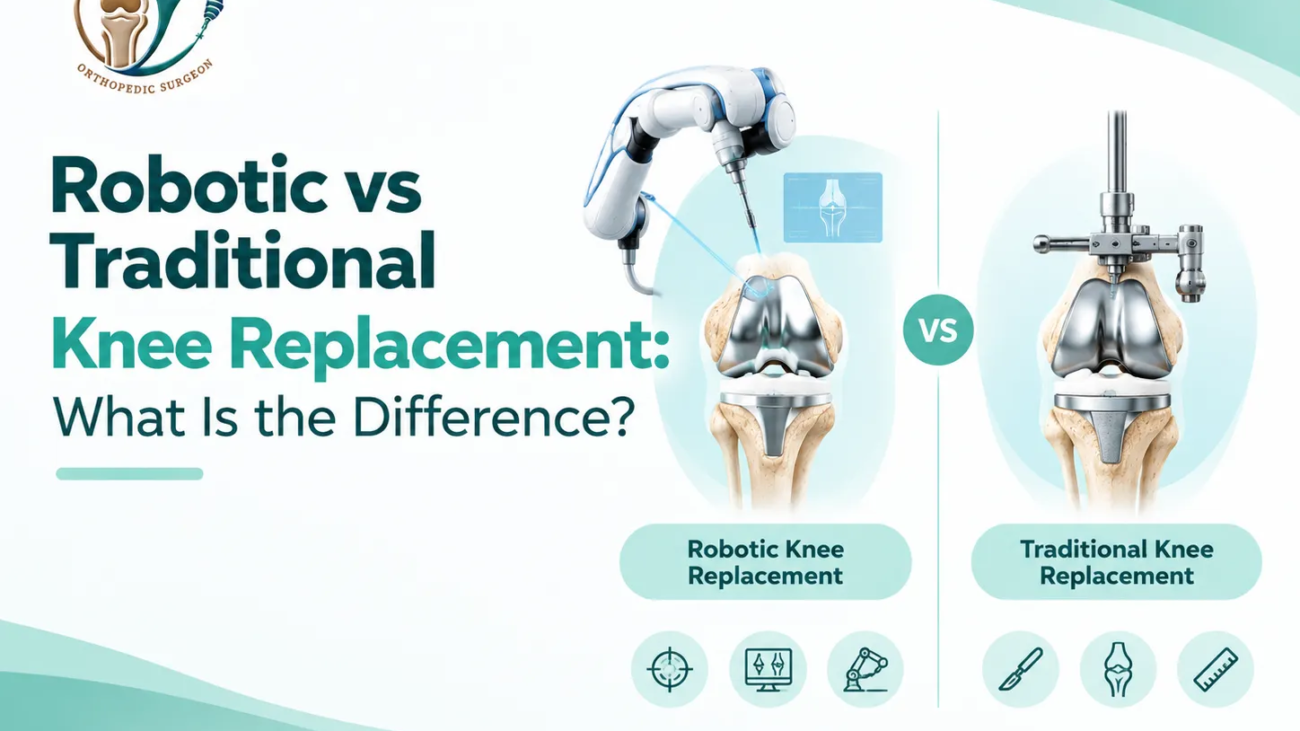
Undergoing joint resurfacing represents a critical decision for individuals suffering from chronic, end-stage arthritis. Evaluating robotic vs traditional knee replacement allows prospective patients to make well-informed choices regarding surgical accuracy and rehabilitation.
Dubai has become a premier global destination for advanced orthopaedic technology and modern joint reconstruction. While conventional techniques have relieved joint pain for decades, comparing robotic vs traditional knee replacement highlights remarkable technological innovations. Modern robotic systems provide real-time anatomical feedback, optimizing implant longevity and postoperative comfort.
Deciding between these surgical techniques requires a detailed understanding of joint kinematics and surgical instrumentation. Reviewing robotic vs traditional knee replacement options ensures that you select an approach matched to your anatomy. At Dr. Muhieddine Hamie Clinic, patient assessments focus on precision, tissue conservation, and swift functional mobility.
Defining the Surgical Principles of Robotic vs Traditional Knee Replacement
The primary objective of joint arthroplasty is excising degraded cartilage and resurfacing bone surfaces with biocompatible prosthetics. In a conventional procedure, the orthopaedic surgeon relies on physical cutting blocks, mechanical alignment rods, and visual tactile assessment. While experienced surgeons achieve dependable outcomes manually, comparing robotic vs traditional knee replacement demonstrates how computer-guided systems minimize alignment variations.
Robotic-assisted surgery integrates high-resolution pre-operative or intra-operative digital imaging with robotic arm guidance. The surgeon remains in total control throughout the procedure, using the robotic platform to execute bone preparation within sub-millimeter tolerances. When assessing robotic vs traditional knee replacement, robotic assistance acts as a high-precision navigational guide that prevents accidental deviations from the digital plan.
Evaluating robotic vs traditional knee replacement reveals that digital workflows transform subjective estimates into reproducible, measurable operative results. Balancing joint tension throughout the full range of motion helps patients regain a natural-feeling knee joint.
Technical Comparison Between Robotic vs Manual Knee Replacement
A rigorous technical evaluation of robotic vs manual knee replacement reveals contrasting operative workflows:
- Surgical planning: Conventional surgery relies on standard two-dimensional radiographs, whereas robotic protocols generate dynamic virtual models of your unique joint structure.
- Bone resection: A manual approach utilizes rigid mechanical cutting jigs positioned by eye, while robotic navigation uses computer-guided boundaries to prevent excess bone loss.
- Soft-tissue protection: In robotic vs manual knee replacement, robotic arms feature active haptic boundaries that automatically restrict the saw blade from damaging surrounding collateral ligaments.
- Component balance: Manual alignment checks tension primarily at static angles, whereas robotic software tracks ligament tightness dynamically through active flexion and extension arcs.
These differences highlight why robotic vs manual knee replacement has transformed modern joint care. Enhanced precision ensures optimal implant seating while protecting vital soft-tissue envelopes.
Comprehensive Surgical and Kinematic Comparison
Selecting the right surgical option requires balancing clinical capabilities with expected functional outcomes. The comparative matrix below outlines the primary parameters across both surgical modalities.
| Operative Metric | Robotic-Assisted Knee Replacement | Conventional Manual Knee Replacement |
| Surgical Precision | Sub-millimeter (<0.5 mm) and sub-degree (<0.5°) accuracy | Relies on manual cutting blocks and surgical eye |
| Pre-Operative Modeling | 3D computed mapping or dynamic intra-operative registration | Standard two-dimensional weight-bearing radiographs |
| Soft-Tissue Trauma | Minimally invasive; active haptic boundary protection | Requires broader retraction for mechanical jigs |
| Implant Positioning | Customised to patient-specific dynamic kinematics | Based on generalised anatomical alignment axes |
| Post-Operative Swelling | Lower acute inflammatory effusion and bruising | Moderate early tissue swelling and muscular soreness |
| Hospital Stay Length | Rapid discharge (same-day or single overnight stay) | Typically 2 to 3 days of inpatient observation |
This structured comparison illustrates how robotic vs traditional knee replacement differs in planning and precision. Integrating real-time digital feedback allows for customized surgical interventions.
Key Benefits of Robotic Knee Replacement Surgery
Understanding the clinical benefits of robotic knee replacement surgery provides peace of mind for prospective surgical candidates. The primary advantage is creating an individualized operative strategy tailored to your exact joint anatomy.
By analysing your native joint line, the robotic system allows Dr. Muhieddine Hamie to position implants along your natural mechanical axis. This personalization avoids the unnatural stiffness sometimes experienced when joints are aligned to generic population averages. Experiencing the benefits of robotic knee replacement surgery leads to higher patient satisfaction and a more natural gait.
Another of the foundational benefits of robotic knee replacement surgery is the preservation of healthy bone stock and periarticular soft tissue. Haptic guidance restricts surgical instruments to predefined safe cutting zones. Protecting the quadriceps tendon, collateral ligaments, and neurovascular bundles reduces surgical trauma and post-operative discomfort.
Minimizing soft-tissue irritation represents one of the major benefits of robotic knee replacement surgery. Patients experience lower post-operative swelling, reducing the need for heavy oral analgesics during early rehabilitation.
Functional Advantages of Robotic Knee Replacement
Active patients who evaluate the functional advantages of robotic knee replacement often prioritize rapid functional recovery. Because surgical incisions and tissue retraction remain minimal, early postoperative rehabilitation begins comfortably.
Many individuals experience the advantages of robotic knee replacement within hours of leaving the operating theater. Patients routinely begin assisted walking on the day of surgery, which promotes blood circulation and reduces deep vein thrombosis risks. Accelerated quadriceps activation prevents muscular atrophy, allowing patients to regain balance and walking confidence quickly.
Furthermore, long-term functional advantages of robotic knee replacement relate directly to component durability. Even microscopic misalignments in joint implants can cause uneven polyethylene wear over time. By placing implants with sub-millimeter precision, robotic technology balances joint loads, helping protect implants from premature mechanical loosening.
Reviewing these functional advantages of robotic knee replacement demonstrates how operative accuracy supports lifelong mobility. Restoring optimal joint mechanics allows patients to resume golf, swimming, cycling, and travel without hesitation.
Candidate Selection for Robotic vs Traditional Knee Replacement
Determining candidacy for robotic vs traditional knee replacement involves a thorough clinical assessment, physical examination, and radiographic imaging. Patients presenting with severe bone-on-bone osteoarthritis, failed conservative management, or post-traumatic joint degeneration qualify for both techniques.
However, choosing robotic vs traditional knee replacement is especially advantageous for patients with complex anatomical challenges:
- Post-traumatic deformities: Patients with previous fractures or retained metal hardware benefit from robotic mapping that bypasses intra-medullary alignment rods.
- Severe angular bowing: Rigid varus or valgus leg deformities require robotic tracking to re-establish symmetrical soft-tissue balance safely.
- Partial joint degeneration: Patients with unicompartmental wear benefit from robotic resurfacing that preserves healthy compartments and both cruciate ligaments.
- Active functional demands: Individuals leading athletic or physically demanding lifestyles gain added protection through millimeter-precise implant alignment.
Consulting with Dr. Muhieddine Hamie clarifies whether robotic vs traditional knee replacement best addresses your clinical condition and activity goals.
Recovery Expectations and Rehabilitation Trajectories
Post-operative healing trajectories vary depending on surgical invasiveness, pre-operative health, and rehabilitation adherence. Understanding your anticipated robotic knee replacement recovery time helps establish realistic milestones for personal independence, driving, and returning to professional commitments.
Because robotic surgery spares periarticular tissue, early rehabilitation milestones are achieved more smoothly. Patients comfortably bend their knees beyond 90 degrees within the first week, progressing to independent outdoor walking within three to four weeks.
Comparing systems like mako vs rosa vs velys shows that regardless of the specific robotic platform used, the primary objective remains surgical accuracy and tissue preservation. Dr. Muhieddine Hamie integrates digital precision with structured physical therapy, guiding patients from early protected ambulation to dynamic cardiovascular conditioning.
Choosing specialised robotic knee surgery in Dubai gives patients direct access to fellowship-trained orthopaedic expertise. Modern operative care reduces hospital stays, controls surgical discomfort, and accelerates functional recovery.
Advanced Robotic Technology at Dr. Muhieddine Hamie Clinic
State-of-the-art robotic systems do not replace the skill of an orthopaedic surgeon; they enhance surgical precision. Dr. Muhieddine Hamie maintains complete control throughout every phase of the procedure, utilizing robotic intelligence to confirm operative plans before bone preparation begins.
At his Dubai Healthcare City Phase 2 clinic, Dr. Hamie combines international orthopaedic fellowship training with advanced digital surgical platforms. Digital mapping ensures that implants replicate your natural joint kinematics, providing a knee joint that feels stable, comfortable, and responsive.
Timely assessment of joint degradation prevents progressive bone loss and joint contractures. Through customized surgical planning and tissue-preserving techniques, Dr. Muhieddine Hamie delivers world-class joint care designed to restore active living across the UAE.
Evaluating robotic vs traditional knee replacement empowers you to choose an intervention that supports long-term joint health, stability, and enduring comfort.
Reclaim Your Active Independence and Joint Comfort Today
Severe knee arthritis should not limit your daily vitality, career productivity, or active lifestyle across Dubai. Understanding the clinical distinctions of robotic vs traditional knee replacement provides the clarity needed to pursue definitive joint restoration.
Dr. Muhieddine Hamie offers advanced diagnostic evaluations, customized 3D surgical planning, and cutting-edge robotic joint resurfacing. Take decisive action to eliminate chronic joint pain, protect your soft tissues, and regain your active physical independence.
Schedule Your Comprehensive Orthopaedic Consultation
Connect directly with the clinical team at Dr. Muhieddine Hamie Clinic in Dubai to evaluate your knee condition and determine whether robotic-assisted joint replacement is right for you.
Restoring Joint Mechanics and Long-Term Quality of Life
Navigating robotic vs traditional knee replacement requires expert diagnostic guidance, high-resolution imaging, and a personalized approach to joint biomechanics. While traditional surgery remains a reliable procedure, robotic assistance provides sub-millimeter accuracy and enhanced soft-tissue preservation.
Investing in robotic precision helps prevent alignment errors, minimizes post-operative inflammation, and supports swift community reintegration. Dedicated post-operative rehabilitation transforms precise surgical alignment into lasting joint durability.
Partnering with an experienced orthopaedic specialist ensures your surgical journey leads to pain-free mobility. Restoring smooth, natural joint function allows you to enjoy Dubai’s vibrant professional, social, and recreational lifestyle without physical boundaries.
Frequently Asked Questions
What is the primary difference in robotic vs traditional knee replacement?
Traditional replacement relies on manual cutting guides and visual alignment. Robotic replacement uses 3D digital planning and real-time robotic guidance to position implants within sub-millimeter precision while protecting soft tissues.
Does a robot perform the surgery independently?
No, the robot never operates independently. The orthopaedic surgeon performs every step of the procedure, using the robotic arm as a high-precision instrument that adheres strictly to the surgeon’s customized digital plan.
What are the main benefits of robotic knee replacement surgery?
Key benefits include personalized 3D surgical planning, sub-millimeter component placement, reduced trauma to healthy soft tissues, less postoperative swelling, and a more natural-feeling knee joint during movement.
How do the advantages of robotic knee replacement affect recovery?
Because robotic systems minimize soft-tissue retraction and spare healthy bone, patients experience lower acute pain and reduced swelling, allowing for earlier ambulation and faster functional rehabilitation.
Is robotic vs manual knee replacement more durable over time?
Robotic assistance ensures precise mechanical alignment, which distributes weight evenly across the implant. This balanced loading helps minimize uneven polyethylene wear and supports long-term implant survivorship.
Am I an appropriate candidate for robotic knee replacement?
Patients with severe osteoarthritis, unicompartmental wear, post-traumatic arthritis, or significant joint deformities who have not responded to conservative treatments are generally eligible candidates for robotic knee resurfacing.