 5.0 on Google, 19 reviews
Related care: Total and Partial Knee Replacement and Pain Management After Knee Surgery. Dr. Hamie sees patients at Clemenceau Medical Center, Dubai Healthcare City.
Life after knee replacement delivers predictable pain relief, improved joint mobility, and a dependable return to active daily living. Over ninety percent of patients resume independent walking, comfortable travel, and recreational fitness within weeks of surgery.
Understanding functional milestones allows individuals across Dubai to plan their recovery with clarity and confidence. Modern arthroplasty focuses on restoring natural joint kinematics so that everyday tasks like driving, working, and exercising feel secure. Establishing realistic timelines for physical loading helps you protect your artificial joint while steadily rebuilding strength.
Long-term success depends on following a structured rehabilitation schedule and respecting biological healing times. Moving from surgical recovery to active living requires balancing joint protection with consistent muscular conditioning. At Dr. Hamie Clinic in Dubai Healthcare City Phase 2, individualized post-operative protocols support your safe transition back to personal and professional commitments.
Life After Knee Replacement: Defining the Recovery Milestones
Life after knee replacement refers to the phased functional recovery process following total or partial joint resurfacing. It encompasses gradual milestones for unassisted walking, operating a motor vehicle, long-distance air travel, professional workplace integration, and safe participation in low-impact recreational sports while protecting prosthetic longevity.
Resuming daily activities after joint reconstruction depends on objective functional recovery rather than arbitrary calendar dates. While soft-tissue healing begins immediately, rebuilding neuromuscular control and quadriceps power requires dedicated physical therapy. Navigating life after knee replacement successfully means listening to your body, managing post-activity swelling, and pacing your daily routine.
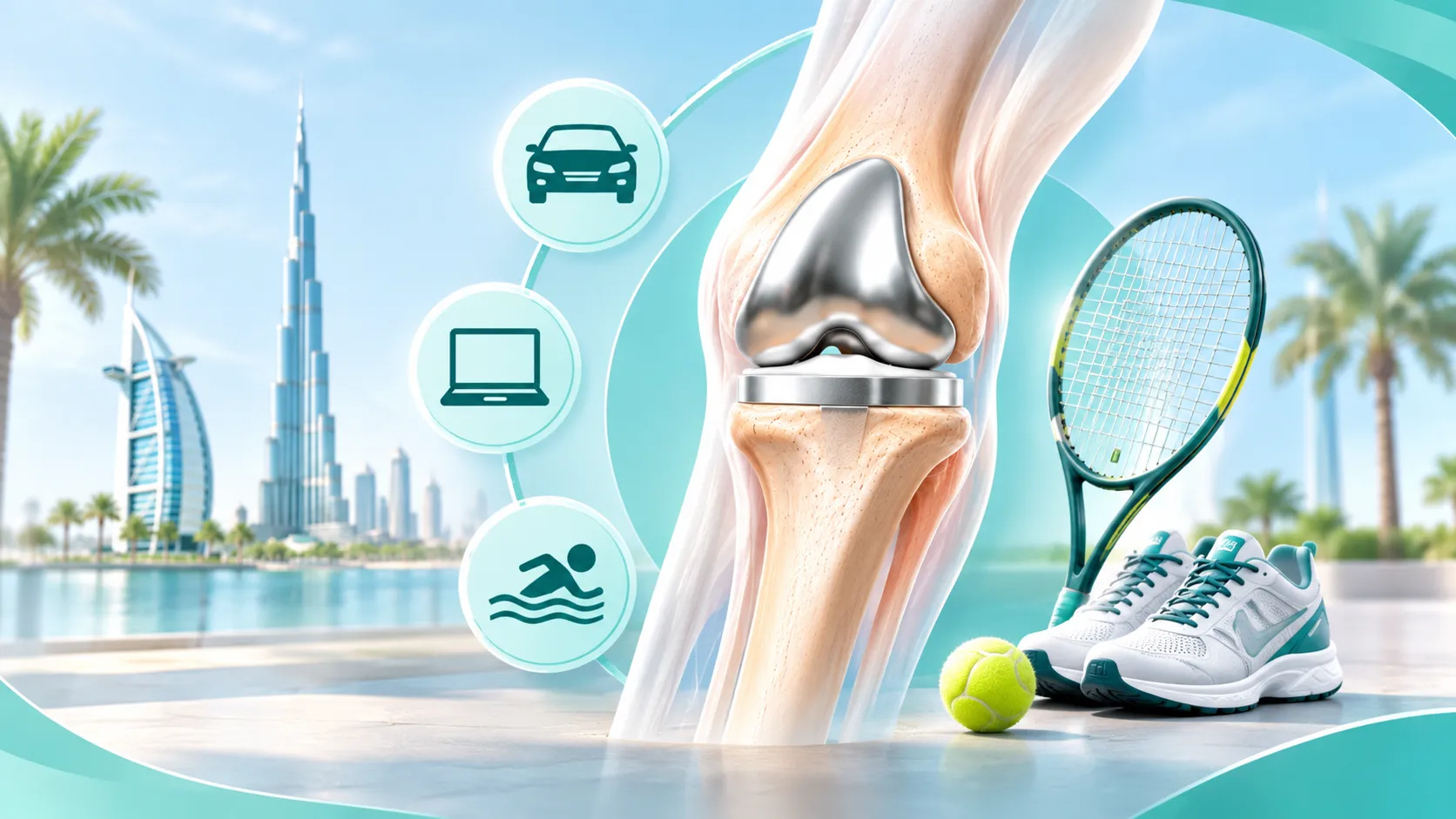
Early rehabilitation establishes the foundation for long-term physical independence. Moving securely between sitting, standing, and walking builds the confidence needed for community excursions across the UAE. Adapting your schedule to include rest and elevation keeps acute inflammation under control during the first two months.
Consistent physical therapy transforms clinical outcomes into everyday vitality. As joint stiffness subsides and muscle endurance improves, patients rediscover freedom of movement without chronic arthritic ache. Adapting to life after knee replacement allows you to engage fully in social, family, and professional life.
Clinical Timeline for Resuming Daily Independence
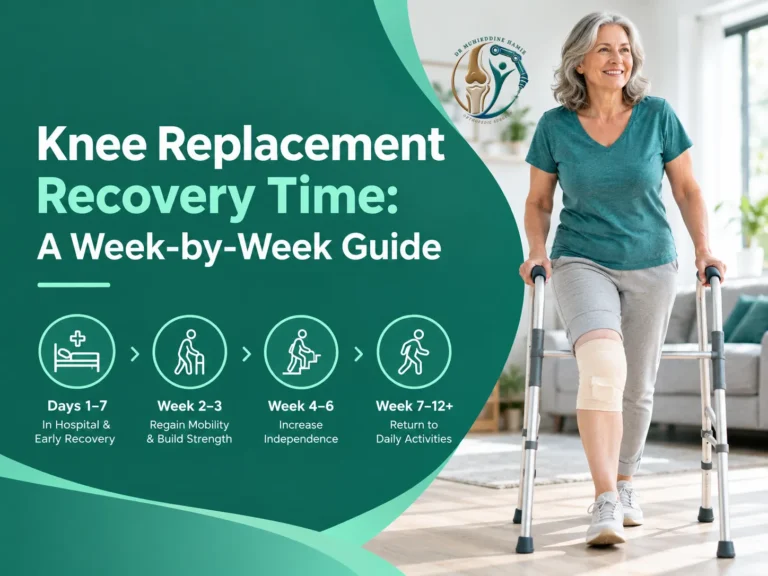
Restoring personal independence follows distinct physiological phases. Tracking these stages helps patients monitor functional improvements safely.
| Milestone Phase | Average Timeline | Core Functional Benchmarks | Primary Clinical Requirements |
|---|---|---|---|
| Independent Walking | 2 to 4 weeks | Navigating home environments without crutches or walkers | Quadriceps control without lag; normal heel-to-toe stride |
| Sedentary Desk Work | 3 to 6 weeks | Sitting comfortably for meetings; managing short office walks | Swelling control; independence from narcotic pain medications |
| Motor Vehicle Operation | 4 to 8 weeks | Operating foot pedals smoothly; rapid emergency braking | Symmetrical braking reaction times; off all narcotic analgesics |
| Air Travel & Tourism | 6 to 12 weeks | Tolerating long airport walks and seated cabin pressure | Low deep vein thrombosis risk; adequate mobility in tight spaces |
| Recreational Fitness | 12 to 24 weeks | Low-impact cardiovascular training and athletic drills | Symmetrical leg strength; zero residual joint effusion |
Reviewing this structured recovery pathway demonstrates that life after knee replacement progresses through measurable steps. Meeting objective criteria at each stage ensures that your return to activity remains safe and sustainable.
Critical Safety Benchmarks for Driving After Knee Replacement
Resuming vehicle operation is a major milestone for patients regaining personal autonomy. Safely planning driving after knee replacement requires evaluating which leg underwent surgery, your braking reflexes, and current medication usage.
For patients who underwent surgery on the left knee and drive an automatic transmission vehicle, driving after knee replacement can often resume within two to four weeks. As long as you no longer take prescription opioid analgesics and enter the vehicle without joint strain, localized recovery permits early travel. The right leg remains fully capable of handling acceleration and braking duties.
Conversely, undergoing right-leg resurfacing requires greater caution before driving after knee replacement. The right limb must execute sudden, forceful emergency stops without hesitation or pain. Clinical evidence shows that reaction times typically return to safe baseline levels between four and six weeks post-surgery.
Conducting a safe vehicle assessment in an open parking lot confirms your readiness before entering active Dubai traffic. If you experience lingering stiffness or delayed pedal response, delaying driving after knee replacement by one or two weeks ensures road safety for everyone.
Understanding the specific type of knee replacement performed also influences vehicle readiness. Patients undergoing partial unicompartmental resurfacing often regain dynamic muscle reflexes faster than those recovering from complete joint reconstruction.
Send your X-ray or MRI on WhatsApp and Dr. Hamie will review it before your visit.
Guidelines for Flying After Knee Replacement and Global Travel
Dubai represents an international transit hub, making air travel a routine aspect of life for many residents. Safely planning flying after knee replacement requires active management of circulatory risks associated with long periods of sitting.
The primary medical concern when flying after knee replacement is deep vein thrombosis. Prolonged immobility in pressurized aircraft cabins slows venous blood return, which temporarily elevates clot risks. Orthopedic guidelines generally advise avoiding commercial flights exceeding four hours for at least six weeks following surgery.
When short regional flights are necessary during early recovery, preventive measures protect circulatory health:
- Wear graduated compression stockings: Elastic compression socks encourage venous blood flow from the lower legs back toward the heart during seated flights.
- Perform regular seated calf pumps: Flexing and extending the ankles every thirty minutes activates calf muscle pumps, preventing blood pooling in deep veins.
- Stay hydrated and walk the aisle: Drink plenty of water and take brief walks down the cabin aisle during cruising altitude to stimulate circulation.
- Carry specialized medical documentation: Prosthetic metal components regularly activate airport security scanners, making an implant verification card or surgeon's letter helpful.
Following these practical precautions ensures that flying after knee replacement remains comfortable and secure. Preparing for air travel minimizes limb swelling, allowing you to arrive at your destination ready to enjoy your journey.
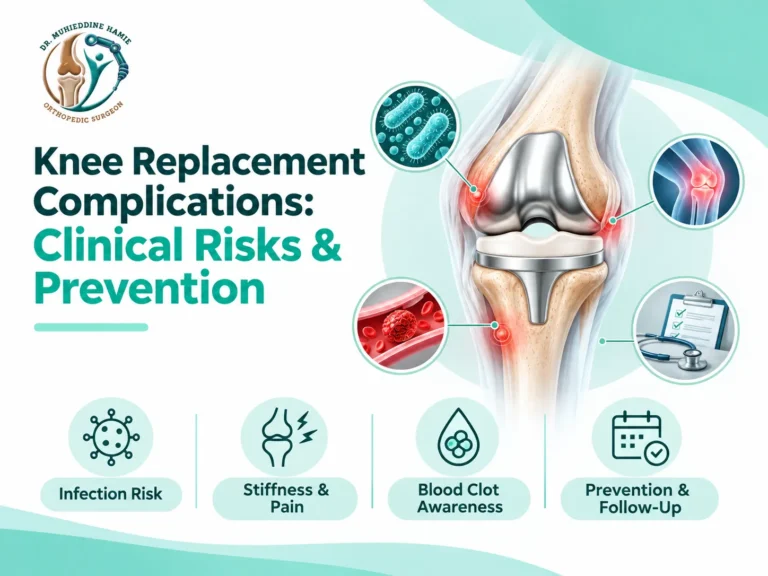
Understanding potential Knee Replacement Complications reinforces why circulatory safety matters during long-distance travel. Avoiding prolonged immobility shields healing soft tissues from unnecessary vascular strain.
Ergonomic Planning for Workplace Reintegration
Returning to work is an important milestone in regaining a regular routine. The ideal schedule depends on the physical demands of your occupation.
Desk-based corporate professionals typically return to work within three to six weeks. Utilizing an adjustable standing desk, keeping a low footrest to support leg elevation, and scheduling short walking breaks prevents stiffness during long meetings. Hybrid office schedules allow recovering professionals to manage daily energy levels while soft tissues continue healing.
Occupations involving prolonged standing, frequent warehouse walks, or site inspections usually require eight to twelve weeks of recovery. Returning to physically demanding roles before rebuilding muscular strength can cause compensatory lower back or hip discomfort. Discussing phased duties with your employer helps align your work responsibilities with your physical progress.
Monitoring your personal knee replacement recovery time provides practical benchmarks as you balance work and rest. Dedicated rehabilitation during the initial six weeks sets the stage for a productive, uninhibited return to professional life.
Safely Resuming Sports After Knee Replacement
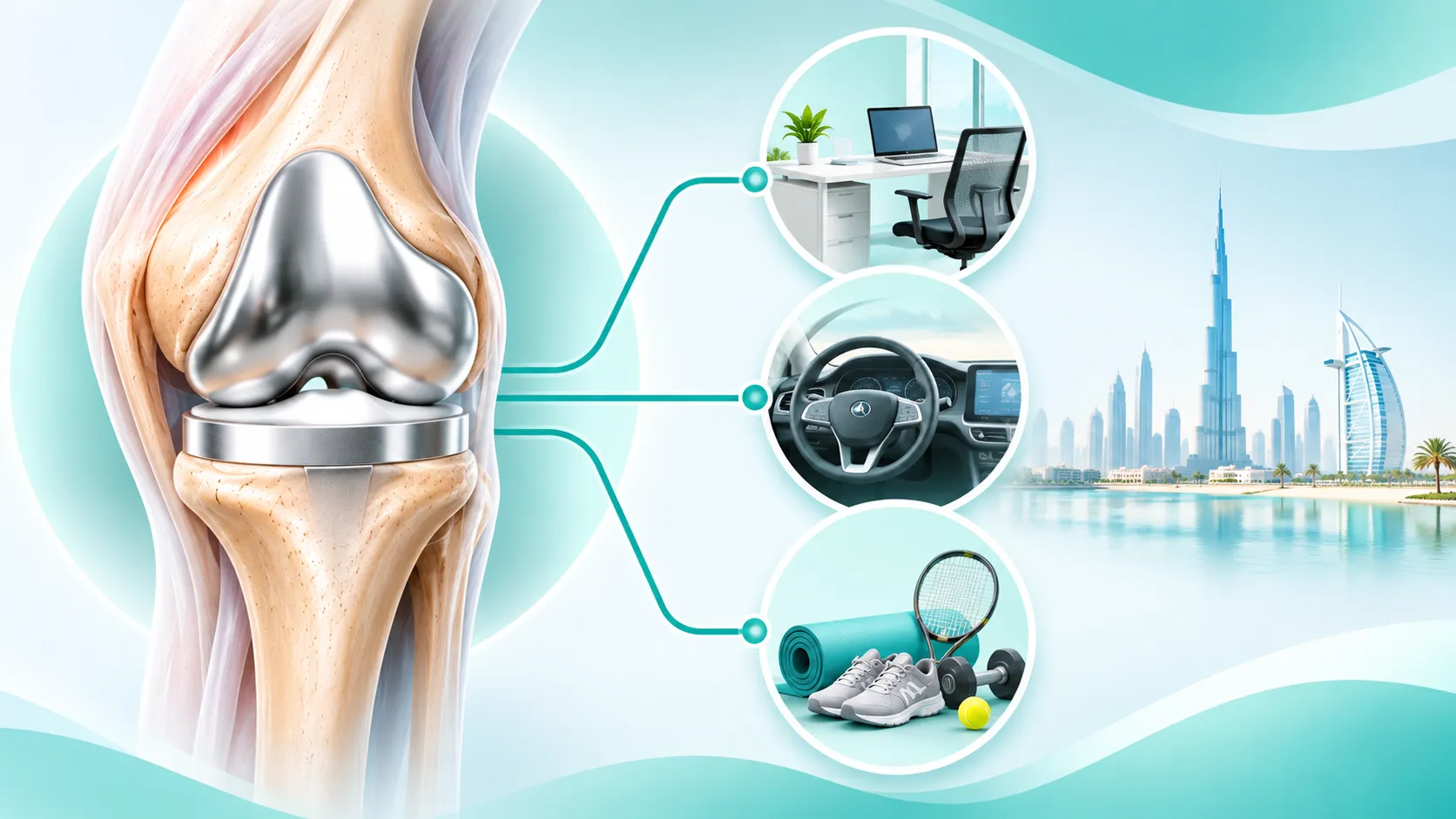
Maintaining an active, athletic lifestyle remains a primary goal for patients undergoing modern joint arthroplasty. Returning to sports after knee replacement requires distinguishing between joint-friendly low-impact conditioning and activities that risk implant wear.
Engaging in sports after knee replacement promotes cardiovascular health, bone density, and muscular stability around your prosthesis. Low-impact activities distribute joint contact forces smoothly across prosthetic bearing surfaces without damaging the underlying bone-implant interface. Most patients resume recreational activities between three and six months post-surgery:
- Swimming and aquatic exercise: Water provides gentle resistance while supporting body weight, making it an ideal low-impact exercise once surgical incisions heal.
- Stationary and outdoor cycling: Smooth pedal revolutions promote joint flexion, enhance synovial circulation, and strengthen the quadriceps safely.
- Golf and flat-course walking: Rotational weight transfers during a golf swing are well tolerated once balance and single-leg stability are restored.
- Doubles tennis and padel: Controlled racket sports provide social and physical recreation while avoiding the sudden stops of high-level singles competition.
Conversely, repetitive high-impact activities, such as contact sports, sprinting, or heavy plyometric jumping, are generally discouraged. High-impact forces can accelerate polyethylene wear and increase the risk of component loosening over time. Focusing on low-impact sports after knee replacement protects your joint while keeping you physically active.
Evaluating your activity goals helps ensure that life after knee replacement remains fulfilling and durable. Sensible athletic choices allow you to stay fit across Dubai's recreational facilities without compromising prosthetic longevity.
Biomechanical Realities of Kneeling After Knee Replacement
Many patients wonder about the comfort and safety of kneeling on an artificial joint. Safely managing kneeling after knee replacement requires understanding both anatomical healing and sensory changes around the incision.
From a structural standpoint, kneeling after knee replacement does not damage modern titanium, cobalt-chromium, or polyethylene components. The prosthetic joint is engineered to withstand substantial compressive loads. However, many individuals experience subjective discomfort or unnatural pressure when placing their body weight directly onto a hard floor.
Discomfort during kneeling after knee replacement typically stems from cutaneous nerve sensitivity rather than internal mechanical failure. The surgical incision divides microscopic cutaneous nerve branches, leaving a small patch of numbness or heightened tactile sensitivity across the front of the knee.
Using a cushioned gel kneeling mat, wearing padded knee protectors, or shifting weight slightly onto the shin can make kneeling after knee replacement far more comfortable. Incorporating gentle kneeling drills into physical therapy helps desensitize the anterior skin envelope over time.
Protecting Prosthetic Longevity in Daily Life
Preserving your artificial joint over decades requires balancing regular physical exercise with sensible joint care. Modern implants provide outstanding survivorship, with registry data confirming that over eighty percent perform reliably beyond twenty-five years.
Maintaining a stable, healthy body weight is one of the most effective ways to protect your prosthesis. Every kilogram of excess body weight multiplies contact forces across the tibial bearing surface during daily walking strides. Keeping body mass within a healthy range reduces mechanical wear and lowers loosening risks.
Scheduling periodic clinical check-ups with your orthopedic specialist ensures that component positioning and bone stock are monitored over time. Routine weight-bearing radiographs identify subtle interface changes long before clinical symptoms appear.
Patients seeking specialized knee replacement in Dubai benefit from world-class orthopedic expertise and advanced tissue-sparing techniques. Dr. Muhieddine Hamie designs comprehensive care pathways that guide patients from pre-operative planning to long-term athletic independence.
Long-Term Care at Dr. Hamie Clinic
Achieving an active, unrestricted recovery requires experienced surgical execution and dedicated post-operative support. Dr. Muhieddine Hamie brings international orthopaedic training and advanced surgical expertise to his practice in Dubai Healthcare City Phase 2.
At Dr. Hamie Clinic, patient care extends far beyond the operating room. Every recovery protocol is tailored to match the patient's individual lifestyle, workplace demands, and athletic aspirations. Dr. Hamie combines tissue-sparing surgical approaches with criteria-based rehabilitation milestones to support a smooth, predictable return to daily life.
Patients receive clear, practical guidance on resuming driving, traveling, and returning to sports safely. Regular follow-up appointments allow the clinical team to track joint flexibility, confirm mechanical stability, and support your long-term mobility goals.
Take the Next Step Toward Restoring Your Active Lifestyle
Living with chronic, debilitating joint osteoarthritis should not restrict your personal vitality, career productivity, or active lifestyle across Dubai. Embracing life after knee replacement provides the physical freedom needed to participate in the activities you enjoy most.
Dr. Muhieddine Hamie offers advanced orthopedic consultations, digital surgical planning, and comprehensive recovery oversight at Dr. Hamie Clinic. Take a proactive step toward eliminating chronic joint pain, restoring functional mobility, and enjoying an active future.
Consult with Our Orthopedic Specialists
Connect directly with the clinical team at Dr. Hamie Clinic in Dubai to discuss your joint health and explore personalized joint restoration strategies. Schedule your consultation today through our online appointment system or contact our clinic directly.
Conclusion
Undergoing joint replacement surgery is an investment in your physical autonomy, daily comfort, and future mobility. Modern surgical techniques, durable biomaterials, and targeted rehabilitation have transformed arthroplasty into a predictable, life-enhancing procedure.
Adapting to life after knee replacement allows you to resume driving, explore international travel, return to professional duties, and engage in recreational sports without chronic joint pain. Following evidence-based timelines protects your prosthesis while helping you build strength and cardiovascular fitness.
Partnering with an experienced orthopedic surgeon provides guidance throughout every phase of your functional recovery. Restoring comfortable, stable joint movement empowers you to enjoy Dubai's vibrant professional, social, and recreational lifestyle with complete confidence.
Frequently Asked Questions
When can I safely resume driving after knee replacement surgery?
Patients recovering from left knee surgery in automatic cars often drive within 2 to 4 weeks. Right knee surgery requires 4 to 6 weeks to ensure rapid emergency braking reflexes without pain, provided all opioid pain medications have stopped.
How soon is it safe to travel on commercial flights?
Short flights under four hours are generally safe after 4 to 6 weeks. Flights exceeding four hours should be delayed until 8 to 12 weeks post-surgery to minimize blood clot risks, using compression stockings and aisle walking for safety.
What sports are recommended during life after knee replacement?
Low-impact sports like swimming, stationary cycling, walking, golf, and doubles padel are highly encouraged. High-impact contact sports, running, and heavy jumping should be avoided to prevent accelerated prosthetic wear.
Is kneeling after knee replacement safe for the implant?
Yes, kneeling is mechanically safe and will not damage the metal or plastic components. However, localized numbness or pressure sensitivity around the surgical incision may make kneeling uncomfortable without a cushioned gel pad.
How long does it take to return to work after surgery?
Desk-based corporate professionals typically resume work within 3 to 6 weeks, often starting with hybrid or modified schedules. Jobs requiring prolonged standing, walking, or physical labor usually require 8 to 12 weeks of recovery.
Will the knee replacement set off airport security metal detectors?
Yes, modern titanium and cobalt-chromium implants regularly trigger airport security scanners. Carrying an official medical implant card or a signed confirmation note from your orthopedic surgeon helps clarify security screenings quickly.

Consultant Orthopedic Surgeon at Clemenceau Medical Center, Dubai. He performs robotic-assisted, total, partial and revision knee replacement and treats sports injuries of the knee.
Meet Dr. Hamie