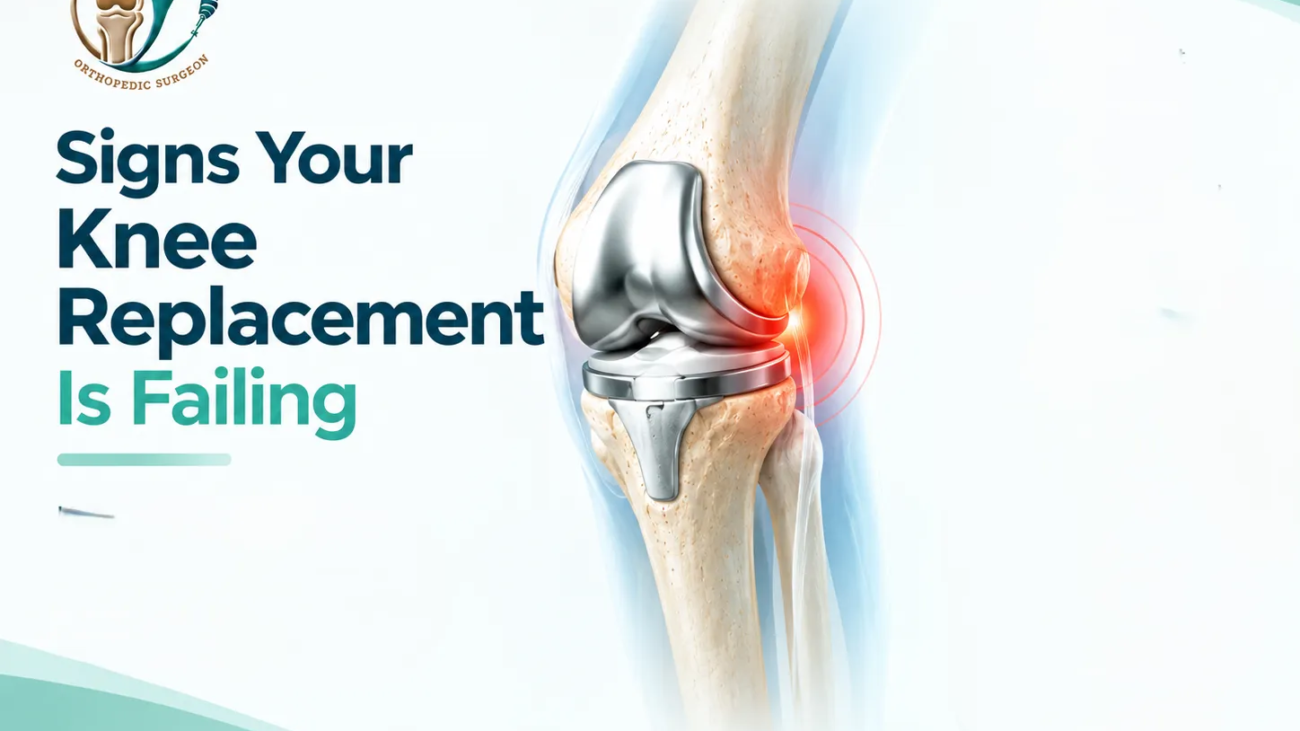
Undergoing joint arthroplasty provides profound relief from chronic osteoarthritis for millions of patients worldwide. However, monitoring for unexpected knee replacement failure symptoms is vital to protecting your long-term mobility and joint health.
While the majority of artificial knee joints function reliably for decades, mechanical wear or biological issues can occasionally emerge. Recognising subtle knee replacement failure symptoms allows active individuals across Dubai to address structural complications before severe bone loss develops. Enduring renewed physical distress without clinical evaluation risks compromising adjacent ligaments and bone stock.
Modern orthopaedic surgery provides precise diagnostic tools and advanced revision techniques to correct failing implants. Learning the primary knee replacement failure symptoms helps you seek timely medical intervention with Dr. Muhieddine Hamie at his Dubai clinic. Early detection preserves host bone and paves the way for successful surgical revision.
Recognising Early Knee Replacement Failure Symptoms
Identifying clinical knee replacement failure symptoms early prevents progressive damage to the surrounding soft-tissue envelope. Artificial joints typically feel stable and predictable once fully rehabilitated. When sudden discomfort or functional decline interrupts normal routines, evaluating your prosthesis becomes necessary.
Early knee replacement failure symptoms often start subtly before progressing into constant mechanical impairment. Patients may dismiss initial aches as simple muscular fatigue from walking through Dubai’s commercial centres. However, an artificial joint that has been comfortable for years should not suddenly become painful.
Specialist evaluation clarifies whether developing knee replacement failure symptoms stem from component loosening, polyethylene breakdown, or joint laxity. Dr. Muhieddine Hamie conducts systematic physical examinations and diagnostic imaging to pinpoint the exact mechanical source of your distress.
Clinical Indicators and Signs of Knee Replacement Failure
Recognising progressive signs of knee replacement failure empowers patients to seek timely clinical assistance. Orthopaedic specialists categorize functional breakdown through specific physical and mechanical presentations:
- Persistent weight-bearing pain: A dull ache or sharp pain that recurs during routine walking after months or years of comfortable mobility.
- Progressive joint instability: A distinct sensation that the knee is buckling, hyperextending, or shifting unpredictably during weight-bearing turns.
- Chronic joint line swelling: Fluid buildup around the artificial joint that resists rest, ice, elevation, and anti-inflammatory medications.
- Warmth and cutaneous redness: Localized elevated skin temperature surrounding the joint capsule, signaling active mechanical friction or biological irritation.
- Audible clicking or clunking: Noticeable popping sounds accompanied by physical discomfort, indicating component wear or ligament laxity.
Monitoring these physical signs of knee replacement failure ensures that underlying implant issues are diagnosed promptly. Early clinical intervention safeguards healthy bone architecture and makes revision surgery far more straightforward.
Identifying Distinct Loose Knee Replacement Symptoms
Aseptic loosening represents one of the most common causes of late joint revision. Experiencing distinct loose knee replacement symptoms indicates that the mechanical bond between the prosthetic component and host bone has weakened.
Patients managing loose knee replacement symptoms typically report start-up pain. This sharp discomfort occurs when rising from a seated position to stand, settling slightly once walking begins. As mechanical micromotion between the implant and bone worsens, walking strides become painful and hesitant.
Furthermore, prominent loose knee replacement symptoms often include an unnerving feeling of structural instability. When the tibial baseplate or femoral shield shifts against underlying bone, the joint cannot support your body weight securely. Radiographic imaging readily identifies radiolucent lines, confirming that implant loosening requires surgical stabilization.
Causes Behind Knee Replacement Problems Years Later
Experiencing complex knee replacement problems years later often surprises patients who enjoyed decades of trouble-free movement. Prosthetic implants naturally encounter millions of mechanical load cycles throughout their functional life.
A primary contributor to knee replacement problems years later is polyethylene wear. Over decades, the ultra-high-molecular-weight polyethylene spacer gradually sheds microscopic particles. The body’s immune system attempts to digest these foreign particles, unintentionally causing osteolysis, a process where bone tissue surrounding the implant is reabsorbed.
Ligament stretching and natural changes in bone mineral density also contribute to knee replacement problems years later. As systemic bone density shifts, the mechanical foundation supporting the prosthesis weakens. Routine orthopaedic monitoring ensures that gradual bone loss is detected before the implant detaches completely.
Evaluating Causes of an Unsuccessful Knee Replacement
Understanding why an individual experiences an unsuccessful knee replacement requires examining both technical and biological variables:
- Implant malalignment: Even minor errors in initial component placement cause asymmetrical weight loading, accelerating polyethylene breakdown.
- Soft-tissue imbalance: Excessive tightness or laxity in the collateral ligaments leads to chronic stiffness or recurring joint instability.
- Arthrofibrosis: Excessive internal scar tissue formation restricts natural bending and straightening, causing permanent joint rigidity.
- Patellar tracking errors: Misalignment between the patellar button and femoral groove causes severe anterior pain during stair navigation.
Thorough clinical assessments reveal the root mechanics behind an unsuccessful knee replacement. Identifying these underlying issues allows Dr. Muhieddine Hamie to formulate an effective corrective strategy.
Comparative Diagnostic Breakdown of Joint Failure Mechanisms
Differentiating between underlying failure modes requires matching objective diagnostic findings with patient symptoms. The comparative matrix below outlines key clinical distinctions across primary prosthetic complications.
| Complication Profile | Primary Clinical Symptoms | Radiographic Imaging Indicators | Recommended Treatment Strategy |
| Aseptic Loosening | Start-up pain, instability upon standing | Radiolucent lines around tibial or femoral base | Component revision with biological augments |
| Polyethylene Wear | Gradual ache, joint effusion, clicking | Narrowed joint space; eccentric component wear | Isolated modular polyethylene spacer exchange |
| Ligamentous Instability | Sensation of giving way, joint buckling | Normal bone interface; dynamic joint opening | Revision using semi-constrained prostheses |
| Periprosthetic Infection | Constant resting pain, redness, fever | Periosteal reaction; elevated ESR and CRP | Debridement or staged revision arthroplasty |
| Arthrofibrosis | Severe stiffness, flexion under 90° | Normal component seating; dense fibrotic bands | Arthroscopic release or mechanical revision |
Reviewing these metrics helps patients understand why knee replacement failure symptoms present in varied ways. Accurately diagnosing the root cause ensures that subsequent corrective interventions restore long-term joint function.
Comprehensive Diagnostic Workflow for Failing Implants
Evaluating acute knee replacement failure symptoms involves a multi-stage diagnostic workup. Orthopaedic specialists combine weight-bearing radiographs, computed tomography, and specialized laboratory tests to assess implant positioning and bone stock.
Blood tests measuring Erythrocyte Sedimentation Rate and C-Reactive Protein help rule out biological causes of joint failure. In cases with persistent effusion, joint aspiration provides synovial fluid for cell counts, bacterial cultures, and biomarker assays. This thorough analysis confirms whether knee replacement failure symptoms stem from mechanical loosening or soft-tissue infection.
Comparing your current symptoms with historical signs you need a knee replacement helps differentiate between joint arthritis and prosthetic failure. While arthritis causes broad joint space narrowing, implant failure involves micromotion between metal components and underlying bone.
Advanced Surgical Revision and Corrective Strategies
When conservative measures fail to resolve knee replacement failure symptoms, revision arthroplasty provides definitive mechanical reconstruction. Dr. Muhieddine Hamie utilizes advanced diagnostic planning and specialized modular implants to restore joint alignment.
Planning for revision knee replacement recovery involves understanding that revision procedures are technically demanding. Specialized stems, wedges, and porous titanium cones rebuild structural bone defects, providing solid anchors for new components. With modern rehabilitation protocols, patients steadily regain walking independence and comfort.
In cases presenting with fever, localized heat, or wound drainage, immediate screening for infected knee replacement symptoms is essential. Treating joint infections requires targeted surgical debridement or staged component exchange to eradicate bacteria and protect surrounding tissues.
Residents across the UAE seeking world-class Knee Replacement Surgery in Dubai benefit from fellowship-trained orthopaedic surgical care. Dr. Muhieddine Hamie combines tissue-sparing techniques with modular reconstructive engineering to resolve complex joint failure safely.
Specialist Care at Dr. Muhieddine Hamie Clinic
Revision joint reconstruction requires an experienced orthopaedic surgeon with specialized training in complex joint mechanics. Dr. Muhieddine Hamie brings international orthopaedic fellowship expertise to his Dubai Healthcare City practice, treating patients with failing or painful joint replacements.
Using advanced digital templating and 3D imaging, Dr. Hamie designs customized revision plans to address bone loss and ligament laxity. By optimizing soft-tissue tension and restoring the limb’s natural mechanical axis, surgery recreates a stable, comfortable joint.
Patients experiencing knee replacement failure symptoms receive transparent, evidence-based guidance at every evaluation stage. Dr. Hamie’s focus on tissue preservation and precision engineering ensures that revision surgery restores long-term joint durability.
Reclaim Your Joint Stability and Physical Independence Today
Living with renewed knee pain or joint instability should not compromise your daily vitality, career productivity, or active lifestyle across Dubai. Recognizing critical knee replacement failure symptoms gives you the clarity needed to pursue corrective joint restoration with confidence.
Dr. Muhieddine Hamie provides comprehensive diagnostic evaluations, advanced 3D implant imaging, and modern revision surgery in Dubai Healthcare City Phase 2. Take decisive action to resolve chronic joint pain, stabilize your prosthetic foundation, and restore your active mobility.
Schedule Your Comprehensive Orthopaedic Consultation
Connect directly with the specialized clinical team at Dr. Muhieddine Hamie Clinic in Dubai to evaluate your artificial knee joint and discuss personalized revision solutions.
Conclusion
Navigating a failing joint replacement requires experienced clinical diagnosis, advanced imaging, and personalized surgical execution. Recognizing knee replacement failure symptoms early prevents progressive bone wear and preserves healthy soft tissues, making corrective revision safer and more predictable.
Modern revision arthroplasty utilizes specialized porous coatings, modular stems, and constrained bearing designs to overcome bone defects and ligament laxity. Dedicated post-operative rehabilitation transforms precise surgical correction into lasting physical stability.
Partnering with an experienced orthopaedic specialist ensures your revision pathway delivers comfortable, dependable mobility. Restoring a secure, pain-free joint allows you to enjoy Dubai’s vibrant professional, social, and recreational lifestyle without physical boundaries.
Frequently Asked Questions
1.What are the earliest knee replacement failure symptoms to watch for?
The earliest symptoms include persistent pain during weight-bearing activities, start-up stiffness when standing, localized warmth, and a feeling that the knee is unstable or giving way during routine daily walking.
2.What are the most common signs of knee replacement failure?
Key signs include recurring joint swelling that resists conservative care, sudden angular leg deformity, clicking or grinding sensations accompanied by pain, and a progressive loss of joint range of motion.
3.How do patients describe loose knee replacement symptoms?
Patients typically describe sharp pain when rising from a chair, progressive instability when stepping forward, and a persistent sensation that the artificial joint is shifting inside the leg.
4.What causes knee replacement problems years later after successful surgery?
Long-term problems usually stem from natural polyethylene insert wear, microscopic osteolysis that thins surrounding bone, gradual ligament stretching, or age-related changes in host bone density.
5.Can an unsuccessful knee replacement be corrected with revision surgery?
Yes, an orthopaedic surgeon can perform revision arthroplasty to remove loose or worn components, repair bone defects with specialized modular augments, and restore joint alignment and stability.
6.How does a doctor diagnose knee replacement failure symptoms accurately?
Surgeons utilize standing weight-bearing X-rays, CT scans, blood inflammation markers (ESR and CRP), and joint fluid analysis to confirm whether failure is caused by mechanical loosening, wear, or infection.