Navigating joint resurfacing requires a detailed understanding of the prosthetic components that will restore your physical mobility. Reviewing the available types of knee replacement implants provides patients with the knowledge needed to make confident, informed clinical decisions.
Many active individuals across Dubai wonder how different implant biomaterials impact their daily movement and comfort. Modern joint reconstruction relies on advanced engineering to produce durable types of knee replacement implants designed to mimic natural knee kinematics. Choosing suitable types of knee replacement implants ensures optimal biocompatibility, stable bone fixation, and decades of smooth joint articulation.
Prosthetic components are not one-size-fits-all medical products. Selecting among modern types of knee replacement implants depends on your unique bone density, anatomical alignment, and metal sensitivity profile. Specialist consultations with Dr. Muhieddine Hamie help identify the optimal implant system tailored to your active lifestyle and musculoskeletal anatomy.
Engineering Foundations of Types of Knee Replacement Implants
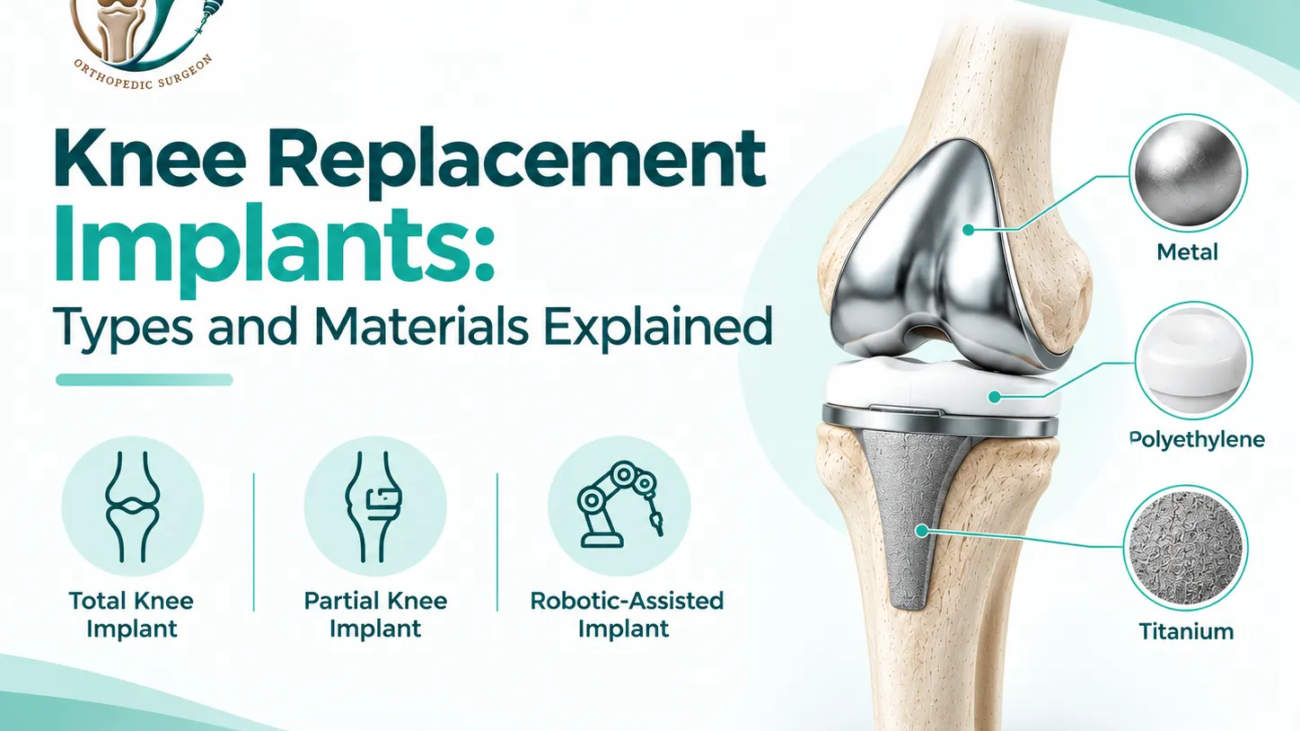
Every artificial joint prosthesis consists of several modular parts designed to replace worn cartilage and bone surfaces. Exploring types of knee replacement implants requires examining the femoral component, the tibial tray, and the polyethylene bearing insert. Each element interacts continuously to support normal weight distribution during walking strides.
The femoral shield caps the end of the thigh bone, while the tibial platform anchors firmly into the shin bone. When evaluating types of knee replacement implants, surgeons review how the ultra-smooth spacer facilitates fluid flexion and rotation. High-grade biomaterials resist micro-friction, preventing microscopic wear debris from irritating surrounding soft tissues.
Furthermore, studying types of knee replacement implants highlights how modern manufacturing has evolved beyond traditional casting methods. Specialized surface coatings, including porous titanium plasma sprays, encourage host bone to grow directly into the implant surface. This biological integration creates a permanent, stable anchor capable of supporting daily athletic activity.
Biocompatible Materials Used in Modern Knee Replacement Implants
Orthopaedic surgeons utilize distinct high-performance materials when selecting knee replacement implants for surgery. The chosen material must withstand repetitive mechanical loading while demonstrating complete biological safety within human tissue:
- Cobalt-chromium alloys: Known for exceptional tensile strength and wear resistance, making them ideal for high-stress femoral resurfacing components.
- Commercially pure titanium alloys: Offer superior biocompatibility and lower stiffness, promoting natural bone ingrowth along the tibial baseplate.
- Oxidized zirconium ceramics: Provide an ultra-smooth, scratch-resistant surface that dramatically reduces polyethylene friction during repetitive motion.
- Highly cross-linked polyethylene: Advanced medical-grade polymers infused with antioxidants like vitamin E to resist long-term oxidative degradation.
Understanding these biomaterials ensures that the selected knee replacement implants match your physiological requirements. Combining durable metals with advanced bearing polymers delivers lifelong joint performance.
Clinical Performance of Titanium Knee Replacement Systems
Opting for a titanium knee replacement platform offers distinct physiological advantages regarding bone conservation and implant stability. Titanium alloys possess an elasticity modulus that closely mimics human trabecular bone structure.
This structural similarity reduces stress shielding, a condition where rigid metal absorbs all mechanical force, causing underlying natural bone to weaken. Incorporating a titanium knee replacement tibial tray encourages healthy physiological stress distribution across the proximal tibia. As a result, native bone density is preserved beneath the prosthetic base.
Additionally, a titanium knee replacement baseplate features superior osteointegration capabilities. Porous biological meshes allow bone cells to infiltrate microscopic metal pores within weeks of surgery. This cementless biological fixation provides a solid, long-term bond ideal for younger, active individuals in Dubai.
Patients choosing a titanium knee replacement benefit from reduced component weight without sacrificing structural strength. This combination of bone preservation and mechanical stability makes titanium components a staple of modern orthopaedic reconstruction.
Advanced Surface Technology in Ceramic Knee Replacement Designs
For individuals prioritizing minimal friction and maximum surface hardness, a ceramic knee replacement component offers an exceptional operative solution. These systems often utilize oxidized zirconium, a specialised metal alloy transformed through thermal oxidation into a scratch-resistant ceramic surface.
A primary advantage of a ceramic knee replacement is its smooth articulation against the polyethylene bearing spacer. The ceramic surface is twice as smooth as standard polished metal alloys, which reduces microscopic polymer wear by up to 85%. Lower bearing friction prevents the accumulation of micro-particles that can trigger osteolysis and premature loosening.
Furthermore, selecting a ceramic knee replacement provides outstanding resistance to surface abrasions. If tiny third-body bone fragments or cement particles enter the joint space, the hardened surface resists scratching. Maintaining pristine surface smoothness supports reliable, friction-free movement throughout millions of walking cycles.
Evaluating the clinical advantages of a ceramic knee replacement helps active patients protect their joint longevity. Reduced wear rates ensure that your knee tolerates dynamic sports, travel, and daily living across the UAE with ease.
Specialized Care Using Hypoallergenic Knee Replacement Solutions
Allergies to trace metals—such as nickel, cobalt, and chromium—represent an important clinical consideration in joint reconstruction. Patients experiencing hypersensitivity require a dedicated hypoallergenic knee replacement to avoid chronic systemic inflammation or localized soft-tissue reactions.
Standard orthopaedic implants contain microscopic traces of nickel to enhance alloy malleability. In sensitive individuals, these ions can cause persistent effusion, cutaneous dermatitis, and joint stiffness. Receiving a hypoallergenic knee replacement eliminates this clinical complication by utilizing biocompatible titanium, pure zirconium ceramics, or specialized titanium-nitride barrier coatings.
Screening for metal sensitivities prior to surgery ensures that vulnerable candidates receive an appropriate hypoallergenic knee replacement. Modern barrier technologies seal all underlying reactive metals completely, preventing ion leakage into the joint fluid. Choosing a certified hypoallergenic knee replacement guarantees peaceful tissue integration and durable comfort for sensitive patients.
Comprehensive Biomaterial and Mechanical Comparison
Selecting between different implant systems requires comparing mechanical performance, biological compatibility, and clinical longevity. The comparative matrix below outlines the primary specifications across contemporary implant choices.
| Implant Material Profile | Structural Composition | Primary Biomechanical Advantage | Best Clinical Indication |
| Cobalt-Chromium Systems | Cobalt, chromium, molybdenum alloy | Superior fatigue strength and hardness | Standard primary and revision total knee surgery |
| Titanium Alloy Systems | Titanium, aluminium, vanadium alloy | Bone-mimicking elasticity; biological ingrowth | Cementless tibial fixation; bone preservation |
| Oxidized Zirconium | Ceramic-metal surface transformation | Ultra-low friction; 85% reduced polymer wear | Younger patients; active sports enthusiasts |
| Coated Hypoallergenic | Titanium-nitride or ceramic barrier seal | Total elimination of reactive metal ion release | Confirmed nickel, cobalt, or chromium allergies |
Evaluating these clinical metrics clarifies why orthopaedic surgeons individualize types of knee replacement implants for every patient. Selecting materials tailored to your biology ensures optimal joint health and peace of mind.
Mechanical Alignment and Fixation Variations
Aside from material composition, types of knee replacement implants vary according to how they interface with host bone:
- Cemented fixation: Uses fast-curing polymethyl methacrylate bone cement to secure implants immediately, ideal for patients with osteopenia.
- Cementless biological fixation: Relies on porous textured coatings that encourage direct bone ingrowth, providing durable fixation for dense bone.
- Hybrid fixation: Combines a cemented tibial baseplate with a cementless press-fit femoral component to maximize stability.
- Cruciate-retaining designs: Features an anatomical recess allowing the patient’s native posterior cruciate ligament to guide natural roll-back mechanics.
- Posterior-stabilized systems: Employs an engineered internal post to stabilize the joint when native cruciate ligaments are compromised.
Reviewing these mechanical configurations ensures that the selected types of knee replacement implants align with your bone quality and ligament stability. Customizing implant geometry safeguards joint kinematics and promotes natural movement.
Connecting Implant Selection to Clinical Durability and Recovery
Understanding how component designs interact with surgical strategy begins by reviewing the broader types of knee replacement available today. Matching full or partial joint resurfacing with the correct implant material ensures that only diseased tissues are altered.
Choosing durable components also influences your overall knee replacement recovery time. Low-friction materials minimize early soft-tissue irritation, allowing patients to begin supported walking within hours of leaving the operating theatre. Reduced inflammation supports steady progress through post-operative physical therapy milestones.
Furthermore, investing in premium materials directly safeguards your expected knee replacement lifespan. Modern ceramics and cross-linked polymers consistently deliver over twenty to twenty-five years of reliable survivorship when aligned with robotic precision.
Determining when to get a knee replacement prevents advanced bone erosion from complicating implant seating. Proactive surgical intervention preserves the structural bone stock needed to anchor modern cementless and ceramic components securely.
Residents seeking world-class care select specialized Knee Replacement Surgery in Dubai for access to fellowship-trained orthopaedic surgical care. Dr. Muhieddine Hamie utilizes tissue-sparing techniques and advanced implant mapping to deliver long-lasting joint restoration.
Advanced Implant Selection at Dr. Muhieddine Hamie Clinic
Modern joint reconstruction relies on combining advanced biomaterials with sub-millimeter surgical accuracy. Dr. Muhieddine Hamie utilizes dynamic digital planning and robotic navigation at his Dubai Healthcare City practice to optimize component positioning.
During your pre-operative assessment, Dr. Hamie evaluates your bone morphology, activity goals, and allergy history to select the ideal types of knee replacement implants. Using 3D computer models, implant size and orientation are matched precisely to your natural anatomy, avoiding generic population alignments.
Patients benefit from smaller operative incisions, preserved bone stock, and balanced soft-tissue tension. Dr. Muhieddine Hamie ensures that every implant system functions as an integrated, natural extension of your body, supporting active living across the UAE.
Reclaim Your Active Independence and Joint Comfort Today
Living with debilitating joint arthritis should not restrict your personal vitality, professional career, or active lifestyle across Dubai. Understanding the clinical advantages of modern types of knee replacement implants provides the clarity needed to pursue joint restoration with total confidence.
Dr. Muhieddine Hamie provides comprehensive diagnostic assessments, advanced allergy evaluations, and state-of-the-art robotic joint resurfacing in Dubai Healthcare City Phase 2. Take decisive action to eliminate chronic joint pain, preserve your healthy bone stock, and invest in decades of comfortable mobility.
Schedule Your Comprehensive Orthopaedic Consultation
Connect directly with the clinical team at Dr. Muhieddine Hamie Clinic in Dubai to evaluate your joint health and discover which advanced implant materials match your anatomical requirements.
Conclusion
Navigating modern joint reconstruction requires expert diagnostic guidance, biocompatible materials, and personalized surgical execution. Orthopaedic engineering has produced remarkable prostheses that resist mechanical wear, eliminate allergy risks, and integrate smoothly with native bone.
Understanding the available types of knee replacement implants ensures that your surgical plan accounts for subtle anatomical variations, bone density, and metal sensitivities. Precise implant seating distributes weight-bearing forces evenly, protecting components from premature loosening.
Partnering with an experienced orthopaedic specialist ensures your surgical journey delivers lasting comfort and mobility. Restoring smooth, natural joint function empowers you to enjoy Dubai’s vibrant professional, social, and recreational lifestyle without physical boundaries.
Frequently Asked Questions
1.What are the main types of knee replacement implants available?
The main types include cobalt-chromium alloy implants, porous titanium systems for biological bone ingrowth, oxidized zirconium ceramic components, and hypoallergenic implants coated with titanium nitride.
2.Who should consider choosing a titanium knee replacement?
Patients with good bone mineral density seeking cementless biological fixation, as well as individuals requiring lightweight components that promote natural bone ingrowth and reduce stress shielding, benefit most from titanium.
3.What are the primary advantages of a ceramic knee replacement?
Ceramic components offer an ultra-smooth, scratch-resistant surface that reduces friction against the plastic spacer by up to 85%, significantly lowering wear debris and extending implant longevity in active patients.
4.How does a hypoallergenic knee replacement protect sensitive patients?
A hypoallergenic implant utilizes pure titanium, ceramic zirconium, or protective titanium-nitride barrier coatings to prevent reactive nickel, cobalt, and chromium ions from releasing into joint tissues and causing allergic inflammation.
5.How are knee replacement implants anchored to natural bone?
Implants are secured either using rapid-curing medical bone cement (polymethyl methacrylate) or through cementless biological fixation, where native bone grows directly into porous textured metal surfaces over several weeks.
6.Which types of knee replacement implants last the longest?
Implants combining oxidized zirconium ceramic or cobalt-chromium with highly cross-linked, antioxidant-infused polyethylene inserts provide the lowest wear rates and regularly last over 20 to 25 years when aligned with robotic precision.