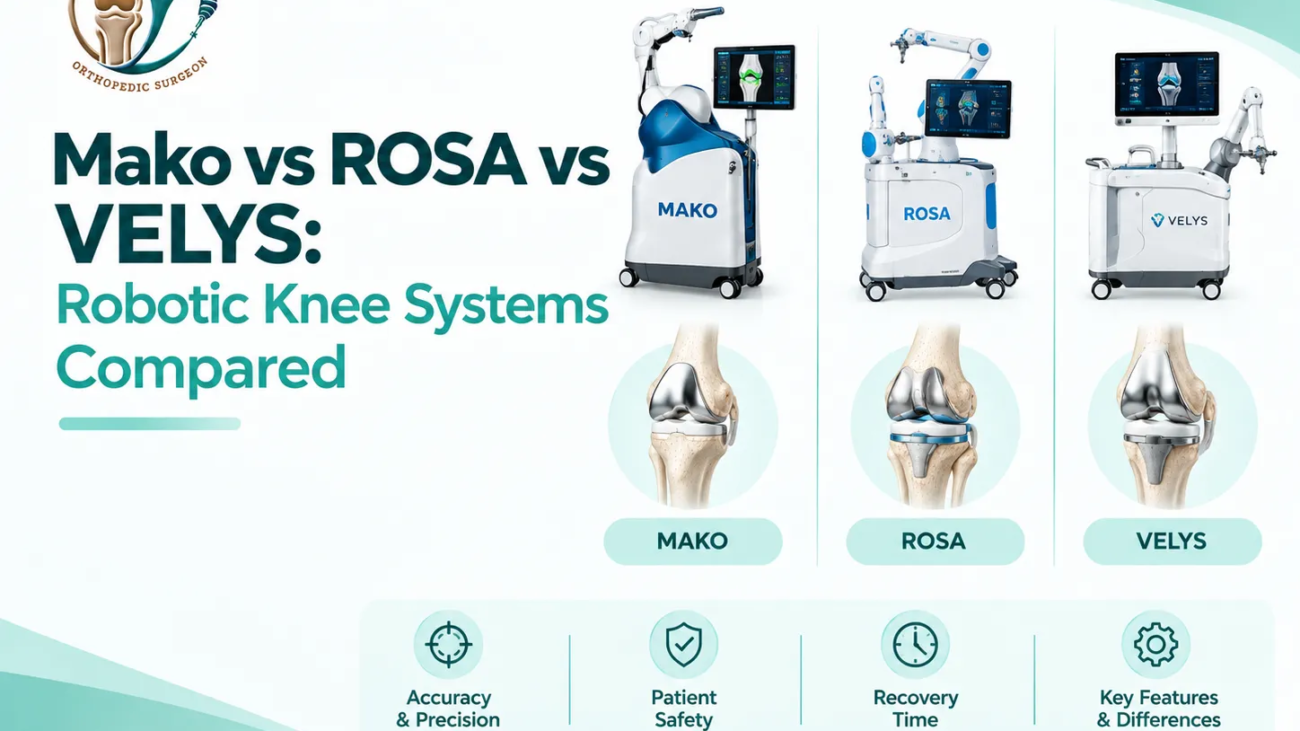
Advanced surgical robotics has fundamentally modernised joint reconstruction across the UAE, providing patients with exceptional operative precision and faster physical rehabilitation. Evaluating MAKO vs ROSA vs VELYS platforms helps prospective patients understand the distinct technological innovations driving contemporary orthopaedic surgery.
Many active residents in Dubai seeking relief from chronic joint arthritis investigate the mechanical nuances between these systems. A thorough analysis of MAKO vs ROSA vs VELYS reveals how each surgical platform approaches preoperative imaging, soft-tissue balancing, and bone resection. While each platform delivers sub-millimeter surgical accuracy, their engineering methodologies and intraoperative workflows differ significantly.
Choosing between robotic solutions requires an understanding of patient-specific anatomy, bone morphology, and ligament balance. Exploring MAKO vs ROSA vs VELYS allows you to navigate surgical recommendations with confidence. At Dr. Muhieddine Hamie Clinic, patient evaluations focus on matching individual joint kinematics with the most suitable technological platform to achieve lifelong mobility.
Technical Foundations of MAKO vs ROSA vs VELYS Technologies
Understanding the operational differences in MAKO vs ROSA vs VELYS begins with examining how each system registers patient anatomy. Robotic platforms function as assistive surgical extensions, translating complex algorithmic data into real-time feedback for the orthopaedic surgeon. Comparing MAKO vs ROSA vs VELYS demonstrates how digital workflows eliminate manual estimation during bone preparation.
The primary distinction across these systems centres on image-based versus imageless planning protocols. In MAKO vs ROSA vs VELYS evaluations, some systems require high-resolution pre-operative computed tomography (CT) scans to construct a 3D digital bone model. Other platforms utilize intraoperative optical mapping and continuous optical tracking to calculate bone geometry without radiation exposure.
Furthermore, analysing MAKO vs ROSA vs VELYS highlights differences in robotic arm design and saw blade guidance. Certain platforms utilize active haptic boundaries, while others feature semi-autonomous robotic cutting guides. Evaluating MAKO vs ROSA vs VELYS ensures that patients recognize how robotic navigation optimizes prosthetic alignment and soft-tissue balance.
Detailed Overview of Primary Types of Robotic Knee Replacement
Contemporary orthopaedic surgery incorporates three foundational types of robotic knee replacement based on robotic interactivity and control mechanisms:
- Haptic robotic systems: The surgeon physically operates the cutting instrument, but the robotic arm enforces rigid virtual boundaries. The blade automatically stops spinning if moved outside the predefined operative zone, safeguarding collateral ligaments.
- Semi-autonomous robotic arms: The robotic arm independently positions a mechanical cutting jig against the bone based on real-time optical tracking. The surgeon performs the bone resection through this computer-positioned guide block.
- Handheld robotic navigation devices: Compact, imageless navigational tools guide bone resections without a large robotic gantry, using dynamic sensor feedback to ensure accurate component positioning.
Evaluating these types of robotic knee replacement ensures that surgical candidates understand the engineering philosophy behind each platform. Selecting among these types of robotic knee replacement depends on individual bone quality, prior deformities, and the surgeon’s clinical strategy. Understanding the available types of robotic knee replacement provides clarity on how technology elevates surgical safety.
In-Depth Analysis of the MAKO Robotic Arm System
The Stryker MAKO robotic arm represents one of the most established and widely studied surgical platforms in modern arthroplasty. This system utilizes a dedicated pre-operative CT scan to create an interactive 3D digital model of the patient’s knee anatomy. The surgeon uses this model to optimize component size, alignment axes, and implant positioning prior to entering the operating room.
During surgery, the MAKO robotic arm enforces strict stereotactic haptic feedback. The robotic arm actively guides the surgeon’s hand, physically preventing the oscillating saw from violating defined bony boundaries. This active boundary protection protects vital soft-tissue envelopes, including the posterior cruciate ligament and popliteal neurovascular bundle.
Furthermore, the MAKO robotic arm enables dynamic intra-operative ligament balancing before executing definitive bone cuts. The surgeon tensions the joint throughout flexion and extension, adjusting implant coordinates on the screen. The MAKO robotic arm provides exceptional precision, making it an outstanding platform for both partial resurfacing and total joint arthroplasty.
Clinical Capabilities of ROSA Robotic Knee Replacement
Developed by Zimmer Biomet, the ROSA robotic knee replacement platform offers remarkable intra-operative adaptability. ROSA (Robotic Surgical Assistant) utilizes both pre-operative 2D X-ray modelling and dynamic intraoperative optical mapping. This flexible approach eliminates the strict requirement for pre-operative CT radiation while delivering robust three-dimensional anatomic data.
During a ROSA robotic knee replacement, high-resolution optical cameras and osseous tracking arrays continuously calculate the patient’s exact leg position in space. If the patient’s leg shifts slightly on the operating table, the robotic arm adjusts its orientation synchronously. This real-time tracking ensures that bone preparation matches the pre-planned surgical trajectory perfectly.
In addition, ROSA robotic knee replacement places significant emphasis on soft-tissue tensioning and joint kinematics. The system measures real-time ligament laxity throughout the entire range of motion, providing immediate data on gap balancing. Choosing a ROSA robotic knee replacement allows surgeons to personalize implant positioning based on the patient’s native soft-tissue envelope.
Distinct Innovations of VELYS Robotic Knee Replacement
The DePuy Synthes VELYS robotic knee replacement platform is a compact, imageless robotic solution designed to streamline operative workflows. Unlike systems that depend on pre-operative CT scans, VELYS captures anatomical surface mapping directly in the operating theatre using high-speed digital optical tracking.
A core advantage of VELYS robotic knee replacement is its integrated dynamic joint tracking technology. The system monitors the mechanical axis and soft-tissue balance through a complete, continuous arc of motion from full extension to deep flexion. This real-time data allows the surgeon to make micro-adjustments to implant positioning before any bone resection occurs.
Operating with VELYS robotic knee replacement instrumentation gives the surgeon exceptional tactile responsiveness combined with high-speed automated saw guidance. The compact system mounts directly to the operating table, conserving surgical space while delivering sub-millimeter cutting precision. Opting for VELYS robotic knee replacement ensures high kinematic accuracy without requiring prior radiographic imaging.
Comparative Matrix: MAKO vs ROSA vs VELYS
Selecting between robotic platforms requires analyzing technical capabilities alongside surgical workflows. The comparative table below outlines essential engineering specifications across all three robotic systems.
| Technical Parameter | Stryker MAKO System | Zimmer Biomet ROSA | DePuy Synthes VELYS |
| Imaging Protocol | Pre-operative 3D CT scan required | 2D X-ray modelling or imageless mapping | Completely imageless intraoperative mapping |
| Robotic Guidance Style | Active haptic boundary saw arm | Semi-autonomous robotic cutting guide | High-speed automated robotic saw mount |
| Soft-Tissue Balancing | Dynamic pre-resection virtual tensioning | Real-time gap balancing through range | Continuous kinematic tracking across full arc |
| Ligament Protection | Active saw shutdown at virtual boundary | Stable guide block prevents blade excursion | Optical sensors control cutting zone limits |
| Joint Applications | Partial knee, total knee, total hip | Total knee, partial knee | Total knee replacement |
| Pre-Operative Radiation | Low-dose CT radiation exposure | Minimal (standard X-rays) or none | Zero pre-operative radiation exposure |
Reviewing these metrics clarifies how MAKO vs ROSA vs VELYS systems manage anatomical alignment. Each platform offers unique operative advantages, allowing the surgeon to select the optimal technology for each patient’s joint structure.
Diagnostic Evaluation and Surgical System Selection
Determining which robotic approach is optimal in MAKO vs ROSA vs VELYS assessments requires evaluating bone quality, anatomical deformities, and soft-tissue stability. Patients presenting with complex post-traumatic deformities or retained metal hardware from previous fractures may benefit from imageless navigation like VELYS or ROSA, bypassing CT metal-artefact distortions.
Conversely, patients with severe bone loss or unique dysplastic joint morphology often benefit from the comprehensive pre-operative 3D virtual planning provided by the MAKO robotic arm. Thorough diagnostic assessments ensure that the selected platform addresses your exact anatomical variations.
Regardless of the robotic platform chosen, advanced operative precision directly enhances long-term joint outcomes. Modern surgical planning optimizes the soft-tissue envelope, which plays a major role in determining your anticipated robotic knee replacement recovery time. Minimizing surgical trauma allows patients to mobilize comfortably within hours of leaving the operating theatre.
Biomechanical Precision and Clinical Longevity
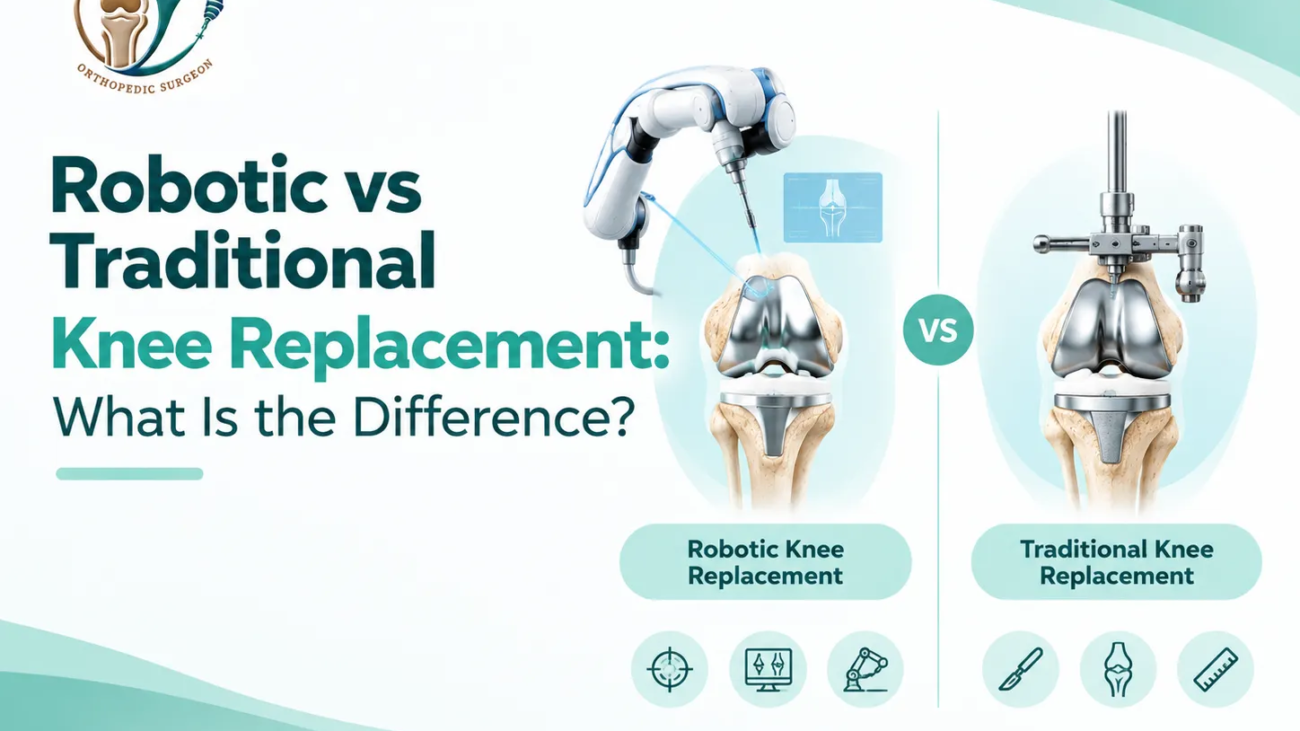
Patients frequently inquire about how robotic technologies compare to manual techniques when evaluating robotic vs traditional knee replacement. Conventional manual techniques rely on mechanical alignment rods and visual inspection, which carry higher rates of alignment outliers.
Comparing MAKO vs ROSA vs VELYS platforms demonstrates that all three robotic systems consistently achieve component alignment within one degree and one millimeter of the surgical plan. This structural accuracy ensures that weight-bearing forces are distributed evenly across the prosthetic bearing surfaces.
Balanced joint loading reduces unnatural shearing stresses on the polyethylene insert, which helps prevent premature wear and mechanical loosening. Selecting an advanced robotic platform preserves bone stock, supports native kinematics, and promotes lasting prosthetic stability.
Residents across the UAE seeking world-class robotic assisted knee replacement in Dubai receive individualized care plans tailored to their physical lifestyle demands. Understanding the engineering differences in MAKO vs ROSA vs VELYS ensures that your joint surgery is executed with modern technological precision.
Advanced Robotic Joint Surgery at Dr. Muhieddine Hamie Clinic
Surgical robotics represents a sophisticated navigational extension of an experienced orthopaedic surgeon’s hands. Dr. Muhieddine Hamie utilizes cutting-edge digital planning and robotic instrumentation to deliver tailored joint resurfacing at his Dubai Healthcare City practice.
Combining international orthopaedic fellowship expertise with state-of-the-art robotic platforms, Dr. Hamie designs customized operative strategies for every patient. By analysing native joint balance and bone geometry, surgery restores natural knee kinematics rather than enforcing rigid, generic population averages.
Patients benefit from smaller incisions, reduced intra-operative blood loss, and accelerated functional recovery. Thorough pre-operative consultations evaluate whether MAKO vs ROSA vs VELYS methodologies best address your clinical pathology, ensuring that you achieve a stable, pain-free joint.
Reclaim Your Active Mobility and Joint Vitality Today
Living with severe joint arthritis should not restrict your personal vitality, professional productivity, or active lifestyle across Dubai. Evaluating MAKO vs ROSA vs VELYS platforms provides the knowledge needed to pursue advanced robotic joint restoration with complete confidence.
Dr. Muhieddine Hamie provides comprehensive diagnostic evaluations, digital joint planning, and advanced robotic-assisted surgical care in Dubai Healthcare City Phase 2. Take proactive steps to eliminate chronic joint pain, protect your native ligaments, and restore your active mobility.
Schedule Your Comprehensive Orthopaedic Consultation
Connect directly with the clinical team at Dr. Muhieddine Hamie Clinic in Dubai to evaluate your joint health and explore which advanced robotic knee system matches your anatomical requirements.
Conclusion
Navigating MAKO vs ROSA vs VELYS systems requires expert clinical guidance, high-resolution diagnostic imaging, and an individualized assessment of joint mechanics. Each robotic platform delivers exceptional operative precision, tissue-sparing boundaries, and balanced soft-tissue tension.
Selecting the appropriate robotic workflow ensures that your surgical intervention accounts for subtle anatomical variations, bone quality, and functional aspirations. Advanced robotic navigation minimizes post-operative inflammation, supporting a rapid, comfortable return to daily activities.
Partnering with a specialized orthopaedic surgeon provides assurance throughout every phase of your surgical journey. Restoring natural, pain-free joint function empowers you to enjoy Dubai’s vibrant professional, social, and recreational lifestyle without physical boundaries.
Frequently Asked Questions
1.What is the main difference in MAKO vs ROSA vs VELYS systems?
MAKO relies on pre-operative 3D CT scans and active haptic boundary guidance, ROSA utilizes 2D X-rays or imageless mapping with a collaborative robotic arm, and VELYS provides completely imageless, real-time dynamic optical tracking.
2.Which types of robotic knee replacement offer the highest accuracy?
All primary types of robotic systems—whether haptic-guided, semi-autonomous, or table-mounted—achieve sub-millimeter cutting accuracy and component alignment within one degree, outperforming conventional manual techniques.
3.Does ROSA robotic knee replacement require a pre-operative CT scan?
No, ROSA does not strictly require a CT scan. It can utilize standard pre-operative X-rays or intraoperative optical anatomical mapping, reducing radiation exposure while maintaining high three-dimensional precision.
4.How does the MAKO robotic arm prevent damage to healthy soft tissues?
The MAKO system utilizes active haptic boundary technology. If the surgeon moves the saw blade outside the predetermined virtual 3D cutting zone, the blade automatically stops, protecting vital collateral ligaments and nerves.
5.What are the key clinical benefits of VELYS robotic knee replacement?
VELYS offers a compact, imageless platform that executes continuous kinematic tracking across the entire arc of motion, allowing the surgeon to optimize soft-tissue balance dynamically without pre-operative imaging.
6.Can any patient undergo robotic knee replacement?
Most patients requiring partial or total knee arthroplasty are candidates for robotic surgery. A clinical consultation and radiographic review confirm whether robotic assistance suits your specific joint anatomy and wear patterns.