Persistent joint discomfort can significantly alter how you live, work, and move across Dubai. Chronic wear of the joint surfaces often disrupts daily comfort and mobility. Recognizing the early signs you need a knee replacement helps you regain functional independence before joint damage progresses further.
Many active residents delay treatment, assuming chronic discomfort is merely an unavoidable part of ageing. However, enduring debilitating symptoms reduces joint health and degrades surrounding muscle structures. Understanding the clinical signs you need a knee replacement empowers you to take decisive steps toward preserving active mobility.
Orthopaedic interventions have evolved dramatically. Modern arthroplasty focuses on restoring natural joint kinetics and eliminating discomfort. Identifying the primary signs you need a knee replacement allows you to explore advanced surgical solutions with Dr. Muhieddine Hamie at his Dubai clinic.
Recognizing the Clinical Signs You Need a Knee Replacement
Understanding your symptoms is the primary stage in determining the ideal surgical timeline. Cartilage degradation often starts subtly before progressing into persistent functional impairment. Paying attention to early signs you need a knee replacement prevents irreversible biomechanical damage to the hip and ankle joints.
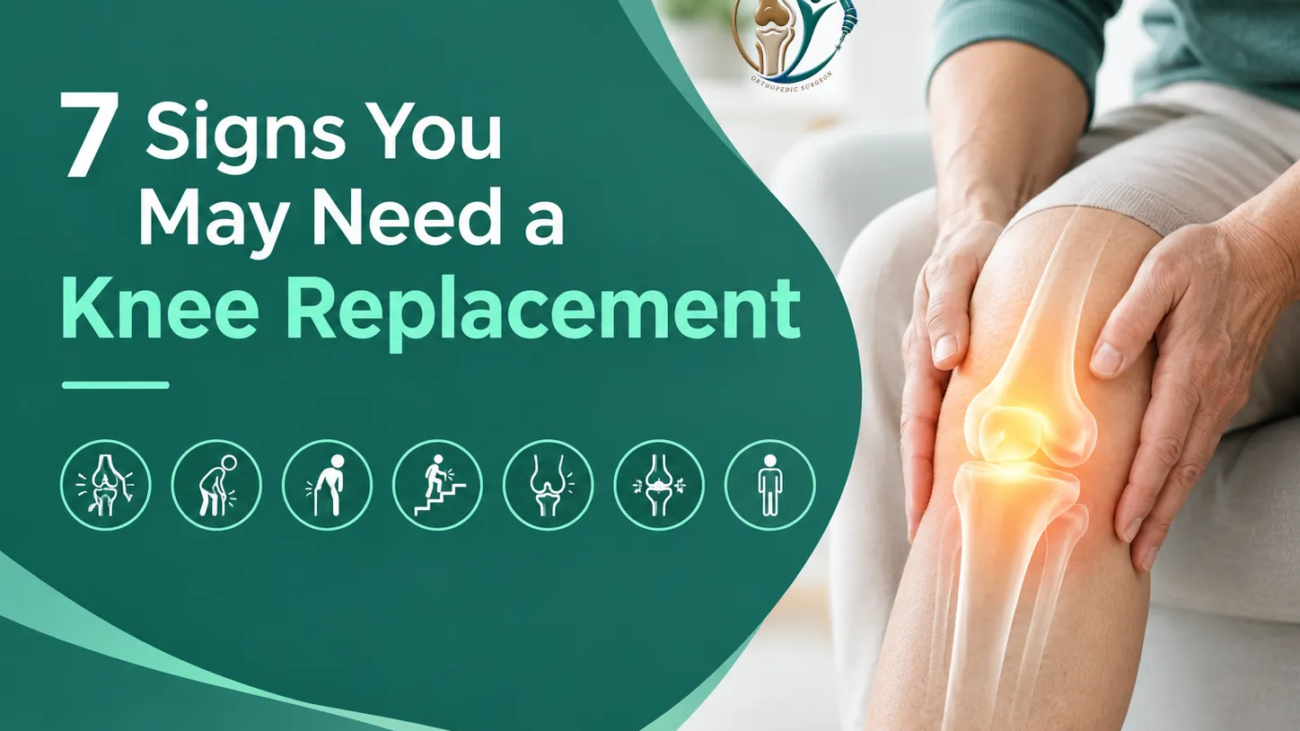
When non-surgical therapies no longer provide lasting relief, surgical consultation becomes essential. Below are seven vital clinical indicators indicating it is time to speak with an orthopaedic surgeon.
1. Severe Bone on Bone Knee Pain During Routine Daily Activities
Experiencing persistent bone on bone knee pain is a reliable signs you need a knee replacement. This intense sensation develops when the articular cartilage wears away entirely. The femoral and tibial bones then grind directly against each other during weight-bearing movement.
Patients coping with severe bone on bone knee pain struggle to complete simple routines. Walking across Dubai Mall, standing during family gatherings, or navigating office corridors becomes excruciating. When joint surfaces lose natural cushioning, bone on bone knee pain makes regular life exhausting.
If conservative remedies fail to reduce bone on bone knee pain, structural wear has likely reached end-stage arthritis. At this stage, joint resurfacing represents the definitive method to resolve bone on bone knee pain permanently.
2. Chronic Resting Pain and Disrupted Sleep Cycles
Persistent resting discomfort is a telling marker among the signs you need a knee replacement. While healthy joints settle when offloaded, arthritic joints continue to throb:
- Night pain: Waking repeatedly from unprovoked night aches is a strong clinical reason for knee replacement evaluation.
- Diminishing relief: Severe joint irritation renders standard anti-inflammatory medications only temporarily effective.
- Health impacts: Ongoing sleep deprivation quickly impairs daily energy, overall mood, and immune resilience.
Experiencing frequent pain while lying down or seated signals the need for an advanced orthopaedic assessment.
3. Progressive Joint Stiffness and Reduced Range of Motion
A marked reduction in physical flexibility ranks high among the distinct signs you need a knee replacement. You might notice difficulty fully straightening the leg or bending it sufficiently to sit comfortably in a vehicle.
This structural rigidity stems from intra-articular inflammation, osteophyte development, and capsular contracture. As functional flexibility deteriorates, simple tasks like putting on footwear or stepping out of the shower become challenging.
When physical rehabilitation exercises no longer restore normal flexion and extension, the joint space has likely collapsed. This progressive mechanical restriction forms a primary reason for knee replacement consideration.
4. Recurrent Joint Swelling That Resists Conservative Therapies
Persistent fluid accumulation around the patella is among the visible signs you need a knee replacement. Unlike mild swelling from exertion, arthritic effusion remains present even at rest:
- Chronic synovitis: Inflammation creates excess synovial fluid and painful internal pressure.
- Treatment resistance: Tightness and discomfort fail to improve with elevation, ice, or compression.
- Ongoing irritation: Persistent swelling indicates continuous cartilage breakdown that non-surgical therapy can no longer control.
Reducing this chronic inflammation typically requires resurfacing the degraded joint.
5. Visible Angular Deformity and Joint Instability
Structural leg bowing or a knock-kneed appearance represents one of the unmistakable signs you need a knee replacement. Asymmetrical cartilage depletion causes the mechanical axis of the limb to shift unnaturally inward or outward.
This structural collapse leads to joint laxity, making the leg feel unstable or prone to sudden buckling. Patients frequently report an unnerving sensation that their limb might give way during regular walking strides.
Correcting this structural malalignment is a critical reason for knee replacement surgery. An artificial implant realigns the limb’s load-bearing axis, restoring mechanical stability and protecting adjacent musculoskeletal structures.
6. Failed Response to Non-Surgical and Conservative Treatments
Exhausting conservative options without sustained relief is a definitive indicator among the signs you need a knee replacement. Standard care pathways—such as targeted physiotherapy, medications, and joint injections—provide helpful temporary respite during mild deterioration.
However, therapeutic benefits decline once cartilage wear becomes severe. Continuing injections during advanced degeneration only delays essential care. When non-surgical methods fail to protect your quality of life, surgical consultation is the logical next step.
7. Severe Restriction of Everyday Independence and Lifestyle
The inability to participate in everyday routines is a compelling signs you need a knee replacement. When chronic stiffness forces you to withdraw from social obligations, recreation, or work, your overall quality of life suffers.
Active residents in Dubai should not let physical limitations dictate their day. When simple movement demands constant planning, joint restoration offers lasting relief. Addressing these functional barriers allows you to regain independent movement and return to an active lifestyle without ongoing distress.
Evaluating When to Get a Knee Replacement
Deciding when to get a knee replacement involves balancing clinical diagnostic imaging with your subjective quality of life. Radiographs reveal joint space narrowing, subchondral sclerosis, and bone spur formation. However, imaging findings must always correlate with your daily functional limitations.
Determining when to get a knee replacement does not depend entirely on chronological age. Younger individuals with post-traumatic osteoarthritis and older adults with degenerative disease can both experience equal functional restoration. The window occurs before prolonged inactivity causes severe muscle wasting or cardiovascular decline.
A collaborative evaluation with Dr. Muhieddine Hamie clarifies when to get a knee replacement based on precise diagnostic metrics. Timely surgical care helps avoid the secondary complications of chronic joint immobility.
Primary Clinical Reason for Knee Replacement Surgery
The foundational reason for knee replacement is resolving chronic physical impairment that prevents regular living. Osteoarthritis remains a prevalent diagnosis leading to joint resurfacing procedures across global and regional populations.
Rheumatoid arthritis and post-traumatic arthritis following prior ligamentous or meniscal trauma also represent frequent causes. In every instance, the underlying reason for knee replacement is the permanent mechanical breakdown of articular cartilage.
When protective cartilage erodes, natural shock absorption is lost. Replacing damaged surfaces with engineered medical implants can reduce friction and establishes a smooth, stable, and durable bearing surface.
Clinical Indications and Knee Replacement Candidate Assessment
Determining whether an individual qualifies as a prime knee replacement candidate requires a comprehensive clinical evaluation. The assessment reviews systemic medical fitness, bone density, soft-tissue envelope stability, and the patient’s personal rehabilitation goals.
| Assessment Parameter | Optimal Knee Replacement Candidate Profile | Conservative Management Profile |
| Cartilage Integrity | Complete joint space loss with bone on bone knee pain | Partial-thickness cartilage defect or mild erosion |
| Symptom Severity | Persistent resting distress and severe functional limits | Intermittent ache only during vigorous sporting activity |
| Conservative Care | Refractory to therapeutic injections and structured physical therapy | Responsive to anti-inflammatory medication and lifestyle shifts |
| Radiographic Grade | Kellgren-Lawrence Grade 3 or Grade 4 osteoarthritis | Kellgren-Lawrence Grade 1 or Grade 2 changes |
| Mechanical Stability | Fixed axial deformity or progressive ligamentous laxity | Preserved coronal alignment and intact structural ligaments |
An ideal knee replacement candidate demonstrates a clear understanding of the rehabilitation pathway. Modern surgical approaches prioritise rapid post-operative mobilisation, allowing patients to resume walking within hours after surgery.
Identifying yourself as a suitable knee replacement candidate ensures realistic expectations and superior functional outcomes. Dr. Muhieddine Hamie employs precise digital templating to verify that each patient receives an intervention tailored specifically to their joint anatomy.
Get Personalized Surgical Solutions at Dr. Muhieddine Hamie Clinic
Modern joint reconstruction has moved away from traditional manual cutting techniques. Today, advanced joint arthroplasty leverages digital kinematics, minimally invasive tissue-sparing approaches, and robotic assistance to ensure millimeter-accurate component positioning.
Precision implant alignment reduces mechanical wear on artificial components, prolonging implant longevity and delivering a natural-feeling knee joint. Dr. Muhieddine Hamie combines international surgical expertise with state-of-the-art operative technology in Dubai Healthcare City.
Patients benefit from reduced surgical trauma, minimal blood loss, and accelerated rehabilitation protocols. This approach allows individuals to return to their everyday personal and professional routines far faster than historical surgical protocols permitted.
Reclaim Your Active Mobility and Comfort Today
Living with debilitating joint pain is not an inevitable consequence of getting older. If you recognise the critical signs you need a knee replacement in your daily life, proactive orthopaedic care can help restore your active lifestyle and comfort.
Dr. Muhieddine Hamie provides comprehensive diagnostic assessments, non-operative management options, and advanced surgical interventions tailored to your specific anatomy. Take the decisive step toward lasting joint restoration and a renewed quality of life.
Schedule Your Comprehensive Orthopaedic Consultation
Connect directly with the clinical team at Dr. Muhieddine Hamie Clinic in Dubai to discuss your symptoms and determine whether you are a prime knee replacement candidate. Book your appointment today through our online portal or contact our clinic directly.
Conclusion
Persistent knee discomfort and structural joint stiffness should not dictate your daily lifestyle or prevent you from engaging in an active routine. Recognizing the critical signs you need a knee replacement early allows you to take control of your musculoskeletal health before joint deterioration leads to secondary complications or severe muscle wasting.
Modern advancements in joint arthroplasty—particularly tissue-sparing, robotic-assisted techniques—have transformed the surgical journey, offering elevated accuracy, reduced recovery periods, and long-lasting functional restoration. A thorough clinical assessment is a crucial step in understanding your options, evaluating conservative possibilities, and identifying whether you are an ideal knee replacement candidate.
Taking a proactive approach to joint care helps you transition from chronic pain management toward long-term relief and improved health. With personalized treatment plans tailored to your specific biomechanics, reclaiming fluid, pain-free mobility is within reach.